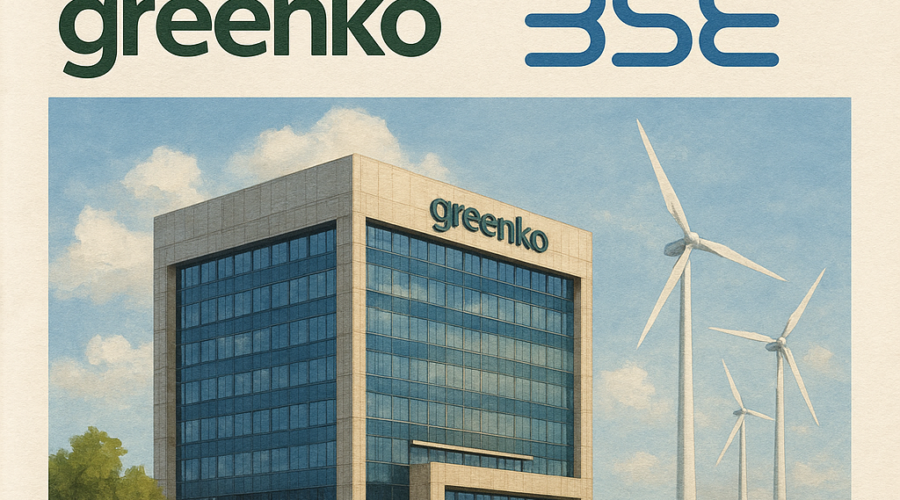
Renewable power giant Greenko Energies, backed by sovereign wealth funds GIC and ADIA, is exploring a potential $1 billion IPO on the Mumbai exchange. The company operates 11 GW of capacity with a 20 GW development pipeline and recently refinanced $520 million in debt. The move comes amid market turbulence, highlighted by the recent 18% debut drop of peer Clean Max Enviro Energy Solutions. Greenko’s offering will serve as a critical litmus test for investor appetite in India’s clean energy sector and the viability of public markets as an exit path for institutional capital.
- Company
- Greenko Energies
- Transaction Type
- Initial Public Offering (IPO)
- Potential Raise
- Up to $1 billion
- Exchange
- Mumbai
- Key Backers
- GIC (Singapore’s sovereign wealth fund), Abu Dhabi Investment Authority (ADIA)
- Co-Founders
- Anil Chalamalasetty, Mahesh Kolli
- Installed Capacity
- Approximately 11 gigawatts (GW)
- Development Pipeline
- Exceeding 20 GW
- Recent Financing
- Approximately $520 million from NABFID to refinance maturing dollar-denominated debt
- Market Precedent
- Clean Max Enviro Energy Solutions’ shares fell 18% on its trading debut
- Broader Market Context
- 7 of the last 8 mainboard IPOs in India delivered negative listing gains
Greenko Energies, the renewable power giant backed by Singapore’s sovereign wealth fund GIC and the Abu Dhabi Investment Authority (ADIA), is reportedly exploring a potential initial public offering (IPO) on the Mumbai exchange that could raise up to $1 billion. The move, if executed, will serve as a crucial barometer for investor appetite in India’s burgeoning, yet currently turbulent, clean energy capital markets.
Most “AI for Diligence” tools are lying to you. The truth is, they are just ChatGPT wrappers. Experience what real AI for Diligence looks like, built like Claude Code, but for M&A/ PE Diligence:
💼 When Claude Code Marries Due Diligence!
Preliminary discussions with investment banks have commenced regarding a possible share sale as soon as this year. However, high-ranking deal advisors caution that the process remains fluid. Key parameters, including the definitive size, timing, and structure of the offering, are still under deliberation, and Greenko retains the option to postpone if prevailing market conditions deteriorate.
Scale and Institutional Weight Behind the Offering
Greenko, co-founded by Anil Chalamalasetty and Mahesh Kolli, represents one of the most substantial renewable energy platforms in the subcontinent. The company currently operates approximately 11 gigawatts (GW) of installed renewable capacity across 20 Indian states. Critically, it maintains a development pipeline exceeding 20 GW of projects under construction, underscoring its aggressive mandate for capacity expansion.
This operational scale is underpinned by robust, long-term institutional capital commitments. Over the last decade, the company and its founders have mobilized and deployed over $10 billion, a figure comprising more than $3 billion in equity financing and an excess of $5 billion secured through global green bonds.
Recent De-risking and Capital Management
In a move suggesting active balance sheet management ahead of a potential public offering, Greenko recently secured approximately $520 million (48 billion rupees) from the National Bank for Financing Infrastructure and Development (NABFID). This capital infusion was earmarked to refinance maturing dollar-denominated debt, mitigating near-term foreign exchange and refinancing risk ahead of any private equity exit strategies in the infrastructure sector.
The IPO Litmus Test: Clean Max Shadow Looms
The timing of Greenko’s consideration comes against a backdrop of significant pressure on the primary market for green energy listings. The potential offering will be closely watched as it directly tests investor sentiment following the lackluster debut of industry peer, Clean Max Enviro Energy Solutions.
Clean Max, which is backed by Brookfield, saw its shares plummet by 18% on its first day of trading earlier this month—a performance marking one of the worst first-day drops for an Indian offering of comparable size in over four years. Furthermore, broader market data indicates significant IPO fatigue, with seven of the last eight mainboard listings in India delivering negative listing gains, suggesting investor caution regarding potentially stretched valuations.
The sector faces headwinds, including reported delays in transmission infrastructure build-out and slowing export growth for certain green energy components, factors that dampen the valuation premium traditionally afforded to pure-play renewable developers.
Implications for Infrastructure and Cross-Border Deals
For institutional investors, a successful Greenko IPO would validate the path to public markets for large-scale, platform-based renewable assets in India, an increasingly important geography for global energy transition capital. Conversely, a pulled or poorly priced offering would force major shareholders like GIC and ADIA to recalibrate their cross-border M&A trends and exit timelines for India.
The outcome will be instructive for other large renewable platforms currently monitoring the market, including firms looking to leverage the deep pools of capital flowing into India’s long-term energy transition goals. Successfully navigating this choppy primary market will set a critical benchmark for future infrastructure equity issuances.
Sources
 substack.com
 businesstimes.com.sg
 economictimes.com
 newsbytesapp.com
 economictimes.com
 renewablewatch.in