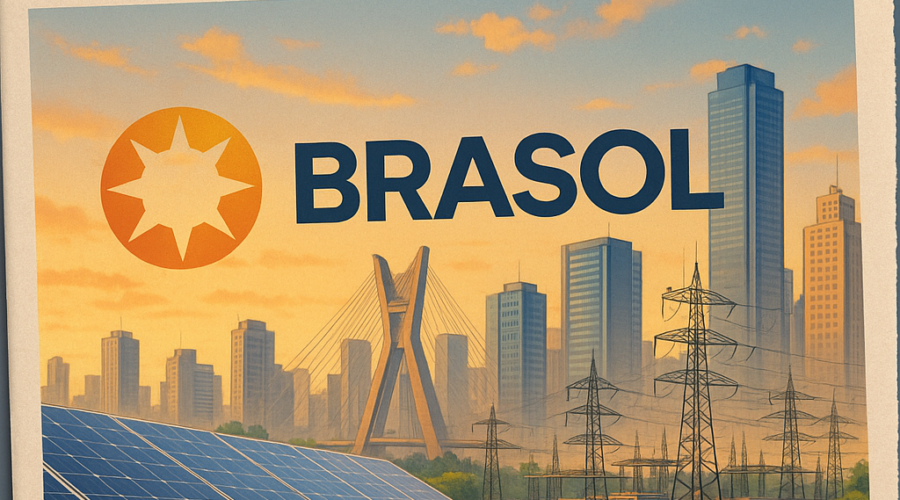
Brasol Participacoes e Empreendimentos S.A., controlled by BlackRock Inc., is strategically targeting mergers and acquisitions in Brazil’s distributed generation (DG) and substation sectors. The company plans to acquire up to R$1.5 billion in solar assets annually, prioritizing M&A over greenfield development to capitalize on market consolidation and developers’ refinancing challenges. Brasol’s focus on integrated "Energy as a Service" solutions, including solar, substations, and battery energy storage, positions it to meet the growing demand from industrial users and data centers, indicating a clear platform consolidation strategy in Latin American energy infrastructure.
- Company
- Brasol Participacoes e Empreendimentos S.A.
- Controlling Shareholder
- BlackRock Inc. (acquired minority stake in 2023)
- Executive Statement
- David Betancur, COO, confirmed focus on acquiring third-party solar assets and substation projects.
- Strategic Focus Areas
- Distributed Generation (DG) and Substations
- Target Annual Solar Acquisition
- Up to R$1.5 billion
- Investment Over Last 5 Years
- Approximately R$2 billion (US$380 million) in Brazilian energy transition
- DG Capacity Projection (End 2026)
- 50 GW in Brazil (15% increase over 2025)
- Substation Strategy
- Larger, more complex transactions, including sale and leaseback for data centers
- Market Context
- Accelerated private investment, consolidation, high demand from energy-intensive users
- Broader Trend
- Brazilian infrastructure investment increasingly reliant on private capital
SÃO PAULO – Brasol Participacoes e Empreendimentos S.A. is actively signaling its intent to deploy capital via mergers and acquisitions across Brazil’s burgeoning distributed generation (DG) and substation sectors. This strategic positioning comes as the broader energy infrastructure market sees accelerated private investment, often focused on consolidation and operational efficiency in the face of regulatory shifts and high demand from energy-intensive users like data centers.
Most “AI for Diligence” tools are lying to you. The truth is, they are just ChatGPT wrappers. Experience what real AI for Diligence looks like, built like Claude Code, but for M&A/ PE Diligence:
💼 When Claude Code Marries Due Diligence!
David Betancur, COO of Brasol, confirmed the company’s focus on acquiring third-party solar assets to bolster its DG portfolio, citing rapid growth in the segment between 2023 and 2025 that created a large pool of acquisition targets. Brasol, which is controlled by BlackRock Inc. following a minority stake acquisition in 2023, has already committed significant capital to the Brazilian energy transition, investing approximately R$2 billion (US$380 million) over the last five years.
The company’s plan includes aggressive solar acquisitions, with intentions to purchase assets worth up to R$1.5 billion per year, capitalizing on market conditions where high interest rates may be restricting some developers’ refinancing capabilities.
The Twin Pillars: DG Consolidation and Substation Growth
Brasol’s operational strategy centers on providing integrated “Energy as a Service” solutions across three core areas: solar power, substations, and battery energy storage systems (BESS).
In the **Distributed Generation (DG)** space, which is projected to reach 50 GW of installed capacity in Brazil by the end of 2026—a roughly 15% increase over 2025—Brasol is prioritizing M&A over greenfield development for solar assets. Solar PV currently accounts for about 99% of Brazil’s DG capacity, largely driven by residential and commercial consumers seeking cost reduction and grid reliability benefits.
The **Substations** segment presents an opportunity for larger, more complex transactions. Betancur noted that substation projects can be two to three times the size of typical solar projects, servicing large-scale industrial users, such as major agricultural operations requiring increased irrigation capacity, or increasingly, hyperscale data centers.
For the booming data center sector, which benefits from Brazil’s relatively low end energy costs and high renewable energy mix, Brasol is employing tailored acquisition strategies, including a “sale and leaseback” model for existing substations. This allows data center operators to free up capital for other projects while securing long-term power infrastructure service from Brasol.
Market Context: Private Capital Filling the Infrastructure Gap
This strategic M&A activity aligns with broader trends in Brazilian infrastructure. Analysts note that the country’s infrastructure investment relies increasingly on private capital, as federal budget allocations for logistics remain insufficient relative to the estimated need.
Infrastructure assets, particularly in energy, are increasingly viewed by private equity and infrastructure investors as a hedge against inflation and interest rate volatility, functioning as a “safe haven” for long-term capital deployment. Furthermore, a national plan is underway to channel nearly $50 billion into sustainable investments, covering renewable energy projects and infrastructure upgrades, solidifying the inflow of private capital into segments like those targeted by Brasol.
| Metric | Projection/Value | Source Context |
|---|---|---|
| DG Installed Capacity (End 2026 est.) | 50 GW | ABGD projection, implying 15% growth. |
| Brasol Target Annual Solar Acquisition | Up to R$1.5 Billion | Capital deployed amid DG consolidation. |
| Total Investment in DG Systems (Total Connected) | 43.5 GW | Capacity benefitting nearly 7 million units. |
| Total Sustainable Investment Target (Govt. Plan) | ~$50 Billion | Mix of public and private capital for green transition. |
For deal advisors and private equity principals focusing on Latin American energy infrastructure investment, Brasol’s moves signal a clear pathway for platform consolidation in distributed renewables and mission-critical grid assets. The interplay between regulatory changes affecting DG and the physical need for new substation capacity—especially for new industrial load centers—creates fertile ground for strategic M&A of third-party solar assets in Brazil.
Sources
 bnamericas.com
 akm.ru
 canalsolar.com.br
 bnamericas.com
 canalsolar.com.br
 bnamericas.com
 internationalbanker.com
 impakter.com