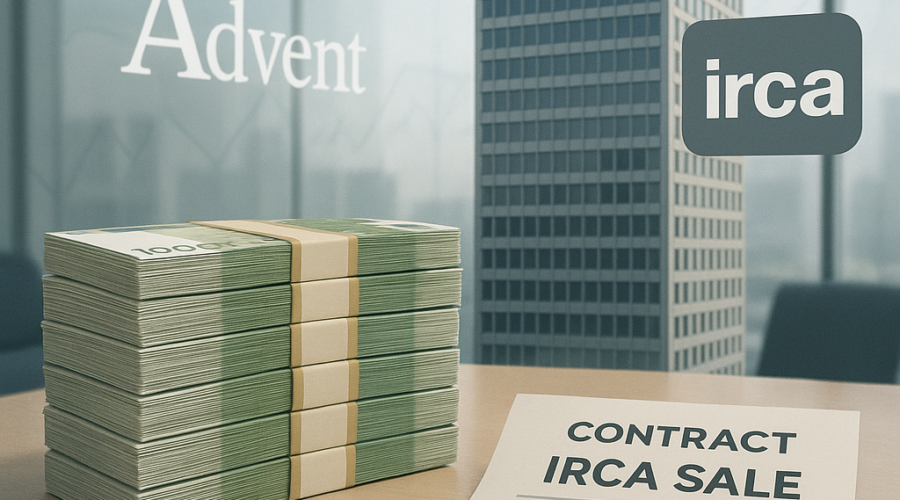
Private equity firm Advent International is preparing to divest Italian chocolate manufacturer Irca for approximately extacutem{}3 billion, with financial institutions mobilizing debt financing for the transaction. This significant exit opportunity in the European specialty food sector reflects Irca’s strong market position in global chocolate and confectionery ingredients. Lenders’ willingness to structure buyout debt, despite France’s 10-year government bond yield at 3.553% as of January 20, 2026, indicates robust financing availability and confidence in established, cash-generative businesses. The deal demonstrates that private equity exit strategies remain viable for portfolio companies with strong operational performance, even in an elevated interest rate environment.
- Seller
- Advent International
- Target
- Irca (Italian chocolate manufacturer)
- Estimated Enterprise Value
- extacutem{}3 billion
- Transaction Type
- Divestiture / Sale
- Financing Status
- Lenders preparing debt financing
- Sector
- Specialty Food / Chocolate & Confectionery Ingredients
- Market Context
- European sovereign debt markets show elevated yields; France’s 10-year government bond yield at 3.553% as of January 20, 2026
- Strategic Driver
- Ongoing consolidation in specialty ingredients; PE exit from enhanced portfolio company
“`html
Private equity firm Advent International is preparing to divest Italian chocolate manufacturer Irca for approximately €3 billion, according to Bloomberg reporting, as financial institutions mobilize debt financing for the transaction[1]. The sale represents a significant exit opportunity in the European specialty food sector and underscores continued lender appetite for leveraged buyout financing despite elevated interest rate environments.
Most “AI for Diligence” tools are lying to you. The truth is, they are just ChatGPT wrappers. Experience what real AI for Diligence looks like, built like Claude Code, but for M&A/ PE Diligence:
💼 When Claude Code Marries Due Diligence!
Deal Structure and Market Context
Advent’s preparation of Irca for sale signals the firm’s confidence in executing a substantial exit from its portfolio company. The €3 billion valuation positions Irca as a meaningful asset within Advent’s investment portfolio, reflecting the company’s market position in the global chocolate and confectionery ingredients sector. Lenders are actively preparing debt packages to support potential acquirers, indicating robust financing availability for mid-market M&A transactions in the current environment.
The timing of the sale preparation occurs as European sovereign debt markets show elevated yields. France’s 10-year government bond yield stands at 3.553% as of January 20, 2026, reflecting broader macroeconomic conditions that influence corporate financing costs[1]. Despite these conditions, the willingness of lenders to structure buyout debt for Irca suggests confidence in the asset’s cash generation and debt service capacity.
Strategic Implications for Specialty Food M&A
The Irca transaction exemplifies ongoing consolidation activity within the specialty ingredients and food manufacturing sectors. Private equity firms continue to pursue exits from portfolio companies acquired during earlier market cycles, particularly where operational improvements and market positioning have enhanced enterprise value. The mobilization of debt financing by lenders indicates that despite macroeconomic headwinds, financial sponsors maintain access to capital for acquisitions in defensive, cash-generative sectors such as specialty food production.
Potential acquirers may include larger food conglomerates seeking to expand ingredient capabilities, competing private equity firms pursuing add-on acquisition strategies, or financial sponsors building platforms in the chocolate and confectionery supply chain. The €3 billion price point positions Irca as an attractive target for mid-market and upper-middle-market buyers seeking exposure to essential food ingredients with stable demand characteristics.
Financing Environment for Leveraged Transactions
The preparation of debt financing by lenders reflects a normalization of leveraged buyout market conditions following the 2023-2024 period of financing constraints. While interest rates remain elevated relative to the pre-pandemic environment, institutional lenders have resumed active participation in structured debt markets for transactions involving established, cash-generative businesses. The Irca sale demonstrates that private equity exit strategies remain viable for portfolio companies with strong operational performance and market positioning.
The transaction’s progression will provide market participants with insights into current valuation expectations for specialty food manufacturers, debt capacity for mid-market acquisitions, and lender appetite for leveraged transactions in the current rate environment. Successful completion of the Irca sale would reinforce the viability of private equity exit strategies in European specialty manufacturing and signal continued institutional investor confidence in the sector’s fundamentals.
“`
Sources
https://www.zonebourse.com/cours/taux-interet/FRANCE-10Y-CASH-146043504/, https://www.gurufocus.com/news/7032338/lululemon-lulu-faces-boardroom-battle-as-founder-seeks-changes