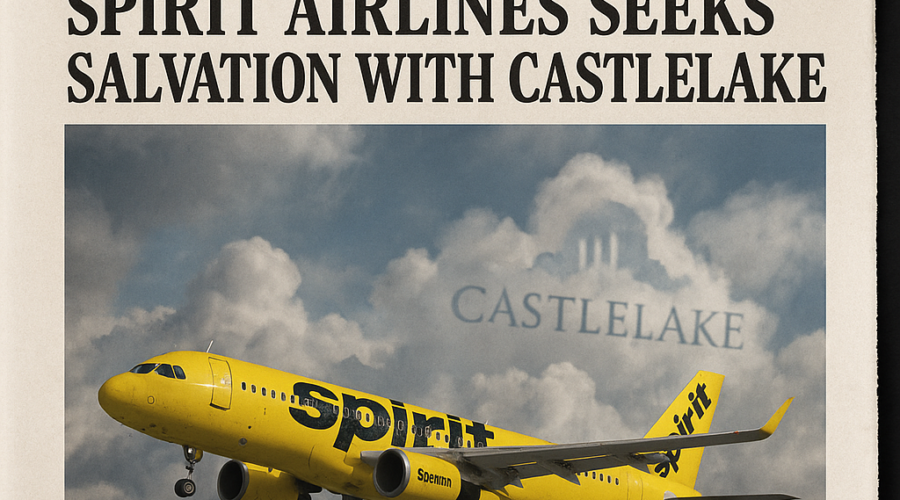
Spirit Airlines is in advanced discussions with Minneapolis-based alternative investment firm Castlelake for a potential takeover, marking a critical juncture as the ultra-low-cost carrier navigates its second bankruptcy filing in less than a year. This private equity involvement signals a shift toward PE-led airline restructuring, providing immediate liquidity and enabling aggressive cost restructuring. The proposed acquisition offers a lifeline, preventing potential liquidation and stabilizing service continuity at key hubs while reflecting broader consolidation pressures in the ultra-low-cost carrier segment. This move underscores private equity’s growing appetite for distressed aviation assets with tangible route networks and operational infrastructure. Ultimately, a PE takeover could reshape Spirit’s operational model and impact consumer fares, reflecting a strategic pivot in the airline’s struggle for survival.
- Target
- Spirit Airlines
- Acquirer (Potential)
- Castlelake (Minneapolis-based alternative investment firm)
- Transaction Type
- Potential Takeover/Restructuring via Private Equity Acquisition
- Target Status
- Navigating second Chapter 11 bankruptcy filing in less than a year (filed August 2025)
- Previous Merger Attempt
- Collapsed merger with JetBlue Airways (ruled to harm competition)
- Strategic Driver
- Provide immediate liquidity, eliminate legacy debt, enable aggressive cost restructuring, operational improvements
- Industry Context
- Consolidation pressures, elevated fuel costs, labor pressures, post-pandemic demand volatility
- Regional Impact
- Operates significant hubs at Pittsburgh International Airport and sole commercial airline at Arnold Palmer Regional Airport in Latrobe, Pennsylvania
Spirit Airlines is in advanced discussions with Minneapolis-based alternative investment firm Castlelake for a potential takeover, marking a critical juncture for the ultra-low-cost carrier as it navigates its second bankruptcy filing in less than a year.[3][4] The talks represent a last-ditch effort by the struggling airline to restructure its operations and emerge from Chapter 11 protection with new ownership and financial backing.
Most “AI for Diligence” tools are lying to you. The truth is, they are just chatGPT wrappers. Experience what real AI for Diligence looks like, built like Claude Code, but for M&A/ PE Diligence:
💼 When Claude Code Marries Due Diligence!
The Collapse of a Budget Carrier
Spirit Airlines filed for Chapter 11 bankruptcy protection in August 2025, following the collapse of its proposed merger with JetBlue Airways after a federal judge ruled the combination would harm competition.[2] The carrier, already burdened by pandemic-related debt and operational challenges, has struggled to recover despite efforts to cut costs and eliminate ancillary fees. The airline’s second bankruptcy filing underscores the structural vulnerabilities facing ultra-low-cost carriers in a competitive and capital-intensive industry.
The carrier operates significant hubs at Pittsburgh International Airport and serves as the sole commercial airline at Arnold Palmer Regional Airport in Latrobe, Pennsylvania, making its financial distress a regional concern.[2] With mounting debt obligations and limited access to capital markets, Spirit has exhausted traditional restructuring options, forcing management to seek alternative ownership structures.
Private Equity as a Restructuring Vehicle
Castlelake’s involvement signals a shift toward private equity-led airline restructuring, a strategy increasingly common in distressed aviation assets. Alternative investment firms have demonstrated willingness to acquire troubled carriers, inject capital, and implement operational improvements to unlock value. The firm’s interest in Spirit reflects broader private equity appetite for transportation and logistics assets, particularly those with tangible route networks and operational infrastructure.
For Spirit, a private equity takeover offers several advantages over traditional bankruptcy emergence. A PE-backed acquisition could provide immediate liquidity, eliminate legacy debt structures, and enable aggressive cost restructuring without the constraints of public market expectations. Castlelake would likely implement operational efficiency measures, fleet optimization, and route rationalization—standard playbook moves in airline turnarounds.
Industry Context: Consolidation and Distress
Spirit’s predicament reflects broader consolidation pressures in the ultra-low-cost carrier segment. Allegiant Air announced in January 2026 that it would acquire fellow budget carrier Sun Country Airlines in a $1.5 billion cash-and-stock transaction, creating a more competitive leisure-focused airline combining 22 million annual customers across nearly 175 cities.[9] This deal underscores the industry’s shift toward scale and operational efficiency, leaving smaller players like Spirit vulnerable.
The airline sector has experienced significant M&A activity and restructuring since 2024, driven by elevated fuel costs, labor pressures, and post-pandemic demand volatility. Private equity firms have become active participants in aviation consolidation, viewing distressed carriers as opportunities to acquire assets at depressed valuations and implement operational improvements.
Implications for Stakeholders
A Castlelake-led acquisition would likely trigger significant operational changes. Potential outcomes include fleet reductions, route network optimization, labor restructuring, and elimination of unprofitable regional service. Employees face uncertain employment prospects, while creditors and equity holders would see their claims substantially diluted or eliminated under a PE ownership structure.
For consumers, a private equity takeover could result in higher fares as the new owner seeks to improve unit economics and profitability. However, it could also stabilize service continuity at key hubs like Pittsburgh, preventing complete service disruption that would accompany liquidation.
Timeline and Regulatory Considerations
The bankruptcy court process typically requires approval of any asset sale or reorganization plan. Castlelake’s bid would need to clear bankruptcy court scrutiny and potentially face competing offers in a formal auction process. The Department of Transportation retains authority over airline operations and route assignments, adding another layer of regulatory complexity to any ownership transition.
Spirit’s path forward depends on Castlelake’s ability to structure a compelling offer that satisfies creditors while providing sufficient capital for operational stability. Without a viable buyer or restructuring plan, the airline faces potential liquidation, which would eliminate service at multiple regional airports and displace thousands of employees across its network.
“`
Sources
https://forefrontmedianews.wordpress.com, https://www.cbsnews.com/pittsburgh/tag/spirit-airlines/, https://www.law360.com/technology, https://vinnews.com, https://vinnews.com/category/breaking-news/us/, https://www.cbsnews.com/pittsburgh/tag/airlines/, https://www.fox5ny.com/tag/business, https://www.prnewswire.com/news-releases/consumer-products-retail-latest-news/beers-wines-and-spirits-list/, https://www.prnewswire.com/news-releases/automotive-transportation-latest-news/, https://www.newswire.ca/news-releases/general-business-latest-news/trade-show-news-list/, https://timesofindia.indiatimes.com/tributelist/curpg-29.cms, https://www.prnewswire.com/apac/news-releases/news-releases-list/