
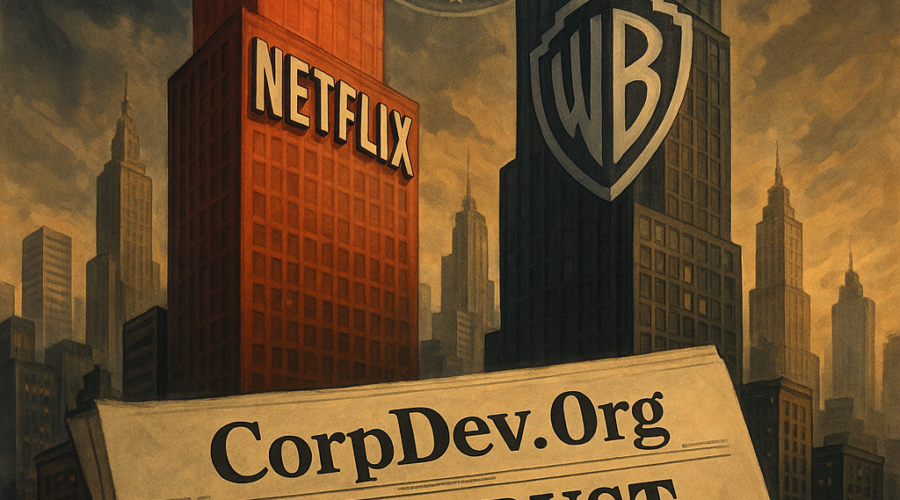
Netflix is facing a U.S. Department of Justice antitrust probe over its proposed $72 billion to $83 billion acquisition of Warner Bros. Discovery’s studios and HBO Max, a deal announced in December 2025. The DOJ has subpoenaed rivals to investigate potential anticompetitive practices and market dominance, while Paramount has launched a rival $77.9 billion hostile bid for broader Warner assets. A combined Netflix and HBO Max would command approximately 30% of the U.S. streaming market, raising significant regulatory red flags despite Netflix’s claims of standard review. This heightened scrutiny underscores a growing trend of antitrust challenges in media consolidation, particularly for transactions involving major streaming players.
- Acquirer
- Netflix
- Target
- Warner Bros. Discovery’s studios and HBO Max streaming service
- Transaction Type
- Acquisition
- Netflix Offer Value
- $72 billion to $83 billion
- Netflix Offer Price
- $27.75 per share in cash
- Paramount Rival Bid Value
- $77.9 billion
- Announced Date
- December 2025
- Expected Shareholder Vote
- March 2026
- Regulatory Body
- U.S. Department of Justice (DOJ)
- Regulatory Action
- Antitrust probe, civil subpoena to rivals
- Estimated Combined U.S. Streaming Market Share
- About 30%
- Key Antitrust Concern
- Potential market dominance and exclusionary conduct
The U.S. Department of Justice is probing Netflix’s proposed $72 billion to $83 billion acquisition of Warner Bros. Discovery’s studios and HBO Max streaming service, subpoenaing rivals to assess anticompetitive practices and potential market dominance.[1][2][3]
Most “AI for Diligence” tools are lying to you. The truth is, they are just ChatGPT wrappers. Experience what real AI for Diligence looks like, built like Claude Code, but for M&A/ PE Diligence:
💼 When Claude Code Marries Due Diligence!
Announced in December 2025, Netflix agreed to pay $27.75 per share in cash for Warner Bros. assets, valuing the deal at $72 billion according to initial reports, though subsequent coverage cites figures up to $83 billion.[1][2] Paramount launched a rival $77.9 billion hostile bid, including Warner’s cable networks like CNN and TNT, escalating a bidding war for control of key Hollywood studios and streaming platforms.[1]
DOJ’s Broad Inquiry into Netflix Practices
The DOJ’s civil subpoena to an unnamed entertainment rival demands details on Netflix’s “exclusionary conduct” that could entrench monopoly power, focusing on how the streaming leader competes amid the Warner deal review.[1] Regulators hold authority to block mergers reducing competition or fostering monopolies, with this probe providing grounds to challenge the transaction or illuminate Netflix’s business tactics.[1]
Netflix maintains the review is standard, denying separate monopolization scrutiny. A company lawyer stated: “We are constructively engaging with the Department of Justice as part of the standard review of our proposed acquisition of Warner Bros.”[1] Co-CEO Ted Sarandos testified before the Senate Judiciary Committee that a bundled Netflix-HBO Max offering would lower consumer costs.[1]
Market Share Concerns and Global Scrutiny
A combined Netflix and HBO Max would command about 30% of the U.S. subscription streaming market, prompting antitrust flags despite Netflix’s counter that 80% of HBO Max users already subscribe to its service, rendering the metric unmeaningful.[1] European and UK regulators are also likely to review both Netflix and Paramount bids, targeting acquirers with outsized market power.[1]
President Donald Trump declined involvement, deferring to the Justice Department.[1] Warner Bros. anticipates a shareholder vote in March 2026, while Netflix shares rose 1.6% to $82.20 in after-hours trading following the WSJ report.[2][3]
Strategic Implications for Media M&A
This deal exemplifies **cross-border M&A trends 2025** and **antitrust risks in media consolidation**, where regulators increasingly target **streaming market dominance strategies**. A Netflix-Warner merger promises synergies in content production and distribution but risks DOJ lawsuits if deemed anticompetitive. Historical parallels include blocked AT&T-Time Warner elements and ongoing Paramount-Skydance reviews, signaling heightened scrutiny on **private equity exit strategies in media** and Big Tech expansions.[1]
Financial terms highlight premium valuations: Netflix’s offer at $27.75 per share reflects Warner’s studio assets (e.g., DC Films, HBO originals) and 100 million HBO Max subscribers, potentially boosting Netflix’s content library amid live sports pushes and ad-tier growth.
| Bidder | Value | Key Assets Targeted | Status |
|---|---|---|---|
| Netflix | $72-83B ($27.75/share) | Studios, HBO Max | DOJ probe; shareholder vote March 2026 |
| Paramount (hostile) | $77.9B | All Warner incl. cable (CNN, TNT) | Active; multi-regulator review |
[1][2]
For deal advisors and C-level executives tracking **M&A antitrust challenges 2026**, this case underscores the need for robust HSR filings and rival outreach to preempt blocks, especially in consolidating sectors like streaming where market shares exceed 25-30%.
Sources
https://timesofindia.indiatimes.com/technology/tech-news/us-doj-asks-rival-about-netflixs-practices-to-investigate-warner-bros-deal-describe-any-other/articleshow/128038209.cms, https://stocktwits.com/symbol/NFLX/news, https://ts2.tech/en/category/nasdaqnflx/, https://www.marketbeat.com/stocks/NASDAQ/NFLX/news/, https://finviz.com/quote.ashx?t=GOOG&ty=fc, https://www.benzinga.com/news