

Novartis is strategically prioritizing early-stage pipeline assets and clinical-stage candidates for acquisition, a shift driven by intense competition and prohibitive valuations for late-stage drug programs. This approach allows Novartis to build pipeline depth and sustainable revenue streams across therapeutic areas like oncology, cell and gene therapy, and cardiovascular disease. The company’s decade-long track record includes over 15 significant early-to-mid stage acquisitions and licensing deals, such as the 2022 Pliant Therapeutics acquisition for $1.6 billion. By focusing on Phase II and Phase III assets, Novartis aims for better risk-adjusted returns on invested capital, effectively navigating the scarcity of near-launch assets. This strategy positions Novartis to optimize capital efficiency while maintaining a robust drug development pipeline.
- Company
- Novartis
- Strategic Focus
- Acquiring early-stage pipeline assets and clinical-stage candidates
- Rationale
- Intensifying competition and high valuations for late-stage drug programs; patent cliffs, biosimilar erosion, constrained R&D productivity
- Target Asset Stages
- Primarily Phase II and Phase III development
- Acquisition Track Record (Past Decade)
- Over 15 significant acquisitions and licensing deals targeting early-to-mid stage assets
- Notable Acquisitions/Deals
- 2022 acquisition of Pliant Therapeutics ($1.6 billion); 2023 licensing agreement with Arcus Biosciences; multiple bolt-on acquisitions in cell and gene therapy
- Key Therapeutic Areas
- Oncology and Hematology, Cell and Gene Therapy, Cardiovascular and Metabolic Disease
- Phase II Valuation Multiple (Typical)
- 2-4x peak sales
- Phase III Valuation Multiple (Typical)
- 4-8x peak sales
- Near-Launch Valuation Multiple (Typical)
- 8-12x peak sales
null
Novartis is reinforcing its commitment to acquiring early-stage pipeline assets and clinical-stage candidates, even as the pharmaceutical giant faces intensifying competition for late-stage drug programs approaching regulatory approval. The strategy reflects a fundamental shift in how large-cap pharma companies are approaching portfolio construction in an era of patent cliffs, biosimilar erosion, and constrained R&D productivity.
Most “AI for Diligence” tools are lying to you. The truth is, they are just ChatGPT wrappers. Experience what real AI for Diligence looks like, built like Claude Code, but for M&A/ PE Diligence:
💼 When Claude Code Marries Due Diligence!
The Strategic Rationale: Building Depth Over Breadth
The Swiss pharmaceutical company’s focus on early-pipeline acquisitions and near-launch assets represents a calculated response to several market pressures. Unlike competitors pursuing blockbuster-stage acquisitions at premium valuations, Novartis is targeting molecules in Phase II and Phase III development, where acquisition multiples remain more rational and integration risks are more manageable.
“The near-launch asset market has become increasingly competitive and expensive,” according to recent analysis from Tufts Center for the Study of Drug Development. Novartis’s approach acknowledges this reality while positioning the company to build sustainable revenue streams across multiple therapeutic areas.
Market Context: The Scarcity of Late-Stage Assets
The pharmaceutical M&A landscape has shifted dramatically over the past 18 months. Late-stage clinical assets—particularly those in Phase III with clear regulatory pathways—command valuations that often exceed 8-12x revenue multiples for peak sales. This pricing power reflects:
- Reduced internal R&D productivity: Major pharma companies are generating fewer internally developed candidates reaching late-stage development, creating artificial scarcity.
- Biotech consolidation: Smaller biotech firms are being acquired by mid-cap competitors before reaching near-launch status, reducing the available pool of assets.
- Regulatory uncertainty: Recent FDA guidance changes and increased scrutiny of efficacy endpoints have made late-stage assets riskier, yet paradoxically more expensive as companies bid defensively.
Novartis’s Acquisition Track Record: A Decade of Portfolio Building
Novartis has executed this strategy with measurable success. Over the past decade, the company has completed more than 15 significant acquisitions and licensing deals targeting early-to-mid stage assets, including:
- The 2022 acquisition of Pliant Therapeutics for $1.6 billion, focused on early-stage fibrosis programs
- The 2023 licensing agreement with Arcus Biosciences for oncology candidates
- Multiple bolt-on acquisitions in cell and gene therapy, a therapeutic area where early-stage assets command premium valuations
This approach has allowed Novartis to maintain a pipeline depth that rivals competitors while avoiding the valuation trap of late-stage asset acquisition.
The Near-Launch Asset Opportunity: A Narrowing Window
Despite the stated preference for early-stage assets, Novartis remains opportunistic about near-launch candidates—molecules in Phase III with clear regulatory pathways and commercial potential. These assets typically offer:
- Reduced clinical risk compared to earlier-stage programs
- Clearer revenue visibility for financial modeling
- Potential for rapid market entry and revenue contribution within 18-36 months
However, the supply of such assets has contracted significantly. Biotech companies with near-launch candidates are increasingly choosing to pursue independent IPOs or remain private longer, betting on higher valuations post-approval. This dynamic has forced large-cap acquirers like Novartis to either accept higher prices or shift focus upstream in the development pipeline.
Therapeutic Focus Areas: Where Novartis Is Hunting
Novartis’s acquisition strategy is concentrated in several high-priority therapeutic areas:
Oncology and Hematology
Novartis continues to build its oncology portfolio, particularly in targeted therapies and immunotherapies. The company has identified early-stage programs in solid tumors, hematologic malignancies, and combination therapies as priority targets.
Cell and Gene Therapy
Following its acquisition of AveXis in 2018 and subsequent CAR-T cell therapy investments, Novartis remains aggressive in acquiring early-stage cell and gene therapy platforms. This area commands premium valuations but offers significant long-term revenue potential.
Cardiovascular and Metabolic Disease
With GLP-1 receptor agonists reshaping the metabolic disease landscape, Novartis is selectively acquiring early-stage programs in obesity, diabetes, and cardiovascular outcomes. The company recognizes that late-stage assets in this space are prohibitively expensive.
Financial Implications: Valuation and Deal Economics
Novartis’s early-stage acquisition strategy has favorable financial characteristics:
| Asset Stage | Typical Valuation Multiple | Clinical Risk | Time to Revenue |
|---|---|---|---|
| Phase II | 2-4x peak sales | High | 5-7 years |
| Phase III | 4-8x peak sales | Moderate | 2-4 years |
| Near-Launch (Pre-Approval) | 8-12x peak sales | Low | 1-2 years |
By concentrating acquisitions in Phase II and Phase III, Novartis achieves better risk-adjusted returns on invested capital. The company can build a diversified portfolio where some programs fail—as is inevitable in drug development—while others generate substantial returns, offsetting the higher clinical risk profile.
Competitive Positioning: How Peers Are Responding
Other large-cap pharmaceutical companies are adopting similar strategies, though with varying emphasis:
- Merck: Has shifted toward oncology and infectious disease early-stage acquisitions, reducing reliance on late-stage asset purchases.
- Roche: Continues to pursue near-launch assets but at more disciplined valuations, leveraging its diagnostic capabilities for synergy creation.
- Eli Lilly: Has been more aggressive in acquiring late-stage metabolic disease assets, reflecting confidence in the GLP-1 market opportunity.
This divergence reflects different strategic priorities and balance sheet capacities. Novartis’s approach is particularly suited to a company seeking to optimize capital efficiency while maintaining pipeline depth across multiple therapeutic areas.
Integration and Execution Risks
Novartis’s strategy carries inherent execution challenges. Early-stage acquisitions require:
- Sustained R&D investment: The company must commit capital to advance acquired programs through clinical development, with no guarantee of success.
- Talent retention: Integrating biotech teams into a large-cap structure often results in key scientist departures, particularly if acquisition terms are unfavorable to founders and early employees.
- Portfolio management: With a larger pipeline, Novartis must make disciplined decisions about which programs to advance and which to deprioritize or divest.
The company’s track record suggests competent execution in these areas, but the strategy’s success ultimately depends on Novartis’s ability to develop acquired assets efficiently and bring them to market on competitive timelines.
Regulatory and Patent Landscape Considerations
Novartis’s acquisition strategy must account for evolving regulatory dynamics. Recent FDA guidance on accelerated approval pathways, breakthrough therapy designations, and real-world evidence has created new opportunities for early-stage assets to reach patients faster. This regulatory environment supports Novartis’s focus on earlier-stage programs, as the company can potentially compress development timelines through strategic regulatory engagement.
Patent considerations also favor this approach. Early-stage acquisitions often provide longer patent exclusivity periods, extending the commercial lifecycle of approved drugs and reducing exposure to biosimilar competition.
Capital Allocation and Shareholder Expectations
Novartis’s M&A strategy must balance acquisition spending with shareholder return expectations. The company has maintained a disciplined approach to deal sizing, typically limiting individual acquisitions to $1-3 billion, with occasional larger transactions. This capital allocation approach allows Novartis to:
- Maintain dividend payments and share buyback programs
- Preserve financial flexibility for opportunistic larger acquisitions
- Avoid the valuation destruction associated with overpaying for late-stage assets
Institutional investors have generally supported this strategy, viewing it as more disciplined than competitors’ approaches to late-stage asset acquisition.
Looking Forward: The Evolution of Pharma M&A
Novartis’s commitment to early-stage pipeline building reflects a broader evolution in pharmaceutical M&A strategy. As internal R&D productivity remains challenged and late-stage asset valuations reach unsustainable levels, large-cap companies are increasingly recognizing that sustainable competitive advantage comes from building deep, diversified pipelines rather than pursuing blockbuster acquisitions.
This shift has implications for the broader biotech ecosystem. Smaller biotech companies with promising early-stage programs can expect continued acquisition interest from large-cap partners, while those with near-launch assets may face pressure to either accept lower valuations or pursue independent paths to commercialization.
For Novartis specifically, the strategy positions the company to maintain revenue growth and competitive positioning through the 2030s, even as current blockbusters face patent expiration. The success of this approach will ultimately be measured by the company’s ability to convert
Sources
Frequently Asked Questions
Why is Novartis shifting its M&A strategy towards early-stage assets?
What are the financial implications of Novartis’s early-stage acquisition strategy?
Which therapeutic areas is Novartis prioritizing for early-stage acquisitions?
How does Novartis’s M&A strategy compare to its large-cap pharmaceutical peers?
What are the primary risks associated with Novartis’s early-stage acquisition strategy?
Related Posts
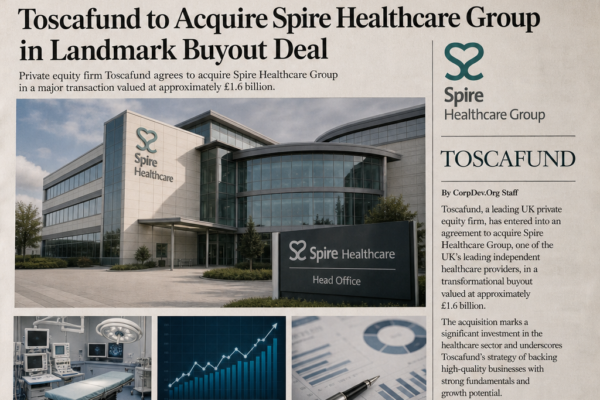
UK Private Hospital Giant Spire Agrees to £1.03 Billion Buyout Led by Toscafund
Spire Healthcare Group agreed on September 5, 2026, to a £1.03 billion cash takeover by Tulip UK Bidco, an investment consortium led by hedge fund manager Toscafund Asset Management alongside THCP...
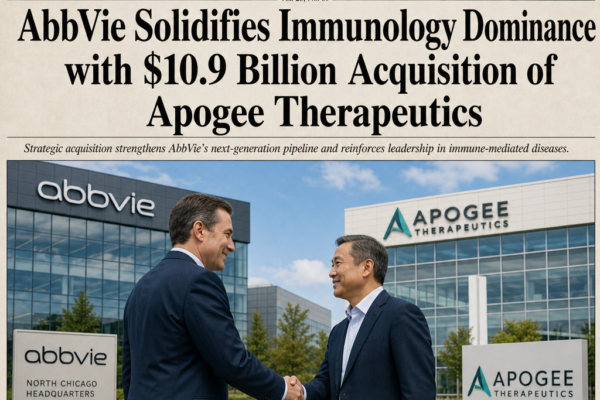
AbbVie Solidifies Immunology Dominance with $10.9 Billion Acquisition of Apogee Therapeutics
AbbVie (NYSE: ABBV) today announced the successful completion of its acquisition of Apogee Therapeutics (NASDAQ: APGE), an all-cash transaction valued at approximately $10.9 billion. Under the terms...
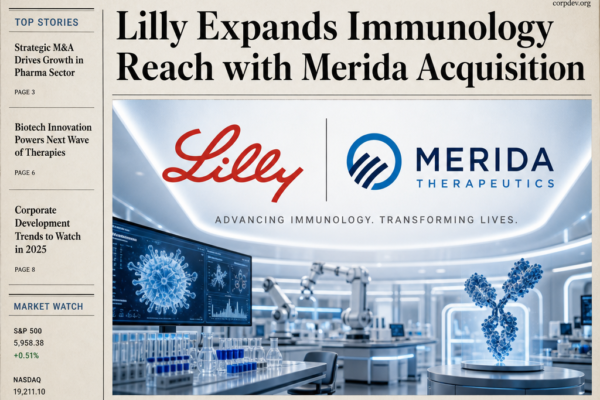
Lilly Adds to Immune Drug Pipeline with $2.9B Merida Buyout
In a strategic maneuver to solidify its presence beyond the metabolic health sector, Eli Lilly and Company (NYSE: LLY) announced on August 31, 2026, a definitive agreement to acquire Merida...
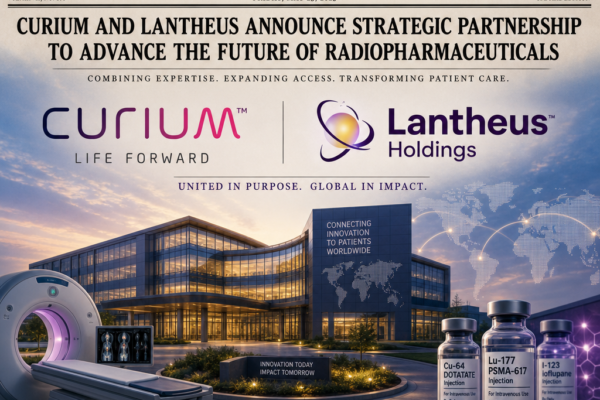
Curium Strikes $8 Billion Mega-Deal for Lantheus to Forge Global Radiopharmaceutical Powerhouse
In a definitive move to dominate the rapidly expanding nuclear medicine landscape, Curium US Holdings has entered into a definitive agreement to acquire Lantheus Holdings, Inc. (NASDAQ: LNTH) for a...