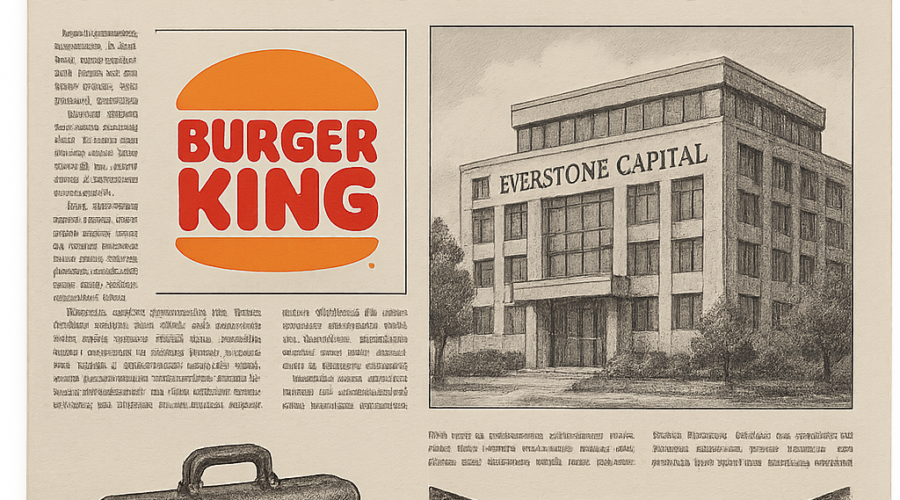
Everstone Capital is divesting its entire 11.26% stake in Restaurant Brands Asia (RBA), the master franchisee for Burger King in India and Indonesia, through a block deal as of January 19, 2026. This tactical exit follows RBA’s improved performance, with India Burger King operations showing 15.6% revenue growth. The transaction aligns with broader cross-border M&A trends in consumer brands, where private equity firms optimize returns amid valuation shifts. This move signals a maturing PE investment landscape in India’s consumer sector, favoring secondary sales over volatile IPOs for exits.
- Seller
- Everstone Capital
- Target
- Restaurant Brands Asia (RBA)
- Transaction Type
- Divestiture / Block Deal
- Stake Sold
- 11.26%
- Announced Date
- January 19, 2026
- Target Operations
- Master franchisee for Burger King in India and Indonesia, over 500 outlets
- India Burger King Revenue Growth
- 15.6%
- India QSR Market CAGR
- 15%
- India QSR Market Value
- $3 billion
Private equity firm Everstone Capital is divesting its entire 11.26% stake in Restaurant Brands Asia (RBA), the master franchisee for Burger King in India and Indonesia, through a block deal as of January 19, 2026[1][3][4]. This move marks a tactical exit from a consumer investment amid India’s evolving **private equity exit strategies in quick-service restaurants**.
Most “AI for Diligence” tools are lying to you. The truth is, they are just ChatGPT wrappers. Experience what real AI for Diligence looks like, built like Claude Code, but for M&A/ PE Diligence:
💼 When Claude Code Marries Due Diligence!
Deal Background and Financial Terms
Everstone, which entered RBA in 2017, seeks buyers for its holding valued at an undisclosed amount, reflecting improved performance at India Burger King operations with 15.6% revenue growth[1][9]. RBA operates over 500 outlets, capitalizing on India’s quick-service restaurant sector expansion driven by urbanization and rising disposable incomes.
The stake sale aligns with broader **cross-border M&A trends 2025-2026** in consumer brands, where PE firms optimize returns amid valuation shifts. Potential buyers include strategic investors like Ajanta Pharma promoters, who plan parallel investments of ₹800 crore in related sectors[3][5][7]. No premium details emerged, but the transaction offers a 20% premium benchmark from comparable deals like JDE Peet’s[4].
Company Profiles and Investment Rationale
Everstone Capital focuses on Asia-Pacific consumer and real estate plays, with this exit funding new deployments in high-growth areas like digital infrastructure[11]. RBA, listed on Indian exchanges, manages Burger King franchises amid post-pandemic recovery, merging operations effective April 1, 2026, to streamline Indonesia and India units[9].
Initial investment targeted India’s QSR boom, yielding steady growth despite competitive pressures from Domino’s and McDonald’s. Everstone’s strategy mirrors KKR and Carlyle exits in consumer platforms, prioritizing **private equity exit strategies in SaaS and consumer tech hybrids**[11].
Synergies, Risks, and Industry Implications
New owners could accelerate store expansions and digital ordering, leveraging RBA’s 15.6% revenue uptick. Risks include client concentration in franchises and regulatory scrutiny on foreign ownership in food services[5].
For India’s QSR market, valued at $3 billion with 15% CAGR, the deal signals maturing **PE investments in India consumer sector 2026**, encouraging secondary sales over IPOs amid volatile listings[9][12]. Historical parallels include Carlyle’s wealth platform growth and FountainVest’s EuroGroup bid, highlighting PE’s shift to portable deal financing[11].
| Metric | Restaurant Brands Asia | Industry Benchmark |
|---|---|---|
| Stake Sold | 11.26% (Everstone) | 20% premium (JDE Peet)[4] |
| Revenue Growth | 15.6% (India Burger King)[9] | 26% YoY (Cummins India proxy)[12] |
| Sector CAGR | 15% (India QSR) | Global PE Consumer[11] |
Leadership and Market Outlook
RBA leadership remains stable post-exit, focusing on synergies from the 2026 merger. Broader trends show PE firms like Blackstone and KKR pursuing consumer carve-outs, with India’s **strategic stake sales in franchise models** gaining traction amid $200 billion UAE-India trade targets[2].
This transaction underscores PE’s pivot to resilient consumer plays, with implications for deal advisors eyeing similar **QSR M&A opportunities India 2026**.
Sources
https://world.infonasional.com/everstone-sell-stake-restaurant-brands, https://www.business-standard.com/india-news/india-uae-announce-trade-nuclear-cooperation-modis-infra-invite-126011901257_1.html, https://www.indiaipo.in/news/detail/capital-market-infrastructure-players-emerge-as-major-winners-in-indias-equity-boom, https://www.business-standard.com/author/reuters%20/t%20_blank%20, https://www.indiaipo.in/news/detail/shadowfax-ipo-analysis-strong-growth-trajectory-countered-by-client-concentration-risks, https://economictimes.indiatimes.com/topic/brand-equity-quiz, https://www.indiaipo.in/news/detail/global-markets-stocks-fall-after-trumps-tariff-threats-gold-receives-safety-bid, https://www.business-standard.com/topic/bs-reads, https://www.ainvest.com/news/everstone-exit-tactical-sale-strategic-implications-rba-2601/, https://www.hindustantimes.com/topic/hindu, https://pe-insights.com/news/, https://economictimes.indiatimes.com/markets/coronavirus-impact-on-pharma-industry