
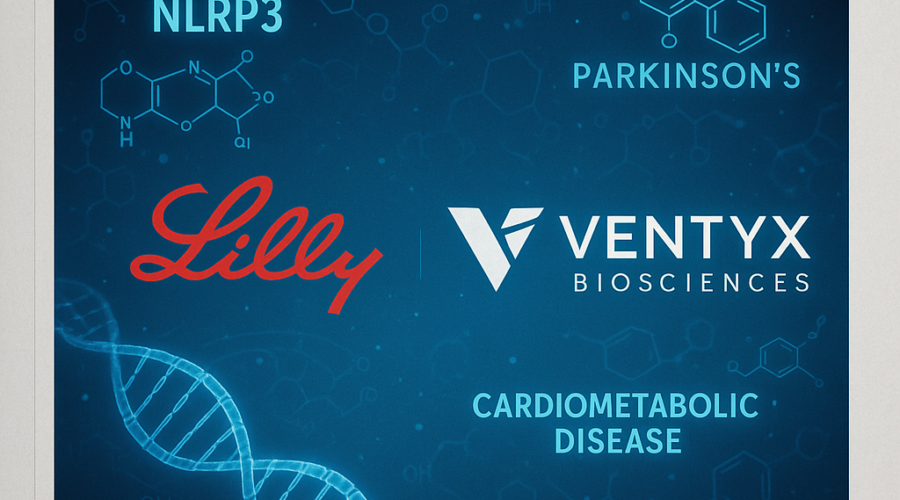
Eli Lilly’s $1.2 billion all-cash acquisition of Ventyx Biosciences is a targeted move to secure a differentiated, oral NLRP3 franchise and expand its footprint across cardiometabolic, neurodegenerative and autoimmune diseases in the wake of promising phase 2 readouts in Parkinson’s and cardiovascular risk reduction.[1][4][8]
Most “AI for Diligence” tools are lying to you. The truth is, they are just ChatGPT wrappers. Experience what real AI for Diligence looks like, built like Claude Code, but for M&A/ PE Diligence:
💼 When Claude Code Marries Due Diligence!
Deal Overview and Financial Terms
Lilly has entered a definitive agreement to acquire Ventyx Biosciences, a San Diego-based clinical-stage biotech focused on oral therapies for inflammation-mediated diseases.[1][3][4]
- Headline value: approximately $1.2 billion equity value.[3][5][8]
- Consideration: all-cash, $14.00 per share for all outstanding common stock.[3][5][8]
- Premium: about a 62% premium to Ventyx’s 30-day volume-weighted average price as of January 5, 2026, and more than 2x its last close at $7.50 before the announcement.[5][8]
- Financing: no financing condition; Lilly is using balance-sheet cash.[5][11]
- Timeline: closing expected in the first half of 2026, subject to Ventyx stockholder approval and customary regulatory clearances.[1][4][5][11]
- Governance: both boards have approved; key shareholders (including New Science Ventures and insiders) representing ~10% of shares have entered voting and support agreements.[1][5]
| Item | Detail |
|---|---|
| Buyer | Eli Lilly and Company |
| Target | Ventyx Biosciences, Inc. |
| Enterprise / Equity Value | ~$1.2 billion (all-equity, cash deal) |
| Offer Price | $14.00 per share, cash |
| Premium | ~62% to 30-day VWAP; >100% to last close |
| Expected Close | H1 2026, subject to approvals |
| Key Assets | NLRP3 inhibitors VTX3232, VTX2735; IBD assets tamuzimod, VTX958 |
Strategic Rationale: Filling Lilly’s NLRP3 “Blind Spot”
Lilly has been heavily weighted toward incretin-based obesity and diabetes therapies, notably tirzepatide (Mounjaro/Zepbound) and pipeline oral obesity drug orforglipron, with revenue expected to more than double in coming years on the back of obesity growth.[7] This acquisition is explicitly about portfolio diversification and de-risking that concentration.
Prior to Ventyx, NLRP3 inflammasome modulation was a “blind spot” in Lilly’s pipeline, despite mounting evidence that chronic residual inflammation is a shared driver of multiple cardiometabolic, neurodegenerative and autoimmune conditions.[1][7][8]
Strategic objectives for Lilly include:
- Secure a best-in-class oral NLRP3 platform with both CNS-penetrant and peripherally restricted assets, covering Parkinson’s, recurrent pericarditis and broader cardiometabolic risk.[4][6][7][8]
- Extend leadership in cardiometabolic health beyond obesity/GLP‑1 into inflammation-driven cardiovascular risk reduction, a “next wave” after LDL and GLP‑1.[2][4][7][8]
- Build a neuroinflammation franchise anchored in Parkinson’s disease, with optionality for other neurodegenerative indications.[2][4][6][8]
- Enhance autoimmune and IBD portfolio with oral S1P1R and TYK2 assets that can ultimately sit alongside or compete with injectable biologics.[2][4][5][7][8]
Lilly’s chief scientific and product officer, Daniel Skovronsky, underscores the thesis: inflammation is now recognized as a key driver of many chronic diseases, and Ventyx’s pipeline addresses “a critical need for better treatment options” in cardiometabolic health, neurodegeneration and autoimmunity.[1][4][5][8]
Ventyx Pipeline: Core Assets Lilly Is Buying
1. VTX3232 – CNS‑Penetrant NLRP3 Inhibitor (Parkinson’s & CV Risk)
VTX3232 is Ventyx’s lead asset and the primary value driver of the deal.[2][4][6][7][8]
- Modality: small-molecule, brain-penetrant NLRP3 inhibitor designed for chronic oral dosing.[2][4][6][7]
- Development stage: Phase 2 in Parkinson’s disease and in patients with obesity and elevated cardiovascular risk.[2][4][7][8]
- Parkinson’s data: a phase 2 readout in June showed biomarker evidence of NLRP3 inhibition and improvements in both motor and non-motor symptoms in Parkinson’s patients.[2][4][8]
- Cardiovascular / stroke risk data: an October phase 2 study in obese patients with cardiovascular risk factors showed nearly 80% reduction in a biomarker linked to stroke and cardiovascular events within one week of treatment.[2][4][7][8]
- Combination with semaglutide: the CV trial evaluated VTX3232 as monotherapy and as add-on to Novo Nordisk’s GLP‑1 agonist semaglutide (Wegovy); while VTX3232 did not drive weight loss, it did provide incremental biomarker reduction, highlighting a potential positioning as an “anti-inflammatory add-on” to GLP‑1s rather than an obesity drug itself.[4][7][8]
For C‑suites and deal teams focused on “inflammation as a service line,” VTX3232 offers a credible anchor asset for future combination strategies with GLP‑1/GLP‑1‑GIP drugs in cardiometabolic disease—an emerging theme across big pharma business development.
2. VTX2735 – Peripheral NLRP3 Inhibitor (Recurrent Pericarditis)
- Profile: peripherally restricted NLRP3 inhibitor, intentionally non-CNS penetrant.[4][7]
- Indication: recurrent pericarditis (a painful chronic heart inflammation with meaningful unmet need and limited approved therapies).[4][7][8]
- Status: Phase 2 clinical development.[2][4][7][8]
This asset provides Lilly an entry into a focused, high-value rare cardiovascular inflammation indication with potential to expand to other peripheral inflammatory conditions.
3. Tamuzimod – S1P1R Modulator (Ulcerative Colitis)
- Mechanism: oral S1P1 receptor modulator, a class validated by drugs like ozanimod.[4][5][7]
- Indication: ulcerative colitis; Phase 2 completed.[4][7]
While the NLRP3 franchise drives the headline, tamuzimod adds optionality in the competitive but growing market for oral IBD therapies, where payers increasingly favor effective orals over high-cost injectables for earlier lines of therapy.
4. VTX958 – Allosteric TYK2 Inhibitor (Crohn’s Disease)
- Mechanism: allosteric TYK2 inhibitor, a mechanism validated by Bristol Myers Squibb’s deucravacitinib in psoriasis.[2][4][7][8]
- Indication: Crohn’s disease; Phase 2 development.[4][7]
Together with tamuzimod, VTX958 positions Lilly with a multi‑mechanism, oral immune-modulation toolkit in inflammatory bowel disease, supporting long‑tail growth and multi-asset autoimmune M&A strategies.
Scientific Thesis: NLRP3 at the Intersection of Multiple Chronic Diseases
Ventyx’s strategy centers on the NLRP3 inflammasome, a protein complex controlling IL‑1β and IL‑18 signaling that sits upstream of multiple inflammatory pathways.[1][2][4][6]
- Cross-disease relevance: NLRP3 is implicated in neuroinflammatory disease (e.g., Parkinson’s), cardiometabolic disease (atherosclerosis, obesity-related inflammation, NAFLD), and autoimmune/inflammatory disorders.[1][2][4][6][8]
- No approved NLRP3 drugs: as of now, there are no FDA‑approved NLRP3 inhibitors, making this a high-risk, high-upside first/fast follower category.[4]
- “Residual” inflammation: Ventyx and Lilly are explicitly targeting residual and chronic inflammation that persists even when traditional risk factors (e.g., LDL, blood pressure, glycemia) are controlled.[1][5]
Ventyx’s CEO, Raju Mohan, describes its NLRP3 portfolio as “class-leading” and focused on modulating residual and chronic inflammation across neuroinflammatory, cardiometabolic and cardiovascular diseases—an articulation very much aligned with emerging cardio-neuro-metabolic convergence strategies at large pharmas.[1][5]
Trigger for the Deal: Parkinson’s and Cardiovascular Readouts
Ventyx’s public goal was to use its 2025 phase 2 data to secure a big pharma partner.[8]
- Sanofi option: Sanofi had invested $27 million in 2024 and secured a right of first negotiation on VTX3232 for Parkinson’s and cardiovascular indications.[2][4][8]
- First Parkinson’s readout (June): showed biomarker drops indicative of NLRP3 inhibition and clinical improvements in motor and non‑motor symptoms in Parkinson’s disease.[2][4][8]
- Second cardiovascular readout (October): nearly 80% reduction in a biomarker linked to stroke and CV events within a week in high‑risk, obese patients.[2][4][7][8]
These back‑to‑back positive readouts intensified strategic interest. Ventyx signaled it did not want to wait for the formal start of Sanofi’s negotiation right after the second readout and instead sought a broader exit, leading to Lilly’s winning $1.2 billion bid to buy the whole company.[2][4][8]
Market and Competitive Context: NLRP3 as a Hot Dealmaking Theme
The transaction underscores growing big pharma interest in the NLRP3 inhibitor class as a next-generation anti-inflammatory modality.
- Analysts at William Blair highlight that other players including Novartis, Neumora, Neurocrine, BioAge, Nodthera and Monte Rosa are also active in the NLRP3 space.[2][7][8]
- This deal provides “read-through” for valuations and potential M&A interest in these peers, especially those with CNS‑penetrant NLRP3 candidates.[
Sources
https://pmlive.com/pharma_news/lilly-announces-acquisition-of-ventyx-biosciences-for-around-1-2bn/, https://www.noahai.co/discover/article/14354, https://www.ropesgray.com/en/news-and-events/news/2026/01/lilly-to-acquire-ventyx-biosciences, https://medcitynews.com/2026/01/eli-lilly-ventyx-biosciences-acquisition-nlrp3-inhibitor-inflammation-vtyx-lly/, https://www.pharmexec.com/view/lilly-enters-billion-definitive-agreement-acquire-ventyx-biosciences, https://www.bioworld.com/articles/727759-ventyxs-nlrp3-inhibitors-best-in-class-lilly-offers-12b, https://www.biospace.com/deals/lilly-bulks-up-inflammatory-pipeline-with-1-2b-ventyx-buy-indupro-cancer-pact, https://www.fiercebiotech.com/biotech/lilly-buys-inflammation-biotech-venytx-12b-wake-parkinsons-cardiovascular-readouts, https://www.wsgr.com/en/insights/wilson-sonsini-advises-ventyx-biosciences-on-dollar12-billion-acquisition-by-eli-lilly.html, https://www.gibsondunn.com/gibson-dunn-advises-jefferies-llc-on-ventyx-biosciences-approximately-1-2-billion-sale-to-eli-lilly-and-company/, https://www.contractpharma.com/breaking-news/lilly-agrees-to-acquire-ventyx-biosciences/
Related Posts
AbbVie Solidifies Immunology Dominance with $10.9 Billion Acquisition of Apogee Therapeutics
AbbVie (NYSE: ABBV) today announced the successful completion of its acquisition of Apogee Therapeutics (NASDAQ: APGE), an all-cash transaction valued at approximately $10.9 billion. Under the terms...
Lilly Adds to Immune Drug Pipeline with $2.9B Merida Buyout
In a strategic maneuver to solidify its presence beyond the metabolic health sector, Eli Lilly and Company (NYSE: LLY) announced on August 31, 2026, a definitive agreement to acquire Merida...
Curium Strikes $8 Billion Mega-Deal for Lantheus to Forge Global Radiopharmaceutical Powerhouse
In a definitive move to dominate the rapidly expanding nuclear medicine landscape, Curium US Holdings has entered into a definitive agreement to acquire Lantheus Holdings, Inc. (NASDAQ: LNTH) for a...
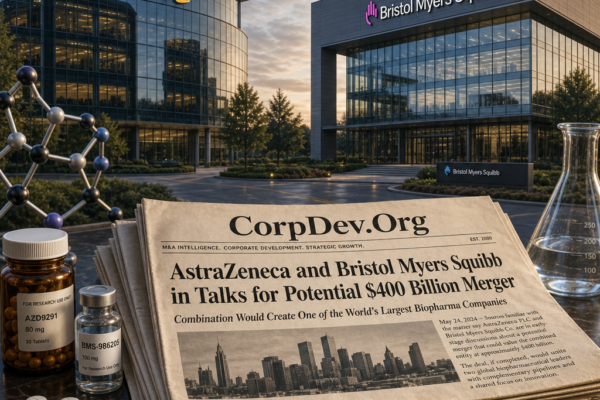
AstraZeneca Shares Tumble on Reports of $400 Billion Bristol Myers Squibb Merger Talks
AstraZeneca PLC (LON: AZN) shares fell as much as 7% in London trading on Monday, August 3, 2026, following reports that the British pharmaceutical giant has held preliminary discussions regarding a...