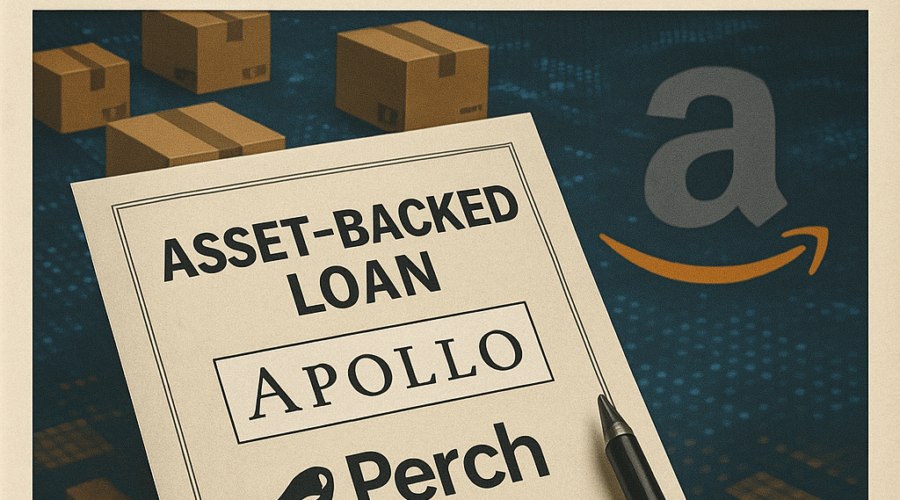
Apollo Global Management recorded a loss on a portion of a $170 million asset-backed loan to Amazon aggregator Perch, writing down the exposure to zero. The financing was extended in 2021 to fund Perch’s roll-up strategy, which ultimately failed amid rising interest rates and softening consumer demand. The collapse of Perch, once valued at $1.5 billion, mirrors the downfall of peers like Thrasio, which filed for bankruptcy. This loss highlights the significant collateral risk in asset-backed lending to volatile e-commerce platforms, forcing private credit funds to reassess underwriting standards for consumer-facing roll-ups.
- Deal Name
- Apollo Asset-Backed Loan to Perch
- Parties
- Apollo Global Management (Lender), Perch (Borrower)
- Financing Type
- Asset-backed loan
- Original Value
- $170 million
- Write-Down
- A material portion of the exposure was written down to zero
- Failure Mode
- Loan impairment due to collateral value erosion
- Root Cause
- Inventory obsolescence, Amazon policy shifts, rising interest rates, and softening consumer demand
- Borrower’s Peak Valuation
- $1.5 billion
- Borrower’s Equity Backers
- SoftBank, Tiger Global
- Sector
- E-commerce Aggregation
Apollo Global Management Inc. recorded a loss on a portion of a $170 million asset-backed financing extended to Perch, an Amazon brand aggregator, after that exposure was written down to zero.[1][2][3] The wipeout marks a rare setback for the private credit giant amid rising scrutiny of financing risks in the volatile e-commerce aggregation sector.
Most “AI for Diligence” tools are lying to you. The truth is, they are just ChatGPT wrappers. Experience what real AI for Diligence looks like, built like Claude Code, but for M&A/ PE Diligence:
💼 When Claude Code Marries Due Diligence!
Deal Background and Financial Hit
Perch, which specialized in acquiring and scaling Amazon third-party seller brands, secured the $170 million asset-backed loan from Apollo to fund its roll-up strategy during the peak of e-commerce aggregator hype in 2021.[1] Apollo’s involvement reflected broader private equity trends in providing asset-based lending to high-growth consumer platforms, leveraging inventory and receivables as collateral.
The full loan amount has not been disclosed as entirely lost, but a material portion was impaired to zero value, forcing Apollo to recognize an immediate write-down.[2][3] This loss highlights vulnerabilities in asset-backed financing for aggregators, where rapid inventory obsolescence and Amazon policy shifts eroded collateral values.
Perch’s Downfall and Industry Context
Perch raised over $900 million in equity from investors including SoftBank and Tiger Global before peaking at a $1.5 billion valuation. Post-2022 market reset, the firm struggled with rising interest rates, softening consumer demand, and increased competition from Amazon’s direct brand initiatives. Aggregators like Perch faced **private equity exit strategies in SaaS and e-commerce** challenges, with many unable to achieve profitable scale amid **cross-border M&A trends 2025** favoring established players.
Similar fates hit peers: Thrasio filed for bankruptcy in 2023 after defaulting on $1.5 billion in debt, while Razor Group pivoted to European markets. Bain & Company analysis notes that 60% of top aggregators from 2021 have either folded or been restructured, underscoring **M&A valuation shifts in consumer tech** driven by higher discount rates and operational inefficiencies.
| Company | Peak Valuation | Outcome | Debt Exposure |
|---|---|---|---|
| Perch | $1.5B | Financing impaired; ops wound down | $170M (Apollo) |
| Thrasio | $10B | Chapter 11 bankruptcy | $1.5B |
| Razor Group | $1B+ | Pivot to Europe; partial sale | $500M+ |
Implications for Private Credit and Apollo
Apollo, managing $700 billion in assets as of late 2025, has expanded aggressively into private credit, originating $50 billion annually per Goldman Sachs estimates. This Perch loss, though isolated, signals caution in **asset-backed lending risks for e-commerce roll-ups**. McKinsey reports warn of 20-30% default rates in consumer-facing asset-based loans originated during low-rate eras, as collateral liquidation values plummet in downturns.
Broader **private equity trends 2026** show lenders tightening covenants and favoring senior secured facilities. Kirkland & Ellis partners note increased due diligence on platform economics, with sponsors like KKR emphasizing cash flow predictability over growth multiples in **strategic M&A in digital marketplaces**.
- Apollo’s credit arm remains resilient, with non-accrual rates under 2% versus industry averages of 5% (per BCG data).
- Regulatory risks rise: SEC scrutiny of private credit disclosures could impact fee income.
- Sector shift: Investors pivot to B2B SaaS aggregators with recurring revenue, mirroring successful exits like Vista Equity’s $10B playbook.
For C-level executives eyeing private credit allocations, this episode underscores the need for diversified exposure and robust collateral stress-testing amid **e-commerce M&A regulatory risks**.
Sources
https://www.thestar.com.my/authors?q=Eugene++Mahalingam, https://www.marketscreener.com/analysis/interviews/, https://www.marketscreener.com/videos/must-watch/