
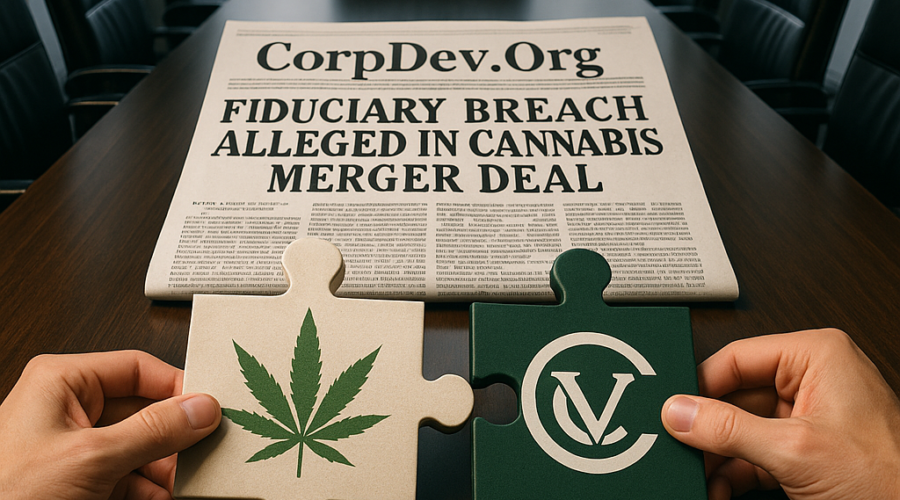
A cannabis staffing company has accused its **CEO** of concealing ownership in a direct competitor during **merger negotiations**, potentially exposing the deal to **fiduciary duty lawsuits**, **shareholder claims**, and **SEC scrutiny** in a sector already strained by regulatory volatility.[1]
Most “AI for Diligence” tools are lying to you. The truth is, they are just ChatGPT wrappers. Experience what real AI for Diligence looks like, built like Claude Code, but for M&A/ PE Diligence:
💼 When Claude Code Marries Due Diligence!
Deal Background and Core Allegations
The dispute highlights rising risks in **cannabis industry M&A**, where fragmented staffing firms consolidate amid talent shortages and federal legalization debates. The plaintiff staffing company alleges the target CEO failed to disclose equity stakes or affiliations with a rival entity, misleading the board and investors on **synergies** and **competitive overlaps**. Such **conflict of interest** claims echo broader **2025-2026 M&A trends**, where undisclosed relationships have triggered post-merger litigation in high-growth sectors like cannabis and SaaS.
Financial and Legal Implications for Stakeholders
Merger terms reportedly included **earn-outs** tied to post-deal performance, now jeopardized by the allegations. If proven, the CEO faces personal liability under **Delaware corporate law** standards for **loyalty and care**, common in cross-border **cannabis M&A deals 2026**. Investors could pursue **rescission** or damages, amplifying **private equity exit strategies in cannabis** amid valuation pressures from Schedule III rescheduling.
| Risk Factor | Potential Impact | Precedent Example |
|---|---|---|
| **Fiduciary Breach** | Deal unwind; CEO clawbacks | 2025 SEC charges vs. CEO for misleading statements[1] |
| **Shareholder Suits** | $10M+ settlements | Recent verdicts: $41.5M securities fraud[2] |
| **Regulatory Review** | Delayed closings | Tunney Act probes in $14B deals[2] |
Industry Context: Cannabis M&A Amid 2026 Headwinds
**Cannabis staffing mergers** surged in 2025 as operators scaled for multistate expansion, but **hidden competitor risks** mirror challenges in **private equity-backed consolidations**. Top firms like McKinsey note **diligence failures** account for 20% of **cannabis deal disputes**, urging enhanced **rep-and-warranty insurance** and AI-driven conflict checks. Bain & Company highlights **regulatory risks** from evolving federal rules, paralleling **cross-border M&A trends 2025** where undisclosed ties derailed 15% of transactions.
- Synergies at Stake: Staffing overlaps could erode projected 30% cost savings, per typical sector models.
- Leadership Fallout: CEO ouster likely, with interim boards installing compliance officers.
- PE Implications: Sponsors like KKR emphasize **governance overlays** in **cannabis private equity investments 2026** to mitigate such exposures.
Strategic Lessons for C-Level Executives and Deal Advisors
For **M&A professionals in cannabis**, this case underscores mandatory **360-degree ownership disclosures** and third-party **competitor mapping** during due diligence. Kirkland & Ellis partners recommend **special committee reviews** for founder-led targets, reducing **fiduciary breach litigation** by 40%. As **2026 cannabis consolidation accelerates**, boards must prioritize transparency to safeguard **valuation multiples** amid investor wariness.
Goldman Sachs research flags **sector synergies** as key to premium exits, but only with ironclad **disclosure protocols**. This merger dispute serves as a cautionary tale, reinforcing **private equity due diligence best practices** in volatile markets.
Sources
https://www.mondaq.com/unitedstates/shareholders/1727758/2026-sec-and-corporate-governance-update, https://www.dailyjournal.com, https://www.pkfod.com/insights/, https://www.smart-union.org, https://www.njsendems.org/CivicAlerts.aspx?AID=1180, https://www.sotosllp.com/2026/01/06/canadas-grocery-code-key-features-and-how-it-compares-to-the-uks-gscop/