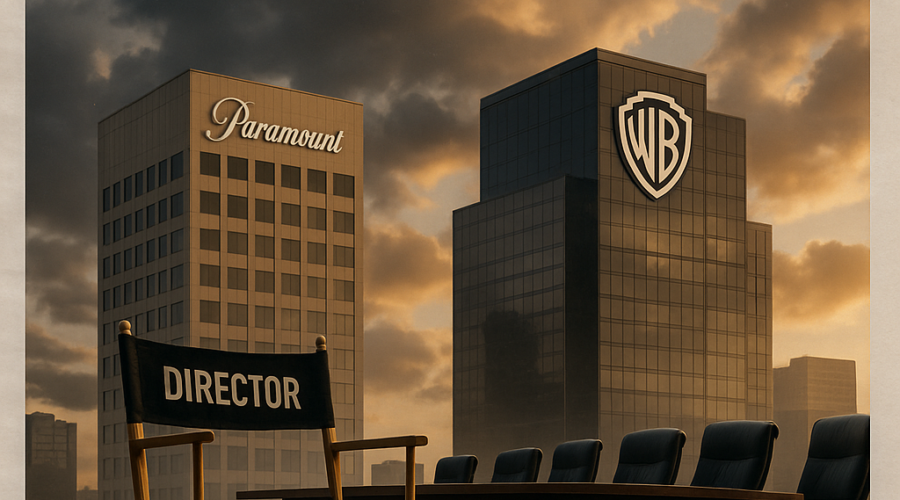
On April 13, 2026, a coalition of more than 1,000 film and television professionals, including industry luminaries like J.J. Abrams, David Fincher, and Denis Villeneuve, issued an open letter formally opposing Paramount Skydance’s pending $110.9 billion acquisition of Warner Bros. Discovery (WBD). This creative resistance emerges as the transaction enters a critical regulatory window, pitting the financial necessity of scale against the cultural preservation of the American studio system.
Most “AI for Diligence” tools are lying to you. The truth is, they are just ChatGPT wrappers. Experience what real AI for Diligence looks like, built like Claude Code, but for M&A/ PE Diligence:
💼 When Claude Code Marries Due Diligence!
The Rationale for Resistance: A Fractured Creative Ecosystem
The open letter, which features signatures from over 75 Academy Award winners, characterizes the merger as a “catastrophic” move for an industry already reeling from years of aggressive media industry consolidation. The signatories argue that reducing the number of major U.S. film studios—potentially leaving only four dominant entities—will inevitably lead to “fewer opportunities for creators, fewer jobs across the production ecosystem, and less choice for audiences.”
- Monopsony Risks: Creatives fear a combined Paramount-Warner entity will exert undue power over the labor market, depressing wages and eliminating competitive bidding for projects.
- Content Homogenization: The letter cites the erosion of the “mid-budget film” and independent distribution as direct consequences of past mega-mergers, such as the 2022 formation of Warner Bros. Discovery itself.
- Regulatory Call to Action: The group has signaled support for California Attorney General Rob Bonta and other state regulators to investigate and block the transaction on antitrust grounds.
Financial Framework: The $111 Billion “Scale Play”
From a Wall Street perspective, the merger is framed not as a creative luxury but as a survival mechanism. Under the leadership of David Ellison, Paramount Skydance is betting that the combined intellectual property (IP) of two iconic libraries—ranging from Star Trek and Mission: Impossible to Harry Potter and Game of Thrones—is the only way to achieve the scale necessary to challenge Netflix and Disney on a global stage.
Deal at a Glance: Paramount-WBD Merger Terms
| Metric | Detail |
|---|---|
| Total Enterprise Value | $110.9 Billion |
| Offer Price | $31.00 per share (All-cash) |
| Targeted Synergies | $6.0 Billion+ (Run-rate) |
| Pro-Forma Debt Load | ~$85 Billion |
| Leverage Ratio | ~6.0x 2026E EBITDA |
Institutional advisors, including Goldman Sachs and KKR, have closely scrutinized the deal’s structure, which includes a significant equity backstop from the Ellison family and RedBird Capital. However, the financial burden is substantial. The combined entity faces a staggering debt pile, placing the company in territory often reserved for leveraged buyouts. This has prompted S&P Global to place Paramount on credit watch, citing the risks of entertainment M&A valuation shifts and the high execution risk of achieving $6 billion in synergies.
Strategic Implications and Labor Concerns
The “synergies” touted by management often translate to “layoffs” in the ears of the creative community. To justify the $111 billion price tag, Paramount must aggressively streamline operations, likely leading to the consolidation of CBS Sports with TNT Sports and the potential sale of non-core real estate assets. For C-suite executives, the primary objective is streaming profitability strategies—migrating to a single technology stack and reducing the “churn” that has plagued individual platforms like Max and Paramount+.
The “Zaslav Factor” and Exit Strategies
The deal also highlights a significant shift in leadership. While David Ellison is positioned as the architect of the “next-generation media company,” current WBD CEO David Zaslav is set for a massive departure. Reports suggest a “golden parachute” or equity payout exceeding $500 million for Zaslav, a figure that has further fueled the anger of the creative guilds. This underscores the private equity exit strategies often seen in the sector, where executive payouts are secured even as the broader workforce faces contraction.
The Road Ahead: Antitrust and Cultural Impact
The merger faces a daunting regulatory environment. Although the current administration has occasionally signaled a more permissive approach toward remedies like divestitures, the DOJ and FTC have recently updated their guidelines to address “labor-market collaborations” and “serial acquisitions.” The open letter from Hollywood’s elite serves as a political headwind that regulators cannot easily ignore.
For dealmaking professionals, the Paramount-WBD saga is a case study in the tension between financial scale and creative autonomy. If the deal proceeds, it may represent the final chapter in the consolidation of the “Big Six” Hollywood studios into a “Big Three” or “Big Four,” fundamentally altering cross-border M&A trends in 2026 and the future of global content production.