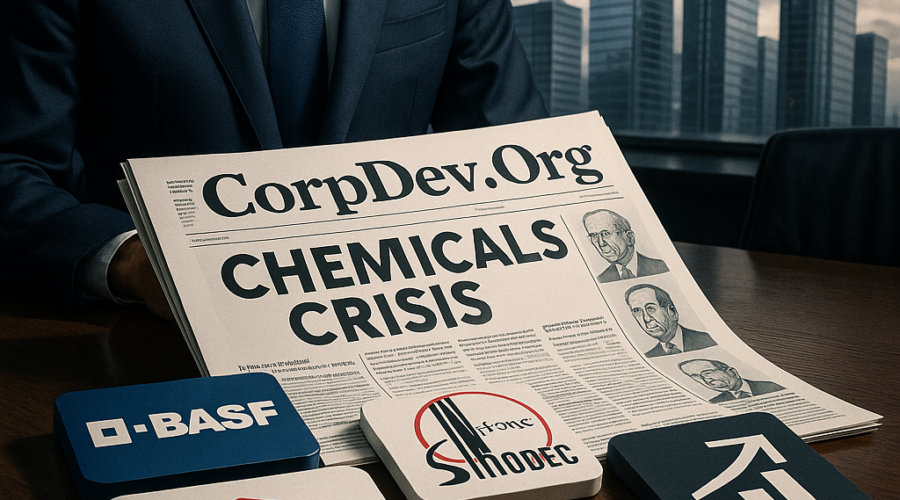
SK Capital Partners' 2019-vintage chemicals fund reported a net IRR of -0.35% as of late 2025, with portfolio companies like Venator Materials filing for bankruptcy and Ascend Performance Materials being transferred to creditors. This distress is driven by a structural crisis combining high European energy costs, Chinese overcapacity, and new regulations like the Carbon Border Adjustment Mechanism (CBAM), which priced its first certificates at €75.36 per tonne. The crisis marks the breakdown of the traditional 'buy-and-leverage' private equity model for commodity chemicals, proving that geopolitical and energy security risks can now completely override financial engineering in industrial investment theses.
- Primary Firm Profiled
- SK Capital Partners
- Distressed Fund
- 2019-vintage chemicals-heavy fund
- Fund Performance
- -0.35% Net IRR (as of late 2025)
- Peer Group Median IRR
- 13.9%
- Failure Mode
- Structural sector crisis rendering 'buy-and-build' thesis ineffective.
- Root Causes
- High European energy costs, Chinese capacity glut, and EU regulatory costs (CBAM).
- Distressed Asset 1
- Venator Materials (Filed for Chapter 11 bankruptcy in 2023)
- Distressed Asset 2
- Ascend Performance Materials (Control transferred to creditors in 2025)
- Distressed Asset 3
- SI Group (Handed over to lenders)
- Broader Market Signal
- Advent International delayed its 2026 purchase option for a 40.94% stake in Envalior from LANXESS.
The global chemicals sector, long a cornerstone of industrial private equity, is grappling with a structural “once-in-a-generation” crisis that has blindsided even the most seasoned specialist investors. As of mid-2026, a toxic combination of high energy costs in Europe, persistent overcapacity in China, and a sharp downturn in key end-markets like automotive and construction has pushed several high-profile private equity holdings into financial distress.
Most “AI for Diligence” tools are lying to you. The truth is, they are just ChatGPT wrappers. Experience what real AI for Diligence looks like, built like Claude Code, but for M&A/ PE Diligence:
💼 When Claude Code Marries Due Diligence!
The fallout is most visible at SK Capital Partners, a $10 billion firm renowned for its sector-specific expertise. Recent filings and market reports indicate that a wave of the firm’s legacy holdings have entered restructuring or been handed over to creditors. This shift highlights a broader industry trend: the breakdown of the traditional “buy-and-build” thesis for commodity and specialty chemicals in a world of fragmented energy pricing and geopolitical volatility.
The Structural Squeeze: Why This Crisis is Different
Unlike previous cyclical downturns, the current malaise in the chemicals industry is being categorized by analysts at firms like Oliver Wyman and Kearney as structural rather than cyclical. Three primary factors are driving this shift:
- The Energy Arbitrage Collapse: European producers, historically reliant on Russian gas, now face energy costs that remain three to four times higher than those in the U.S. and Asia. This has rendered energy-intensive manufacturing in clusters like Rotterdam and Ludwigshafen fundamentally uncompetitive.
- The China Capacity Glut: Chinese producers have prioritized market share over profitability, flooding global markets with cheap commodity chemicals (olefins, polymers, and intermediates) at prices that Western plants cannot match.
- Regulatory Headwinds: The European Union’s tightening emissions trading rules and the rollout of the Carbon Border Adjustment Mechanism (CBAM)—which saw its first official certificate price set at €75.36 per tonne in Q1 2026—have added layers of cost that private equity-backed firms, often heavily levered, struggle to absorb.
Case Study: SK Capital’s Portfolio Under Pressure
The distress within SK Capital’s portfolio serves as a bellwether for the sector. While the firm has seen success in recent healthcare-focused vehicles, its 2019-vintage chemicals-heavy fund reported a net Internal Rate of Return (IRR) of -0.35% as of late 2025—sharply underperforming the 13.9% median for its peer group.
| Portfolio Company | Status / Development (May 2026) | Sub-Sector |
|---|---|---|
| Archroma | Secured last-minute extension on $1B debt; terms sweetened for creditors. | Textile & Paper Chemicals |
| Venator Materials | Filed for Chapter 11 bankruptcy (2023); equity interest largely wiped out. | Titanium Dioxide & Pigments |
| Ascend Performance Materials | Control transferred to creditors in 2025 amid nylon market slump. | Nylon / Polyamide 6.6 |
| SI Group | Handed over to lenders following sustained margin compression. | Performance Additives |
Market Sentiment and M&A Outlook
The distress is not isolated to SK Capital. Advent International recently opted not to proceed with its 2026 purchase option for a 40.94% stake in Envalior from LANXESS, citing unfavorable financing conditions and the need to adjust the valuation safety margin. This delay underscores the caution permeating the 2026 chemicals M&A landscape.
Investment professionals are now pivoting toward private equity exit strategies in SaaS and healthcare to offset industrial losses, as the “technical ground” for manufacturing deals becomes increasingly treacherous. For those remaining in chemicals, the focus has shifted from expansionary M&A to cross-border M&A trends 2026 that prioritize “operational alpha”—improving manufacturing productivity and procurement efficiency over simple multiple expansion.
The Path Forward: Carve-outs and Specialization
Despite the gloom, strategic realignment is creating new opportunities. Majors like BASF and Bayer continue to shed non-core assets to simplify corporate structures. For private equity firms, the remaining value lies in high-margin specialties linked to semiconductor manufacturing, agriculture, and green technology.
However, the window for simple “buy-and-leverage” strategies in basic chemicals appears closed. As noted by industry analysts, unless there is a dramatic correction in European energy policy or a stabilization of Chinese output, the sector’s structural decline will continue to test the limits of private equity’s ability to “fix and flip” industrial assets in a volatile global economy.
Executive Summary: The chemicals crisis of 2026 has exposed the risks of sector-specific concentration in private equity. Dealmakers must now navigate a landscape where energy security and geopolitical alignment are as critical to the investment thesis as EBITDA multiples.