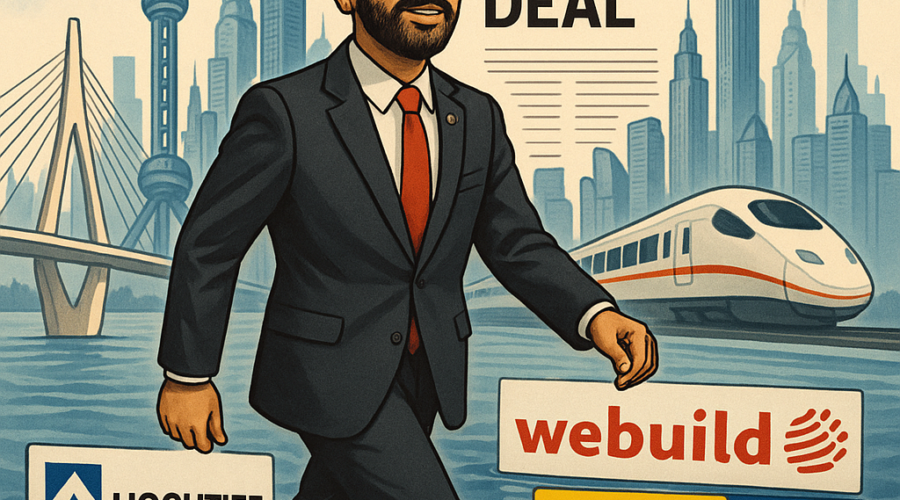
New York City Mayor Zohran Mamdani is intervening in the $33.4 billion take-private of The AES Corporation by a consortium including GIP, EQT, and the Qatar Investment Authority. Citing the city's 2025 Fair Work Act, Mamdani's office has issued a "Notice of Municipal Interest" demanding a 40% local labor mandate and a "Social Equity Dividend" for related projects. This move targets the involvement of foreign sovereign wealth funds in critical energy and data center infrastructure. Mamdani's "municipal protectionism" establishes a new "Triple-Tier Regulatory" environment (Federal, State, Municipal), forcing global dealmakers to price in local political risk, now termed the "Mamdani Discount," in major urban centers.
- Regulator
- New York City Mayor's Office
- Jurisdiction
- New York City
- Regulation Name
- Fair Work Act of 2025
- Affected Deal
- GIP-led take-private of The AES Corporation
- Deal Value
- $33.4 Billion
- Affected Parties
- GIP (BlackRock), EQT Infrastructure, Qatar Investment Authority (QIA)
- Stated Rationale
- Concerns over foreign sovereign wealth funds in critical local energy transitions.
- Key Provision Invoked
- 40% local labor mandate and a "Social Equity Dividend"
- Specific Demand
- 30% Minority Public Stake or $1.2B "Community Resilience Fund"
- Market Impact
- Creation of a "Mamdani Discount"; 2.4% dip in shares of NY-linked infrastructure firms
- Broader Implication
- Establishes a "Triple-Tier Regulatory" environment (Federal, State, Municipal)
NEW YORK — In a move that has sent shockwaves through the corridors of Global Infrastructure Partners (GIP) and BlackRock, New York City Mayor Zohran Mamdani is leveraging municipal regulatory powers to intervene in the $33.4 billion acquisition of The AES Corporation (NYSE: AES). The deal, a massive take-private led by a consortium including GIP, EQT Infrastructure, and the Qatar Investment Authority (QIA), has become the first major test of Mamdani’s “New New York” economic doctrine on the international stage.
Most “AI for Diligence” tools are lying to you. The truth is, they are just ChatGPT wrappers. Experience what real AI for Diligence looks like, built like Claude Code, but for M&A/ PE Diligence:
💼 When Claude Code Marries Due Diligence!
Sources familiar with the matter tell the Journal that the Mayor’s office has issued a formal “Notice of Municipal Interest,” citing concerns over the involvement of foreign sovereign wealth funds in critical local energy transitions. While the deal primarily targets global renewable assets, its implications for New York’s power grid and nascent data center clusters have given the Mayor’s office a seat at the bargaining table that dealmakers did not anticipate.
The Leverage: Zoning and the 2025 Fair Work Act
Mamdani’s intervention centers on a strategy of “municipal protectionism,” a term gaining traction among deal advisors at firms like Kirkland & Ellis and Goldman Sachs. By invoking the Fair Work Act of 2025—a signature piece of legislation passed in his first 100 days—Mamdani is demanding that any infrastructure projects under the new ownership within city limits adhere to a 40% local labor mandate and provide a “Social Equity Dividend” to the city’s general fund.
“We will not allow the vital infrastructure of our city to be traded between global titans of capital without a clear, legally binding benefit for the working-class New Yorkers who power this city,” Mayor Mamdani said in a statement provided to the Journal. “Whether the capital comes from Midtown or the Middle East, it must follow New York’s rules on labor and sustainability.”
Deal at a Glance: The GIP-AES Take-Private
| Term | Details |
|---|---|
| Enterprise Value | $33.4 Billion |
| Lead Acquirers | GIP (BlackRock), EQT Infrastructure |
| Minority Partners | Qatar Investment Authority (QIA), CalPERS |
| Primary Rationale | Consolidation of AI-critical energy assets and data center infrastructure |
| Mamdani’s Demand | 30% Minority Public Stake or $1.2B “Community Resilience Fund” |
A New Era of Regulatory Friction
The intervention marks a departure from traditional cross-border M&A trends 2026, where federal oversight through the Committee on Foreign Investment in the United States (CFIUS) was the primary hurdle. According to McKinsey analysts, the rise of “interventionist city-states” like New York and London is creating a “Triple-Tier Regulatory” environment: Federal, State, and Municipal.
Investment professionals are watching closely to see if Mamdani’s move will trigger a “capital flight” or if the sheer gravity of New York’s market will force a compromise. “The risk is that we see a chilling effect on private equity exit strategies in SaaS and infrastructure if every local municipality begins demanding a seat at the M&A table,” noted a senior partner at Bain & Company. “However, Mamdani has identified a gap in the regulatory architecture—local land use—and he’s using it with surgical precision.”
Strategic Implications for Institutional Investors
- Sovereign Wealth Scrutiny: The inclusion of the Qatar Investment Authority has provided a populist hook for the Mayor to question the “democratic accountability” of the deal.
- Infrastructure as a Public Utility: Mamdani’s team argues that since AES manages critical data and energy paths, the transaction is subject to the city’s Public Asset Stewardship Ordinance.
- The “Citadel” Precedent: This move follows Mamdani’s high-profile clash with Ken Griffin over the 350 Park Avenue development, signaling that his administration views large-scale capital deployment as a negotiable public good.
Navigating the “Mamdani Discount”
Public markets have already begun pricing in what some are calling the “Mamdani Discount.” Shares of other New York-linked infrastructure firms dipped 2.4% following the news of the intervention. Deal advisors are now recommending that private equity and M&A legal teams include “Municipal Impact Assessments” in their initial due diligence phases to anticipate such hurdles.
The Mayor’s office has hinted that it might withdraw its objections if the consortium agrees to a 10-year rent-stability guarantee for any residential properties adjacent to the data centers being planned. This “linked development” strategy is a hallmark of Mamdani’s socialist-leaning platform, aiming to curb displacement driven by the “electrification of everything.”
The Path Ahead
As the long-stop date for the GIP-AES deal approaches in late 2026, all eyes are on the negotiating table at City Hall. If Mamdani successfully extracts concessions, it could redefine sovereign wealth fund regulatory risk 2026 and set a template for other progressive mayors in major global hubs. For dealmakers, the message is clear: The path to a global megadeal now runs directly through the Mayor’s office.
Sources
mckinsey.com