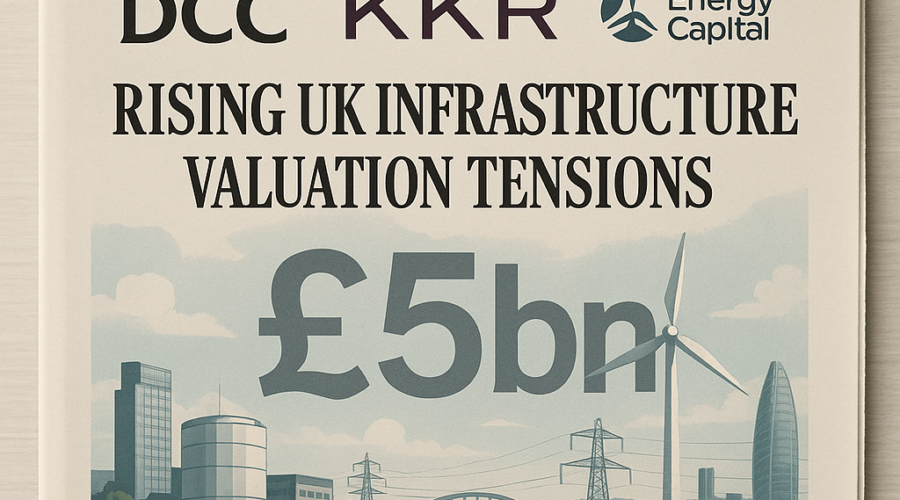
The board of FTSE 100 energy distributor DCC plc formally rejected a £4.95 billion ($6.2 billion) all-cash takeover proposal from a KKR and Energy Capital Partners consortium on April 30, 2026. The 5,800 pence-per-share offer was deemed to "fundamentally undervalue" the company, representing only a ~17% premium. This rebuff signals a widening valuation gap between private equity buyers and UK boards, especially for companies mid-transformation. The case demonstrates how an aggressive portfolio simplification strategy can create a powerful "embedded value" narrative, forcing potential acquirers to offer significantly higher premiums to secure board engagement.
- Target
- DCC plc
- Acquirer
- Consortium of KKR and Energy Capital Partners (ECP)
- Transaction Type
- Unsolicited Takeover Proposal (Rejected)
- Offer Price
- 5,800p per share (all-cash)
- Equity Value
- £4.95 Billion
- Enterprise Value (Est.)
- Approx. £6.3 Billion
- Premium
- ~17% over the undisturbed share price
- Rejection Date
- April 30, 2026
- Target's Advisors
- J.P. Morgan Cazenove, UBS
- Key Deadline
- June 10, 2026 ('Put up or shut up')
- Sector
- Energy Distribution & Infrastructure
The board of FTSE 100 energy distributor DCC plc has formally rejected a £4.95 billion ($6.2 billion) unsolicited takeover proposal from a consortium led by KKR and Energy Capital Partners (ECP). The rejection, announced on April 30, 2026, highlights a growing disconnect between private equity’s appetite for “undervalued” London-listed assets and the internal valuation benchmarks held by boards undergoing complex strategic pivots.
Most “AI for Diligence” tools are lying to you. The truth is, they are just ChatGPT wrappers. Experience what real AI for Diligence looks like, built like Claude Code, but for M&A/ PE Diligence:
💼 When Claude Code Marries Due Diligence!
The all-cash offer of 5,800 pence per share represented a modest premium over DCC’s trading price earlier in the week but was deemed by the board to “fundamentally undervalue” the company’s prospects. This decision comes as DCC nears the completion of a multi-year restructuring designed to transform the former conglomerate into a pure-play energy transition and infrastructure leader.
Strategic Context: The Conglomerate Discount and the Pivot to Energy
For several years, DCC has traded at what analysts frequently describe as a “conglomerate discount,” weighed down by its disparate interests in healthcare and technology. Under the leadership of CEO Donal Murphy, the firm launched a radical simplification strategy in late 2024. As of this rejection, DCC has already completed the sale of its healthcare division to Investindustrial for approximately £1 billion and divested its UK/Ireland IT distribution business to Aurelius.
The remaining core, DCC Energy, is the primary target for KKR and ECP. The consortium’s interest aligns with a broader private equity infrastructure investment 2026 trend, where firms are seeking stable, cash-generative distribution networks that play a critical role in the energy transition. DCC Energy operates across a spectrum ranging from liquid gas distribution to solar PV installation and electric vehicle (EV) charging infrastructure.
Deal Terms at a Glance
| Metric | Details |
|---|---|
| Offer Price | 5,800p per share (Cash) |
| Total Equity Value | £4.95 Billion |
| Enterprise Value (Est.) | Approx. £6.3 Billion |
| Premium | ~17% over the undisturbed share price |
| Financial Advisers | J.P. Morgan Cazenove, UBS |
Why the Rejection? Undervaluation and Strategic Timing
Institutional investors and deal advisors suggest that the timing of the bid was opportunistic. DCC is currently in the process of selling its remaining technology asset—a North American pro-AV specialist—which analysts value at upwards of £550 million. The board’s refusal to engage suggests they believe the market has yet to fully price in the simplified, higher-margin energy business that will emerge after the final divestment.
Insights from top-tier consultancies like Bain & Co. suggest that boards are increasingly resistant to “low-ball” public-to-private offers in the UK, citing improved macroeconomic stability and a rebound in FTSE 100 earnings as reasons to hold out for higher multiples. The 5,800p offer sits significantly below some analyst price targets of 7,000p+, signaling a significant gap in cross-border M&A valuation expectations.
Market Implications: A “Put Up or Shut Up” Deadline
Under the Irish Takeover Rules, the KKR and ECP consortium now faces a “put up or shut up” deadline of June 10, 2026. They must either announce a firm intention to make an offer or walk away for at least six months. This rejection places DCC in “play,” potentially attracting competing bids from other infrastructure-focused funds or strategic energy majors looking to consolidate European distribution networks.
Industry Trends and Similar Moves
- The London Exodus: The bid for DCC is the latest in a string of UK take-private trends 2026, following similar moves for firms like Intertek and earlier successes in the professional services and testing sectors.
- Infrastructure Synergy: KKR and ECP recently formed a $50 billion partnership focused on AI and energy infrastructure. DCC’s distribution networks could serve as a logistical backbone for localized energy solutions required by high-consumption data centers.
- Regulatory Scrutiny: Any successful bid will likely face review under the National Security and Investment Act (UK), given DCC’s role in national energy security and its extensive liquid fuel distribution network.
The Road Ahead for C-Suite Executives
For dealmakers, the DCC rejection serves as a case study in defensive M&A strategy. By aggressively simplifying the portfolio before a bid arrived, DCC’s management created a clear narrative of “embedded value” that made a standard premium look inadequate. If the consortium returns with an improved offer, it will likely need to exceed 6,300p to bring the board to the table, reflecting the scarcity value of high-quality, transition-ready energy infrastructure.
For now, DCC remains an independent entity, but with its shares trading at a significant discount to their historical highs, the pressure to deliver on its “double profits by 2030” promise has never been higher. Shareholders will be watching the June deadline closely to see if KKR’s dry powder is enough to bridge the valuation gap.
Sources
 ft.com
 gurufocus.com
 ernestchiang.com
 fitchratings.com
 irishtimes.com
 tipranks.com
 irishtimes.com
 stblaw.com
 ecpgp.com
 abfjournal.com