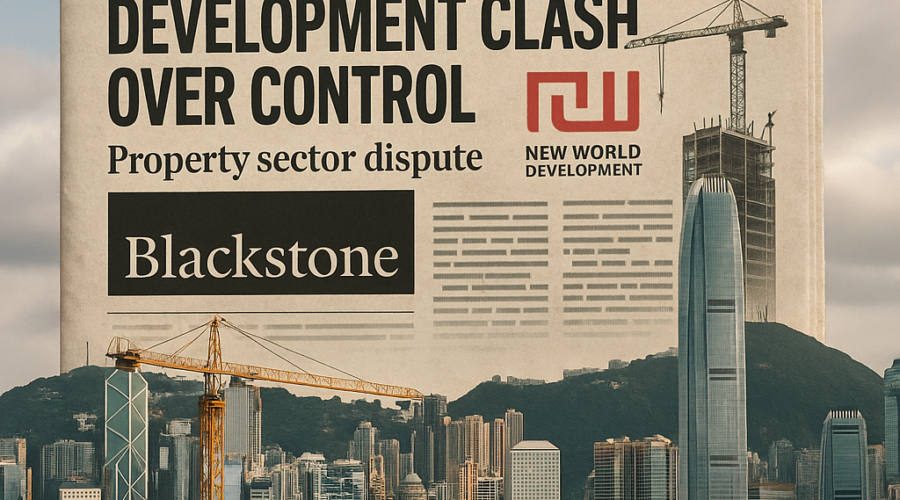
A proposed $4 billion recapitalization of Hong Kong developer New World Development by Blackstone has stalled over a fundamental dispute regarding control. The deal, which included a $2.5 billion injection from Blackstone, faltered as the controlling Cheng family resisted ceding significant influence despite the developer’s pressing liquidity needs, including net debt of HKD 122.7 billion. Project-specific liabilities, like guarantees for the 11 Skies development, further complicated negotiations. This impasse exemplifies the classic friction in Asian distressed deals, where the legacy interests of founding families often override the governance requirements of institutional capital needed for a turnaround.
- Deal Name
- Blackstone-New World Recapitalization
- Parties
- Blackstone, New World Development (Cheng Family)
- Transaction Type
- Recapitalization / Rescue Financing
- Proposed Value
- Approximately $4 billion
- Proposed Blackstone Injection
- Approximately $2.5 billion
- Proposed Family Contribution
- $1 billion to $1.5 billion
- Failure Mode
- Stalled negotiations / Impasse
- Root Cause
- Dispute over ceding control
- Target’s Net Debt
- Approx. HKD 122.7 Billion
- Target’s Recent Loss
- HKD 3.7 Billion
- Target’s Net Debt-to-Equity
- ~90.9%
- Key Project-Level Hurdle
- Guaranteed rental payments for the 11 Skies development
Negotiations for a substantial $4 billion recapitalization involving Blackstone and Hong Kong developer New World Development have reportedly reached an impasse, highlighting the persistent friction between global private equity capital and established family control in stressed real estate assets. The core issue centers on the Cheng family’s reluctance to cede significant influence despite the developer’s pressing need for liquidity following a severe property downturn across Hong Kong and mainland China.
Most “AI for Diligence” tools are lying to you. The truth is, they are just chatGPT wrappers. Experience what real AI for Diligence looks like, built like Claude Code, but for M&A/ PE Diligence:
💼 When Claude Code Marries Due Diligence!
The Proposed Capital Structure and Control Conundrum
Blackstone’s offer centered on injecting approximately $2.5 billion into a special-purpose vehicle (SPV) that would elevate the private equity giant to the position of New World’s largest shareholder. This was to be complemented by a $1 billion to $1.5 billion contribution from the Cheng family. However, according to reports, the Cheng family, which currently controls about 45% of the firm via Chow Tai Fook Enterprises, is actively exploring alternative financing avenues that promise greater retention of management influence and operational sway.
For private equity firms accustomed to securing significant board representation or operational oversight in large-scale rescue financing, this resistance signals a classic deal-making challenge when dealing with venerable Asian conglomerates. This situation mirrors historical debates in distressed real estate investment strategies where control premiums outweigh immediate valuation relief for founding families.
| Metric | Value | Context |
|---|---|---|
| Reported Loss | HKD 3.7 Billion | Recent operating performance |
| Net Debt | Approx. HKD 122.7 Billion | Significant leverage following expansion |
| Net Debt-to-Equity Ratio | ~90.9% | Indication of high leverage relative to equity base |
Liabilities and Project-Specific Hurdles
Beyond the control dynamic, the complexity of the proposed transaction is amplified by specific project liabilities. A critical sticking point involves obligations tied to the ambitious 11 Skies retail development near Hong Kong International Airport. Blackstone reportedly sought clarity and resolution regarding guaranteed rental payments associated with this venture, payments New World has so far struggled to renegotiate with the airport authority.
This project-level risk underscores the diligence challenges in evaluating Hong Kong property rescue deals; the overarching firm solvency is intertwined with the success or failure of specific, large-scale development guarantees. While New World managed to secure an $11 billion refinancing package from a syndicate of banks last year, the recent reported loss suggests the underlying asset pressures remain acute.
Broader Implications for Private Equity in Asia
This stall serves as a reminder to the global investment community about the nuances of executing large-scale cross-border M&A transactions involving generational family-controlled businesses in the Greater China region. While deep value exists in distressed developers, securing the necessary governance structure to implement turnarounds—often required by PE limited partners—frequently clashes with the founding family’s legacy interests.
Experts in deal structuring note that alternative equity infusions, such as preferred equity or convertible notes structured to avoid immediate dilution of common share control, may be the next avenue explored by New World. However, without addressing the immediate debt load and operational hurdles, the pool of capital willing to absorb this level of risk without substantial control will narrow, potentially pushing the required cost of capital higher for any eventual solution.