
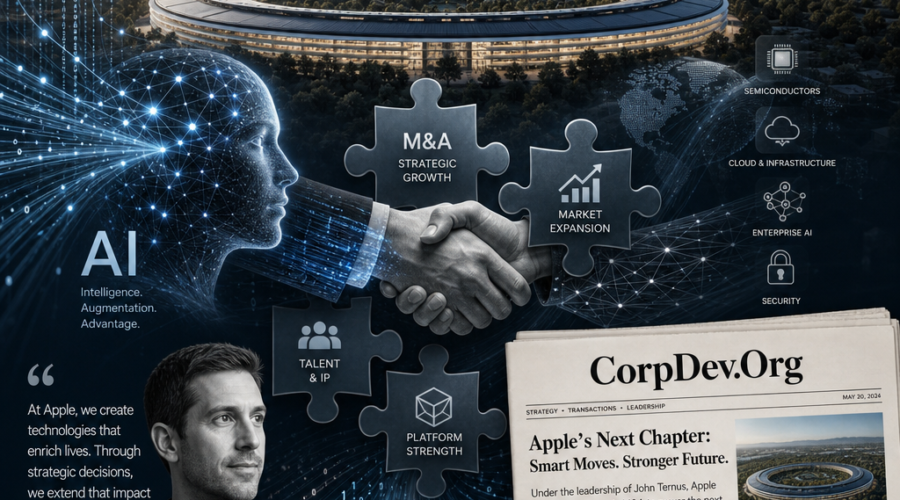
On September 1, 2026, John Ternus officially assumed the role of CEO at Apple Inc., marking the most significant leadership transition in Cupertino since 2011. While outgoing CEO Tim Cook, now Executive Chairman, leaves behind a $4.75 trillion colossus, the market’s focus has shifted from operational stability to aggressive innovation. According to Wedbush Securities analyst Dan Ives, the “missing piece” for the Ternus era is a fundamental departure from the Cook playbook: a pivot toward high-stakes strategic M&A to secure dominance in the generative AI landscape.
Most “AI for Diligence” tools are lying to you. The truth is, they are just ChatGPT wrappers. Experience Kai – a Fortune-100 proven AI harness for M&A/ PE Diligence
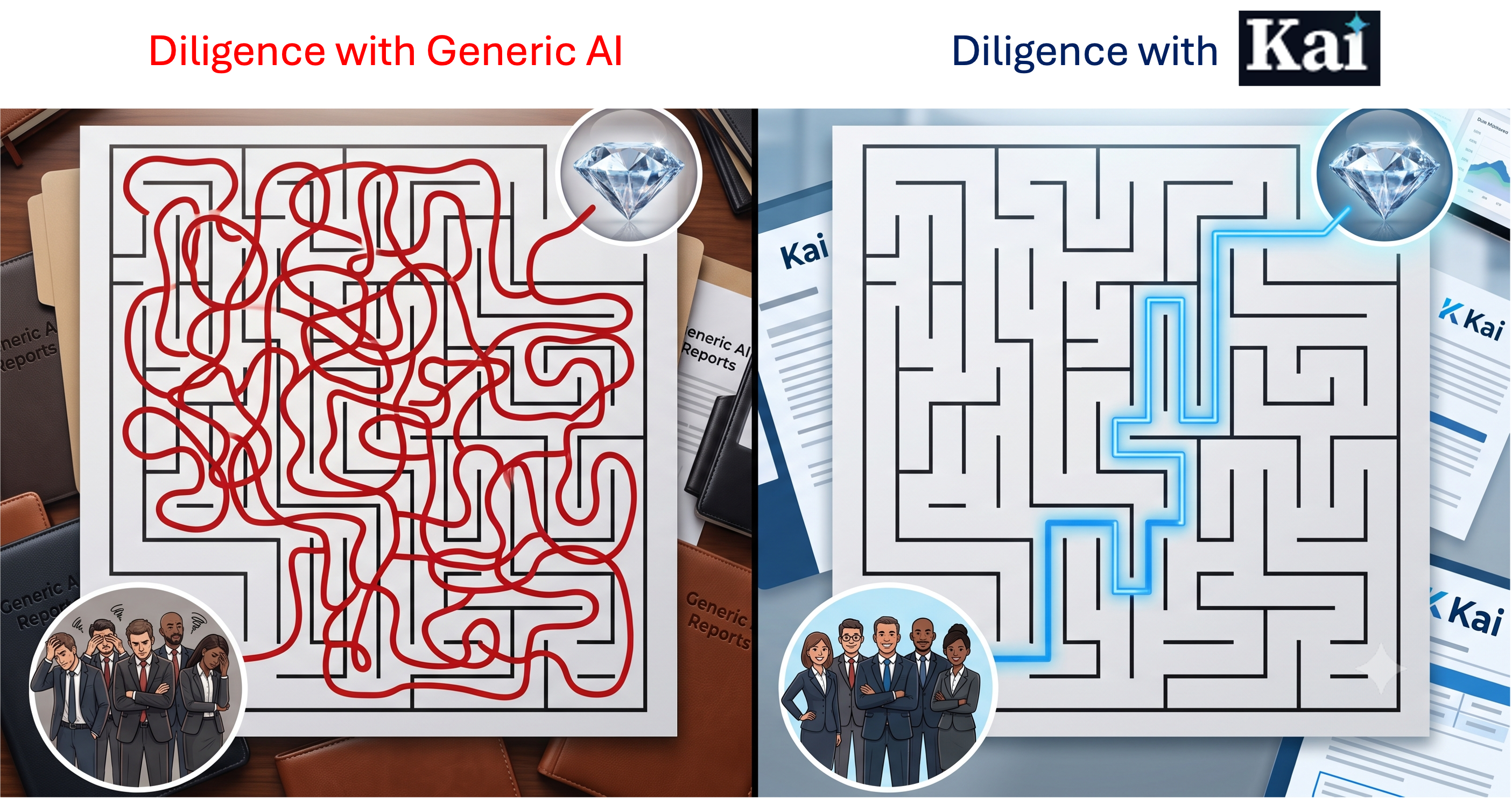
💼 Purpose-built harness for Due Diligence
A Strategic Pivot from ‘Net Cash Neutral’
For over a decade, Apple’s capital allocation strategy was defined by a steady march toward a “net cash neutral” position, prioritizing massive share buybacks and dividends over transformative acquisitions. However, recent regulatory filings and executive commentary signal a regime change. CFO Kevan Parekh recently confirmed that Apple is no longer tethered to the net cash neutral goal, providing the company with the balance sheet flexibility required for multi-billion-dollar “bolt-on” acquisitions.
This financial shift comes at a critical juncture. While Apple Intelligence has begun its rollout, the company still relies heavily on partners like Google—paying an estimated $1 billion annually for Gemini integration—to bridge the gap in large language model (LLM) capabilities. Analysts suggest that to achieve true “device dominance,” Apple must own the underlying stacks, from specialized silicon to foundation models.
The Hardware Architect’s Dilemma
John Ternus, a 25-year Apple veteran and the “hardware guy” behind the iPhone and Apple Silicon, inherits a company that leads in hardware but trails in native AI infrastructure. The current AI strategy has been described as a “build-and-license” hybrid, which Dan Ives argues is insufficient for the long term.
- Infrastructure Gaps: Apple’s Private Cloud Compute (PCC) currently relies on M2 Ultra chips, which have struggled with the processing demands of next-gen LLMs.
- Baltra Delay: Internal reports indicate that “Baltra,” Apple’s dedicated AI server chip, has seen its 2026 launch window slip, increasing the urgency for external talent and IP.
- Talent War: Apple has faced a notable “talent exodus” to rivals like Meta, heightening the need to “acqui-hire” specialized engineering teams through M&A.
Targeting the AI Value Chain
If Ternus is to “put his own fingerprints” on Apple, as Ives suggests, the M&A strategy will likely target three specific verticals within the AI ecosystem. Unlike the $3 billion Beats acquisition—Apple’s largest to date—the next wave of deals could focus on deep-tech integration.
| M&A Vertical | Strategic Rationale | Potential Impact |
|---|---|---|
| AI Semiconductor Startups | Accelerate the development of Baltra and on-device NPUs. | Reduced dependence on Nvidia/Google Cloud infrastructure. |
| Model Compression (PrismML) | Shrink large models to run natively on iPhone/Apple Glasses. | Enhanced privacy and lower latency for “Edge AI” services. |
| Specialized LLMs | Acquire domain-specific models for health, coding, or creative suites. | Higher-margin Services revenue from “Pro” AI features. |
Industry Implications: The 4th Industrial Revolution
The transition to Ternus occurs as the tech sector enters what Ives calls the “4th Industrial Revolution.” With a “golden install base” of over 2.2 billion active devices, Apple remains the ultimate “toll collector” on the consumer AI highway. However, the monetization of this base through cross-border M&A trends 2026 and domestic talent acquisitions is no longer optional.
Investors are looking for Ternus to shake up the “Cook Playbook” by being more aggressive in the open market. The January 2026 acquisition of Israeli startup Q.ai for nearly $2 billion—a deal focused on interpreting facial micromovements for speech—may be a harbinger of more frequent, larger deals intended to bake AI into the very fabric of Apple’s hardware engineering.
The Road Ahead: WWDC and Beyond
Ternus’s first public test will come on September 9, 2026, with the expected launch of the iPhone 18 and Apple’s first foldable handset. While hardware innovation remains the company’s bedrock, the long-term valuation will depend on how quickly Ternus can integrate the “missing piece” of M&A into Apple’s broader AI roadmap. For C-level observers and deal advisors, Apple is no longer just a hardware giant—it is a $117 billion cash pile looking for its next technological soul.