
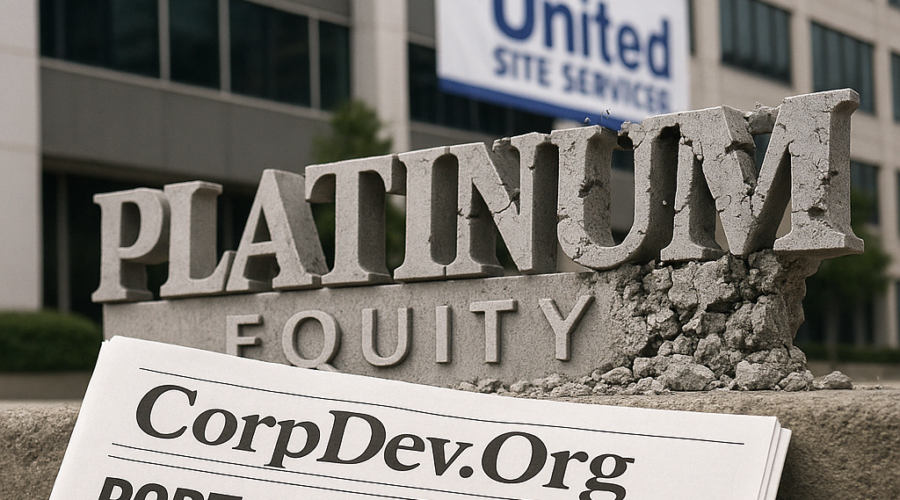
United Site Services (USS), the leading U.S. provider of portable toilets with a fleet of 350,000 units, filed for Chapter 11 bankruptcy last Monday to restructure and eliminate $2.4 billion in debt, handing control to lenders and erasing Platinum Equity’s ownership stake.[1][5]
Most “AI for Diligence” tools are lying to you. The truth is, they are just ChatGPT wrappers. Experience what real AI for Diligence looks like, built like Claude Code, but for M&A/ PE Diligence:
💼 When Claude Code Marries Due Diligence!
Deal Background: Platinum Equity’s Leveraged Bet Unravels
Platinum Equity acquired USS in 2017 from another private equity firm, loading the portable sanitation provider with substantial debt to fund operations and growth.[1] The firm later raised a new fund from investors specifically to prop up USS amid mounting pressures, but rising interest rates and a maturing **debt cliff** proved insurmountable.[1] This filing exemplifies **private equity overleveraging risks in mature service sectors**, where stable cash flows mask vulnerability to rate hikes and economic slowdowns.
Under the lender-supported restructuring plan, USS will issue new equity to creditors, effectively wiping out Platinum Equity’s position—a classic **private equity wipeout strategy in bankruptcy** that prioritizes debt recovery over sponsor equity.[1] Lenders have already accepted the proposal, signaling swift court approval amid 2026’s wave of **distressed asset restructurings**.[1]
Broader Private Markets Turmoil: Cockroaches Emerge
USS’s collapse caps a brutal year-end for private equity and credit, fueling Jamie Dimon’s “cockroaches” warning about hidden risks in opaque portfolios.[1] Preceding failures included First Brands and Tricolor—overleveraged borrowers with fraudulent collateral inflating asset values—and Carriox Capital’s fake invoice scandal, erasing hundreds of millions.[1]
Other red flags: 400 Capital’s lawsuit against Rialto for fee-grabbing on performing loans, and Abu Dhabi Investment Authority’s suit against Energy & Minerals Group over a self-dealing continuation fund.[1] These incidents have rattled stocks of major private lenders and prompted debates on whether **private equity exit strategies in overleveraged assets** are a failed model.[1]
| Company/Fund | Issue | Impact |
|---|---|---|
| First Brands & Tricolor | Fraudulent borrowing/collateral failure | Hundreds of millions in losses; investigations |
| Carriox Capital | Fake invoices | Lender funds evaporated |
| United Site Services | $2.4B bankruptcy restructuring | Platinum Equity equity wiped out |
| Energy & Minerals Group | Continuation fund self-dealing | Sovereign wealth fund lawsuit |
[1]
Macro Drivers: Rate Shock and the Debt Waterfall
Post-2022 rate surges turned a projected **private markets debt cliff** into a “waterfall,” forcing refinancings at unaffordable levels for USS and peers.[1] Overleveraged assets with murky balance sheets now face 2026 maturities, exacerbated by softening demand in construction and events—core to portable sanitation.[1][2]
Relief may loom: Declining rates could grant a “stay of execution,” enabling **private equity distress plays** to acquire assets cheaply while deleveraging portfolios.[1] McKinsey and Bain analyses of 2025 M&A trends underscore this dynamic, noting sponsors pivoting to opportunistic buys in services amid **cross-border M&A caution** from tariffs and geopolitics.[2]
Industry and Strategic Implications for Investors
Portable sanitation remains recession-resilient—tied to infrastructure, events, and construction—but USS’s scale highlights leverage’s perils in low-margin sectors.[4] Expect consolidation: Distressed assets could attract strategics or PE firms like KKR, eyeing **private equity turnaround strategies in essential services**.[3]
For C-level executives and deal advisors, USS signals heightened scrutiny on **portfolio company debt sustainability** in 2026 diligence. Kirkland & Ellis-style restructurings will proliferate, favoring creditors in **Chapter 11 lender takeovers**. Monitor beach replenishment and infra projects for demand tailwinds, as seen in Florida’s $19M Delray Beach contract requiring portable units.[4]
Goldman Sachs private credit outlooks predict selective recovery, but opacity persists—urging LPs to demand granular stress tests on **overleveraged PE holdings**.[1]
Sources
https://wealthnwisdom.substack.com/p/the-private-market-rollercoaster, https://www.edgeandodds.com, https://www.law360.com/bankruptcy-authority, https://bocadailynews.com/2026/01/equipment-staging-begins-for-delray-beach-replenishment-project/, https://www.newser.com/section/5/money-news-headlines.html, https://www.prnewswire.com/news-releases/oceania-cruises-unveils-dramatically-evolved-suites-for-oceania-sonata-302653211.html, https://www.auctionfactory.com, https://www.ainvest.com/news/hisamitsu-founding-family-seeking-2-9-billion-privatization-2601/, https://www.acquanon.com, https://www.garrisonkeillor.com/an-afternoon-at-the-library/