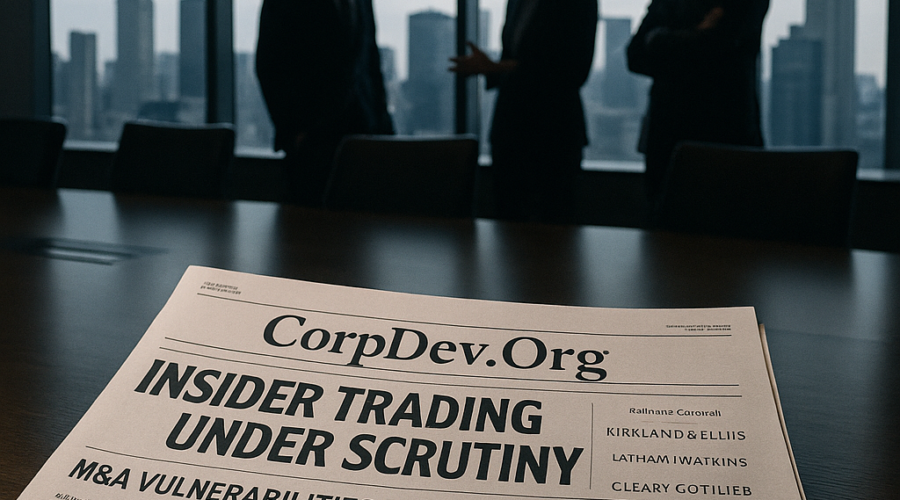
U.S. prosecutors unsealed a federal indictment on May 6, 2026, charging 30 individuals, including elite corporate attorneys, in a decade-long insider trading scheme that generated tens of millions in illicit profits. The scheme, allegedly led by attorney Nicolo Nourafchan, involved stealing non-public M&A data from top law firms such as Goodwin Procter and Latham & Watkins. The case, which implicates deals like the Amazon/iRobot transaction, was cracked open by the SEC's use of advanced data analytics and a key cooperating witness. This enforcement action represents a systemic failure of law firm "information barriers" and signals a major regulatory shift toward holding professional gatekeepers accountable for internal data security.
- Regulators
- U.S. Department of Justice (DOJ) and Securities and Exchange Commission (SEC)
- Primary Allegation
- Decade-long insider trading scheme using stolen M&A data from major law firms.
- Date Indictment Unsealed
- May 6, 2026
- Number of Defendants
- 30 individuals
- Alleged Ringleader
- Nicolo Nourafchan
- Scheme Duration
- 2013 to 2023
- Compromised Law Firms
- Goodwin Procter, Latham & Watkins, Sidley Austin, Weil, Gotshal & Manges
- Key Deal Example
- Amazon / iRobot ($1.7B)
- Investigative Catalyst
- Secret guilty plea of attorney Gabriel Gershowitz in February 2025.
- Enforcement Technology
- SEC's use of sophisticated data analytics and the Consolidated Audit Trail (CAT).
A sprawling federal indictment unsealed on May 6, 2026, has sent shockwaves through the upper echelons of Wall Street and the legal profession. U.S. prosecutors have charged 30 individuals—including elite corporate attorneys and professional traders—in a decade-long insider trading scheme that leveraged stolen data from the world’s most prestigious law firms to reap tens of millions of dollars in illicit profits.
Most “AI for Diligence” tools are lying to you. The truth is, they are just ChatGPT wrappers. Experience what real AI for Diligence looks like, built like Claude Code, but for M&A/ PE Diligence:
💼 When Claude Code Marries Due Diligence!
The case, centered on Yale Law-educated attorney Nicolo Nourafchan, underscores a critical failure in the “information barriers” that underpin the multi-trillion dollar M&A ecosystem. For C-suite executives and private equity partners, the breach represents more than a criminal enterprise; it highlights a systemic risk in confidentiality in cross-border M&A and the limitations of internal document management security.
A Decade of Systematic Exploitation
According to the Department of Justice, the scheme operated with clinical precision from 2013 to 2023. Nourafchan, who held positions at Sidley Austin, Latham & Watkins, and Goodwin Procter, allegedly exploited his “special access” to view non-public documents related to nearly 30 pending mergers. The indictment details a sophisticated “hub-and-spoke” model where information was funneled through New York personal injury attorney Robert Yadgarov to a network of traders spanning from Los Angeles to Tel Aviv and Moscow.
Table 1: Institutional Exposure and Scope
| Law Firm Involved | Notable Status | Representative Deal Impacted |
|---|---|---|
| Goodwin Procter | Victim Firm | Amazon / iRobot ($1.7B, later abandoned) |
| Latham & Watkins | Victim Firm | Undisclosed Tech Mergers |
| Sidley Austin | Victim Firm | Healthcare Sector M&A |
| Weil, Gotshal & Manges | Victim Firm | Cross-border industrial acquisitions |
The most striking revelation involves the 2022 Amazon/iRobot deal. Prosecutors allege that Nourafchan accessed sensitive documents while on leave from Goodwin Procter, demonstrating that administrative status did not necessarily revoke digital credentials—a major red flag for legal tech cybersecurity trends 2026.
Regulatory Escalation: The SEC’s Data-Driven Dragnet
The Securities and Exchange Commission (SEC) has increasingly relied on sophisticated data analytics and the Consolidated Audit Trail (CAT) to identify suspicious patterns that human oversight might miss. This case represents a milestone in SEC enforcement on law firm data, signaling that “gatekeepers” are under higher scrutiny than ever before.
Financial professionals should note that the charges are not limited to the primary tippers. The 30 defendants include “downstream” traders who benefited from the information, reinforcing the SEC’s aggressive stance on “shadow trading”—a trend analyzed by firms like Kirkland & Ellis as a primary risk factor for hedge funds and family offices in the current regulatory environment.
Strategic Implications for the C-Suite and Deal Advisors
For dealmakers, the fallout of this case necessitates a re-evaluation of private equity exit strategies and acquisition protocols. When confidential data is compromised, the valuation of a deal can be artificially inflated by pre-announcement volume, potentially triggering antitrust red flags or “poison pill” provisions.
- Zero-Trust Architecture: Firms must move beyond basic password protection to “Zero Trust” models where access to deal rooms is strictly compartmentalized and monitored via AI-driven anomaly detection.
- Vendor Risk Management: Corporations are increasingly demanding audits of their external counsel’s IT infrastructure. As McKinsey has noted in recent shifts, “reputational capital” is now inextricably linked to digital hygiene.
- Clawback Provisions: We expect a rise in more stringent clawback clauses in engagement letters with law firms, holding them more accountable for internal breaches.
Historical Context: A Pattern of Professional Lapses
This case echoes previous scandals, such as the Matthew Martoma/SAC Capital case or the 2016 “hacking for tips” ring involving Chinese nationals targeting M&A lawyers. However, the 2026 indictment is unprecedented in its duration and the sheer number of “Big Law” professionals implicated. The guilty plea of Gabriel Gershowitz (formerly of Weil and DLA Piper) in early 2025 served as the quiet catalyst for this week’s mass arrests, suggesting that federal investigators have successfully flipped key witnesses within the legal community.
Timeline: The Evolution of the Breach
- 2013: Nourafchan enters the legal industry; initial unauthorized access begins.
- 2017-2021: Scheme expands to include international traders in Russia and Israel.
- 2022: High-profile trading occurs ahead of the Amazon/iRobot announcement.
- February 2025: Gabriel Gershowitz secretly pleads guilty, providing a roadmap for investigators.
- May 6, 2026: DOJ unseals indictments against 30 defendants; 19 arrests made globally.
Conclusion: The High Price of Information Asymmetry
As the legal proceedings move to courts in California and New York, the M&A industry must confront the reality that the greatest threat to deal integrity often comes from within. For investment professionals, the takeaway is clear: the insider trading in M&A deals landscape is no longer just about “bad actors” in boiler rooms, but about the very professionals hired to protect the sanctity of the transaction. Moving forward, the “trust but verify” model for external counsel is likely to be replaced by “audit and encrypt.”