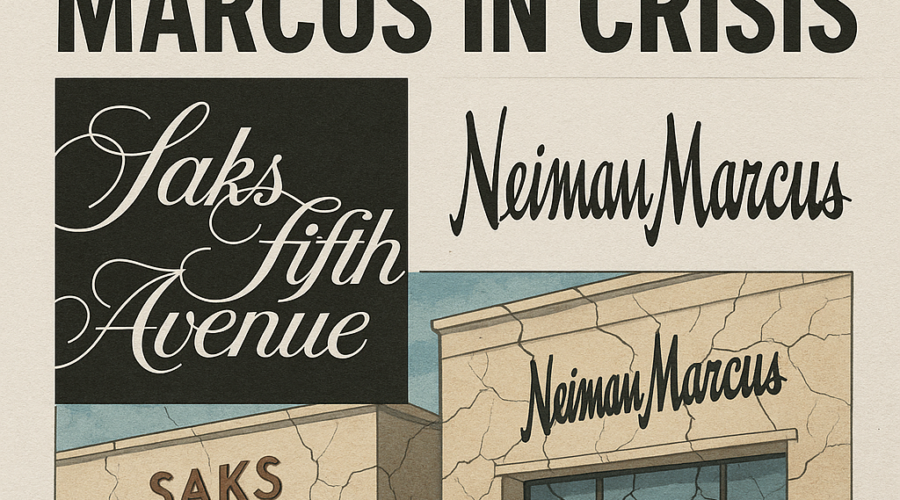
Saks Global Enterprises, owner of **Saks Fifth Avenue**, **Neiman Marcus**, **Bergdorf Goodman**, and **Saks OFF 5TH**, is hurtling toward a **Chapter 11 bankruptcy filing** as early as next week after missing a $100 million debt payment due December 31, 2025, amid severe liquidity strains and vendor disputes.[1][2][7]
Most “AI for Diligence” tools are lying to you. The truth is, they are just ChatGPT wrappers. Experience what real AI for Diligence looks like, built like Claude Code, but for M&A/ PE Diligence:
💼 When Claude Code Marries Due Diligence!
The crisis, unfolding just over a year after Saks Global’s $2.7 billion acquisition of Neiman Marcus Group in December 2024, underscores the perils of **leveraged buyouts in luxury retail** during a period of softening consumer demand and inventory shortages.[1][2][5] CEO Marc Metrick stepped down on January 2, 2026, with Executive Chairman Richard Baker assuming leadership to navigate the turmoil.[1][2][5]
Financial Distress Deepens: Missed Payments and Vendor Lawsuits
Saks Global skipped an interest payment exceeding $100 million tied to Neiman Marcus acquisition debt, triggering a 30-day grace period that expired without resolution.[1][2][5] The company is negotiating a $1 billion **debtor-in-possession (DIP) loan** from creditors—including up to $750 million in new funding with potential debt roll-ups—to sustain operations through restructuring.[1][7]
Vendor frustrations have escalated into lawsuits, with brands like Gabriella Rossetti Inc. and Catherine Regehr Inc. suing over unpaid consignment goods and invoices totaling hundreds of thousands, exacerbating inventory shortfalls that contributed to a 13% year-over-year Q2 2025 revenue drop to $1.6 billion.[1][2][7] Q1 2025 net losses widened to $232 million, prompting lowered full-year guidance.[1]
Asset Sales and Cost-Cutting: Short-Term Lifelines in a Luxury Downturn
To bolster cash, Saks Global sold its 184,000-square-foot Neiman Marcus flagship in Beverly Hills on December 23, 2025, and is offloading the land beneath its San Francisco Neiman Marcus store at 150 Stockton Street.[2][8] Earlier efforts included a $600 million refinancing in August 2025—where creditors absorbed losses—and a $350 million loan from SRL Credit Solutions.[1]
- Store closures: Saks OFF 5TH shuttered its Manhattan flagship on December 31, 2025, with nine more U.S. locations—including West Hartford—closing by January 2026; Saks Fifth Avenue ended 45 years in San Francisco’s Union Square in May 2025.[2][4]
- Job cuts and exits: Hundreds of roles eliminated across corporate offices, stores, and Canadian operations; Neiman Marcus HQ in Dallas’ Cityplace Tower closed after two years.[1][5]
- Portfolio pruning: Plans to divest 500-600 brands and explore a $1 billion minority stake sale in Bergdorf Goodman.[1][2]
| Date | Event | Financial Impact |
|---|---|---|
| Dec 2024 | $2.7B Neiman Marcus acquisition | Added debt load; Amazon, Authentic Brands backed |
| Aug 2025 | $600M creditor refinancing | Creditors take losses to avert bankruptcy |
| Q2 2025 | Revenue falls 13% to $1.6B | Inventory issues blamed |
| Dec 23, 2025 | Beverly Hills store sale | Capital for debt paydown |
| Dec 31, 2025 | Misses $100M+ payment | Bankruptcy prep announced |
| Jan 2, 2026 | CEO Metrick exits | Baker takes helm |
M&A Implications: Lessons from Luxury Retail Consolidation Failures
The Saks-Neiman deal, financed by bond issuances and partners like Amazon and Salesforce, aimed to forge a “multi-brand luxury portfolio with tremendous growth potential.”[1][2] Instead, it amplified **private equity-style leverage risks** in a sector battered by e-commerce shifts, post-pandemic spending pullbacks, and **cross-border luxury retail distress**. Real estate assets—nearly 13 million square feet valued over $7 billion—offer restructuring upside, but experts warn sales provide only temporary relief amid 90%+ retail occupancy driving investor interest elsewhere.[6]
For M&A advisors, this echoes past department store bankruptcies like Macy’s 1992 filing and Lord & Taylor’s 2020 collapse, highlighting **luxury retail bankruptcy exit strategies** such as DIP financing and asset monetization. Neiman Marcus’ Dallas flagship fate remains uncertain, with city talks for mixed-use redevelopment ongoing amid potential store network rationalization.[5]
Outlook for Stakeholders: Restructuring or Liquidation?
Chapter 11 could enable Saks Global to reorganize under court protection, preserving brands while shedding debt—though gift card holders and Amex credit users face risks given shared corporate structure.[3] Baker’s vendor relationships may aid inventory restocking, but persistent sales declines and luxury demand softness demand operational overhauls.[6] Investors eye **luxury retail M&A trends 2026**, where survivors like Nordstrom leverage smaller footprints and digital innovation.
Sources
https://fashionunited.com/news/business/saks-seeks-1-billion-dollar-bankruptcy-loan-to-avoid-bankruptcy-as-it-faces-vendor-lawsuits/2026010669848, https://en.wikipedia.org/wiki/Saks_Global, https://frequentmiler.com/saks-rumored-to-be-filing-for-bankruptcy-use-those-gift-cards-and-credits/, https://westfaironline.com/business/saks-may-face-bankruptcy-amid-debt-woes/, https://therealdeal.com/texas/dallas/2026/01/05/saks-global-ceo-steps-down-amid-looming-bankruptcy/, https://www.mytotalretail.com/article/saks-global-ceo-steps-down-as-bankruptcy-looms/, https://www.emarketer.com/content/saks-global-bankruptcy-looms, https://www.costar.com/article/401460699/teetering-saks-global-to-sell-land-beneath-its-san-francisco-neiman-marcus-store