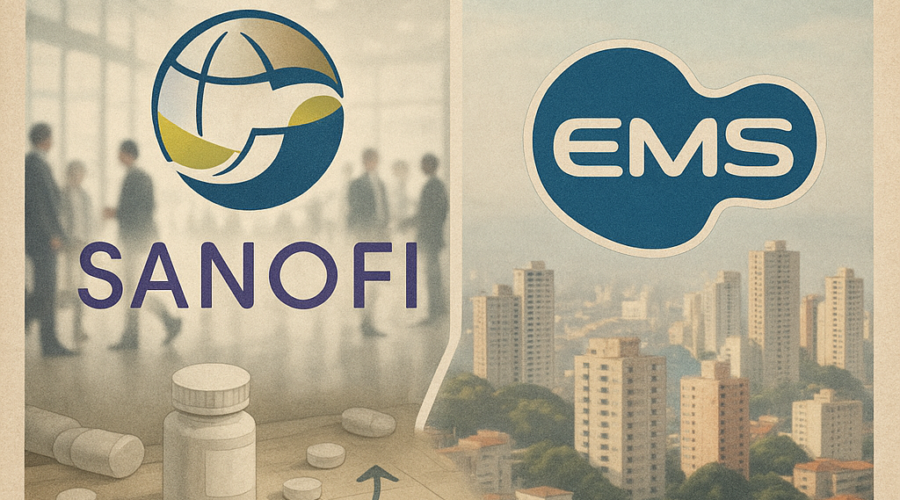
Paris-headquartered pharmaceutical giant Sanofi has agreed to divest its Brazilian generics unit, Medley, to local drugmaker EMS, in a move signaling further streamlining of its global portfolio and a calculated retreat from non-core assets in Latin America. The transaction, announced Friday, is valued at “more than $500 million,” according to a company executive at EMS.
Set and exceed synergy goals with benchmarks and actionable operational initiative level data from similar deals from your sector:
💼 Actionable Synergies Data from 1,000+ Deals!
The deal underscores a persistent trend among multinational pharmaceutical companies—pioneered by moves such as Sanofi’s prior divestiture of consumer health brands—to focus capital expenditure on high-margin biopharma innovation, particularly in immunology and vaccines, rather than the lower-margin generics space. This strategy aims to offset revenue erosion from patent expirations, such as the anticipated “Semaglutide Cliff” impacting the broader Latin American market.
Deal Structure and Valuation Context
While the precise enterprise value was not disclosed by the parties, the figure cited by EMS’s Vice President in Brazil exceeds $500 million. This potential valuation sits below Sanofi’s original investment cost for Medley, which was approximately $665 million when acquired in 2009. The sale process, reportedly managed by the consulting firm Lazard, involved a competitive field that included Aché and Hypera Pharma.
For EMS, the acquisition is a transformative play in the domestic generics market. The addition of Medley is projected to catapult EMS’s market share in Brazilian generics to approximately 30%, creating a local powerhouse with projected annual revenues approaching R$ 12 billion (approximately $2.4 billion USD, based on recent exchange rates).
| Metric | Detail | Significance |
|---|---|---|
| Seller | Sanofi (France) | Focusing capital on pure biopharma/specialty pipeline. |
| Buyer | EMS (Brazil) | Achieves critical mass in generics; potential 30% market share. |
| Valuation (Indicative) | >$500 Million | Below 2009 acquisition price ($665M). |
| Regulatory Hurdle | CADE Approval (Brazil Antitrust) | Expected later in 2026; EMS anticipates low scrutiny due to market fragmentation. |
Rationale: The Strategic Pivot in Pharma M&A
Sanofi’s sale of Medley aligns with its broader corporate mandate to pivot toward innovative, high-margin biopharmaceuticals. This divestiture accelerates the funding pipeline for R&D, particularly in immunology, oncology, and vaccines, which are considered critical growth drivers to secure sales targets through the next decade.
For a multinational, managing a non-core generics business in an emerging market requires significant operational complexity that often does not yield the returns seen in patented drug portfolios. This is part of a pattern seen globally, where Big Pharma firms seek to shed legacy assets to partner with Private Equity or domestic champions better equipped to manage established, local-market volume businesses.
The trend in the Brazilian pharmaceutical landscape supports this transaction. While the overall market remains attractive, domestic players like EMS are engaging in “offensive” strategies, consolidating the generics segment while international players focus on higher-complexity molecules and biosimilars compliance under new ANVISA regulations.
Integration Strategy and Regulatory Outlook
EMS plans to maintain Medley as a distinct brand alongside its existing portfolio, allowing consumers continued choice at the pharmacy counter, despite internal synergies expected in manufacturing and R&D. This retention of multiple brands is a common tactic in highly fragmented consumer and generics markets to maximize shelf presence and consumer loyalty while capturing efficiencies behind the scenes.
The deal’s completion is contingent on approval from Brazil’s antitrust authority, CADE. Executives at EMS are reportedly confident that the consolidation, while making them the market leader, will not trigger concerns over market concentration, given the overall fragmentation of the Brazilian generics sector.
Advisors tracking cross-border M&A transactions in the Latin American healthcare sector note that due diligence in these regions continues to focus heavily on IP rights and regulatory compliance, factors which are less of a concern in a pure generics handover between two established local players, assuming smooth regulatory transition.