“`html
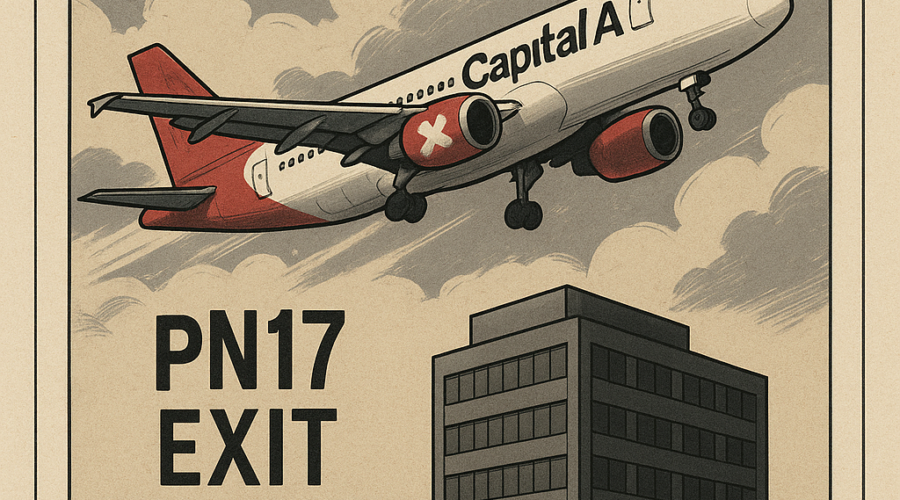
Capital A Bhd announced the completion of its disposal of AirAsia Aviation Group Ltd and AirAsia Bhd to AirAsia X Bhd, marking a critical milestone in the parent company’s restructuring plan to exit Practice Note 17 (PN17) status on Malaysia’s Bursa exchange.[1][6] The transaction, structured through a combination of share issuance and debt assumption, represents the culmination of a reorganization strategy first announced in April 2025.
Set and exceed synergy goals with benchmarks and actionable operational initiative level data from similar deals from your sector:
💼 Actionable Synergies Data from 1,000+ Deals!
Transaction Structure and Financial Terms
The disposal was executed through two primary mechanisms. AirAsia X allotted and issued 2.3 billion shares to Capital A and its entitled shareholders in exchange for AirAsia Aviation Group.[1] Separately, AirAsia X assumed RM3.80 billion in debt owed by Capital A to AirAsia Bhd, completing the acquisition of the latter entity.[1]
In conjunction with the transaction, AirAsia X conducted a private placement of 606.06 million shares on January 16, with all placement shares and consideration shares scheduled for listing on the Main Market on January 19.[1] Capital A simultaneously reduced its issued share capital by RM2.74 billion, reflecting the structural reorganization.[1]
Strategic Rationale and PN17 Implications
The transaction addresses Capital A’s long-standing challenge of exiting PN17 status, a regulatory classification imposed on companies with financial distress or going concern uncertainties. Capital A received an unqualified audit opinion from Ernst & Young for its 2024 financial year, but the audit included a material uncertainty related to going concern, indicating significant doubt about the company’s ability to continue operations.[1]
By transferring its core aviation operations to AirAsia X, Capital A shifts operational and financial risk to a subsidiary with independent market access and capital-raising capacity. This restructuring aligns with Tony Fernandes’s stated objective to complete the PN17 exit process, which he indicated in June 2025 was in its final stages with only 15-20% of the process remaining.[1]
Shareholder Dilution and Investor Rights
The transaction results in significant shareholder dilution for Capital A investors. The 2.3 billion shares issued to Capital A shareholders represent a substantial increase in AirAsia X’s equity base. Additionally, AirAsia X granted investment holding company Garynma Investments Pte Ltd subscription rights for up to 403.29 million new shares, representing 12% of total issued shares, exercisable within 24 months and with a 48-month exercise window.[1]
Operational and Market Context
AirAsia X, the long-haul affiliate of the AirAsia group, demonstrated operational momentum in the fourth quarter of 2024, carrying 1.1 million passengers—a 20% increase year-over-year—supported by a 20% expansion in seat capacity to over 1.3 million seats.[2] The acquisition of AirAsia Aviation Group and AirAsia Bhd consolidates the group’s aviation operations under a single listed entity with direct market access.
The timing of the transaction completion and the scheduled listing of new shares on January 19 follows months of regulatory approvals, including requirements from the Thai stock exchange and creditor consent, which Fernandes indicated in June 2025 had been substantially secured.[1]
Regulatory and Restructuring Precedent
Capital A’s restructuring represents a complex cross-border and multi-jurisdictional reorganization typical of large-scale private equity-style recapitalizations in Southeast Asia. The transaction involves debt-for-equity conversions, subsidiary acquisitions, and capital reductions—mechanisms commonly employed in distressed restructurings and leveraged recapitalizations. The involvement of Garynma Investments Pte Ltd as a strategic investor with significant subscription rights suggests continued institutional backing for the reorganized structure.
The completion of this disposal removes Capital A’s primary operating assets and associated liabilities, positioning the holding company as a vehicle for non-aviation investments and strategic holdings. This separation model has precedent in other regional airline restructurings, where holding companies divest operational subsidiaries to improve financial metrics and regulatory standing.
“`
Sources
https://klse.i3investor.com/web/stock/overview/5099, https://www.klsescreener.com/v2/news/stock/5238, https://theedgemalaysia.com/flash-categories/Aviation, https://theedgemalaysia.com/categories/Frankly%20Speaking, https://www.thestar.com.my, https://theedgemalaysia.com/source/theedgemalaysia.com?page=1, https://theedgemalaysia.com/author/The%20Edge%20Malaysia?page=1, https://theedgemalaysia.com/author/Choy%20Nyen%20Yiau?page=1