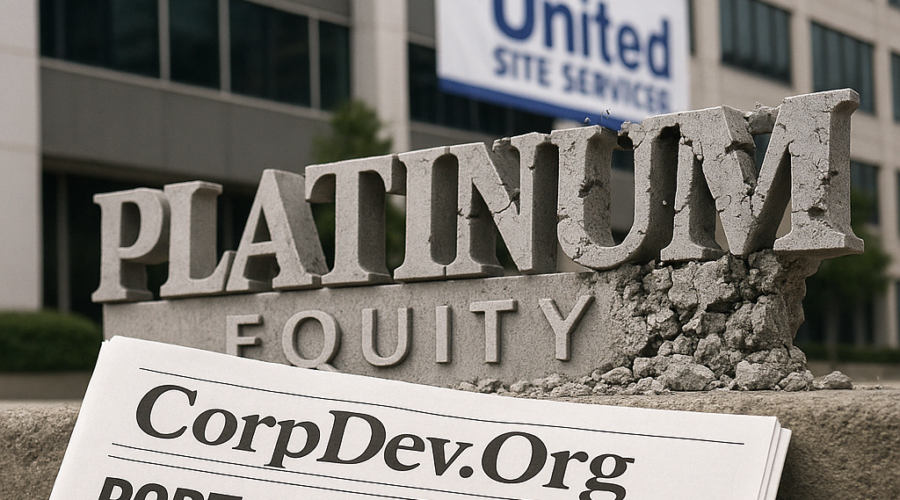
United Site Services (USS), the leading U.S. provider of portable toilets with a fleet of 350,000 units, filed for Chapter 11 bankruptcy last Monday to restructure and eliminate $2.4 billion in debt, handing control to lenders and erasing Platinum Equity’s ownership stake.[1][5]
Set and exceed synergy goals with benchmarks and actionable operational initiative level data from similar deals from your sector:
💼 Actionable Synergies Data from 1,000+ Deals!
Deal Background: Platinum Equity’s Leveraged Bet Unravels
Platinum Equity acquired USS in 2017 from another private equity firm, loading the portable sanitation provider with substantial debt to fund operations and growth.[1] The firm later raised a new fund from investors specifically to prop up USS amid mounting pressures, but rising interest rates and a maturing **debt cliff** proved insurmountable.[1] This filing exemplifies **private equity overleveraging risks in mature service sectors**, where stable cash flows mask vulnerability to rate hikes and economic slowdowns.
Under the lender-supported restructuring plan, USS will issue new equity to creditors, effectively wiping out Platinum Equity’s position—a classic **private equity wipeout strategy in bankruptcy** that prioritizes debt recovery over sponsor equity.[1] Lenders have already accepted the proposal, signaling swift court approval amid 2026’s wave of **distressed asset restructurings**.[1]
Broader Private Markets Turmoil: Cockroaches Emerge
USS’s collapse caps a brutal year-end for private equity and credit, fueling Jamie Dimon’s “cockroaches” warning about hidden risks in opaque portfolios.[1] Preceding failures included First Brands and Tricolor—overleveraged borrowers with fraudulent collateral inflating asset values—and Carriox Capital’s fake invoice scandal, erasing hundreds of millions.[1]
Other red flags: 400 Capital’s lawsuit against Rialto for fee-grabbing on performing loans, and Abu Dhabi Investment Authority’s suit against Energy & Minerals Group over a self-dealing continuation fund.[1] These incidents have rattled stocks of major private lenders and prompted debates on whether **private equity exit strategies in overleveraged assets** are a failed model.[1]
| Company/Fund | Issue | Impact |
|---|---|---|
| First Brands & Tricolor | Fraudulent borrowing/collateral failure | Hundreds of millions in losses; investigations |
| Carriox Capital | Fake invoices | Lender funds evaporated |
| United Site Services | $2.4B bankruptcy restructuring | Platinum Equity equity wiped out |
| Energy & Minerals Group | Continuation fund self-dealing | Sovereign wealth fund lawsuit |
[1]
Macro Drivers: Rate Shock and the Debt Waterfall
Post-2022 rate surges turned a projected **private markets debt cliff** into a “waterfall,” forcing refinancings at unaffordable levels for USS and peers.[1] Overleveraged assets with murky balance sheets now face 2026 maturities, exacerbated by softening demand in construction and events—core to portable sanitation.[1][2]
Relief may loom: Declining rates could grant a “stay of execution,” enabling **private equity distress plays** to acquire assets cheaply while deleveraging portfolios.[1] McKinsey and Bain analyses of 2025 M&A trends underscore this dynamic, noting sponsors pivoting to opportunistic buys in services amid **cross-border M&A caution** from tariffs and geopolitics.[2]
Industry and Strategic Implications for Investors
Portable sanitation remains recession-resilient—tied to infrastructure, events, and construction—but USS’s scale highlights leverage’s perils in low-margin sectors.[4] Expect consolidation: Distressed assets could attract strategics or PE firms like KKR, eyeing **private equity turnaround strategies in essential services**.[3]
For C-level executives and deal advisors, USS signals heightened scrutiny on **portfolio company debt sustainability** in 2026 diligence. Kirkland & Ellis-style restructurings will proliferate, favoring creditors in **Chapter 11 lender takeovers**. Monitor beach replenishment and infra projects for demand tailwinds, as seen in Florida’s $19M Delray Beach contract requiring portable units.[4]
Goldman Sachs private credit outlooks predict selective recovery, but opacity persists—urging LPs to demand granular stress tests on **overleveraged PE holdings**.[1]
Sources
https://wealthnwisdom.substack.com/p/the-private-market-rollercoaster, https://www.edgeandodds.com, https://www.law360.com/bankruptcy-authority, https://bocadailynews.com/2026/01/equipment-staging-begins-for-delray-beach-replenishment-project/, https://www.newser.com/section/5/money-news-headlines.html, https://www.prnewswire.com/news-releases/oceania-cruises-unveils-dramatically-evolved-suites-for-oceania-sonata-302653211.html, https://www.auctionfactory.com, https://www.ainvest.com/news/hisamitsu-founding-family-seeking-2-9-billion-privatization-2601/, https://www.acquanon.com, https://www.garrisonkeillor.com/an-afternoon-at-the-library/