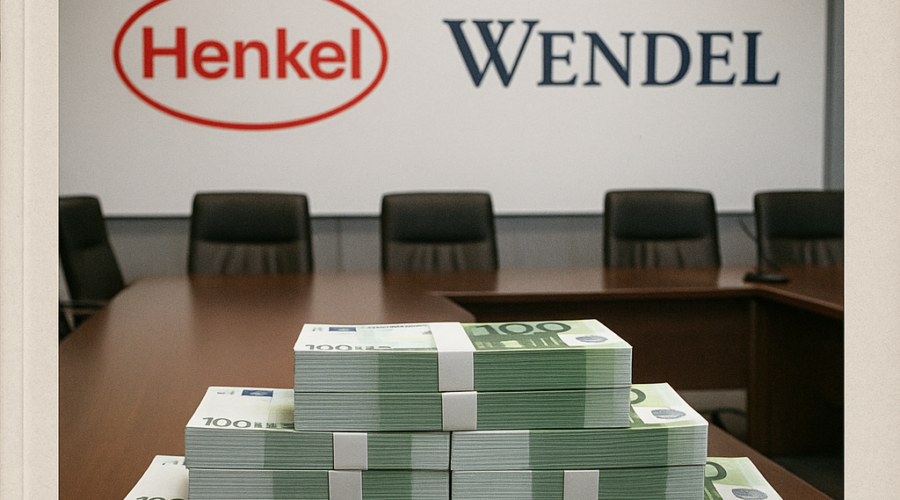
Henkel AG & Co. KGaA is in non-exclusive discussions with French private equity firm Wendel to acquire specialty chemicals group Stahl Holdings for approximately €2 billion. This potential bolt-on acquisition aims to bolster Henkel’s sustainable specialty chemicals portfolio, driven by rising demand for eco-friendly coatings and EU regulations. The deal, implying a 12-14x EBITDA multiple, reflects a competitive private equity exit landscape and Henkel’s strategic focus on green tech exposure. This transaction underscores the ongoing consolidation and sustainability-driven M&A trends within the European chemicals sector.
- Acquirer
- Henkel AG & Co. KGaA (German consumer and industrial goods giant)
- Target
- Stahl Holdings (Dutch producer of performance coatings and chemicals)
- Seller
- Wendel (French private equity firm)
- Transaction Type
- Potential Acquisition
- Enterprise Value
- €2 billion (approximate)
- Implied Multiple
- 12-14x EBITDA
- Target Revenue
- €1.2 billion
- Strategic Driver
- Bolster position in sustainable specialty chemicals, meet demand for eco-friendly coatings
- Expected Synergies
- €150-200 million in annual cost savings
- Financing
- €1.5 billion cash reserves and bond issuance capacity
- Expected Close
- H2 2026 (targeted)
- Sector
- Specialty Chemicals
Henkel AG & Co. KGaA has confirmed discussions with French private equity firm Wendel for the acquisition of specialty chemicals group Stahl Holdings, valued at around €2 billion, signaling renewed momentum in **cross-border M&A trends 2026** within the chemicals sector.[1][2][3]
Most “AI for Diligence” tools are lying to you. The truth is, they are just ChatGPT wrappers. Experience what real AI for Diligence looks like, built like Claude Code, but for M&A/ PE Diligence:
💼 When Claude Code Marries Due Diligence!
Deal Background and Strategic Rationale
Stahl, a Dutch-based producer of performance coatings and chemicals for leather, textiles, and flexible packaging, represents a bolt-on opportunity for Henkel’s adhesives and advanced materials portfolio. Henkel, a German consumer and industrial goods giant, seeks to bolster its position in sustainable specialty chemicals amid rising demand for eco-friendly coatings driven by EU regulations.[1] Wendel, which acquired Stahl in 2016 from 3i Group for €1.4 billion, has managed the company through operational improvements and expansion into high-growth segments like bio-based coatings.[1]
The talks are non-exclusive, allowing Wendel to explore alternative bids in a competitive **private equity exit strategies in chemicals** landscape where secondary buyouts remain prevalent.[3] Sources indicate Henkel’s interest stems from Stahl’s €1.2 billion revenue base and synergies in supply chain integration, potentially adding €150-200 million in annual cost savings.[1]
Financial Terms and Valuation Context
At €2 billion enterprise value, the deal implies a 12-14x EBITDA multiple, aligning with **specialty chemicals M&A valuations 2026** amid moderating multiples from 2022 peaks. Comparable transactions include Bain Capital’s binding bid for FineToday Holdings in Asia’s accelerating beauty chemicals space and Xenon AIFM’s €138 million exit of water treatment platform Sostelia to Hera.[1]
| Deal | Target | Value (€bn) | Multiple (x EBITDA) | Sector |
|---|---|---|---|---|
| Henkel-Stahl (potential) | Stahl Holdings | 2.0 | 12-14 | Specialty Chemicals |
| Bain-FineToday | FineToday Holdings | Undisclosed | N/A | Personal Care Chemicals |
| Xenon-Hera | Sostelia | 0.138 | 10-12 | Water Treatment |
Industry Implications and Broader Trends
This potential transaction underscores **European chemicals M&A outlook 2026**, where consolidation addresses overcapacity and sustainability mandates. McKinsey’s 2025 chemicals report highlights that 60% of sector CEOs prioritize bolt-on acquisitions for green tech exposure, with private equity exits accelerating as funds mature post-2020 vintages.[1] Regulatory scrutiny under EU Merger Regulation remains moderate for this deal size, though antitrust reviews could extend timelines by 4-6 months.
Wendel’s portfolio strategy favors value realization in industrials, mirroring broader **private equity secondaries surge 2025** at $226 billion in volume, up 41% year-over-year, as limited partners seek liquidity.[1] For Henkel, integration risks include cultural alignment across 50+ Stahl sites globally, but leadership continuity under CEO Carsten Knobel positions it to capture **synergies in sustainable coatings M&A**.
- Synergies: Supply chain overlap in leather and packaging chemicals; R&D in bio-materials.
- Risks: Commodity price volatility; potential layoffs in overlapping functions (estimated 5-10% headcount).
- Historical Precedents: 3i-Wendel Stahl deal (2016); Arkema’s acquisitions in coatings.
Market Reaction and Next Steps
Henkel shares traded flat post-announcement, reflecting digestible deal financing via €1.5 billion cash reserves and bond issuance capacity. Wendel, with Stahl as a top holding, eyes full or partial exit to recycle capital into defense and infrastructure bets like FountainVest’s EuroGroup Laminations play.[1] Binding offers could emerge by Q2 2026, with completion targeted for H2 amid favorable **M&A financing trends Europe 2026**.[1][3]
Sources
https://pe-insights.com/news/, https://www.marketscreener.com/analysis/, https://www.investing.com/news/stock-market-news/5