
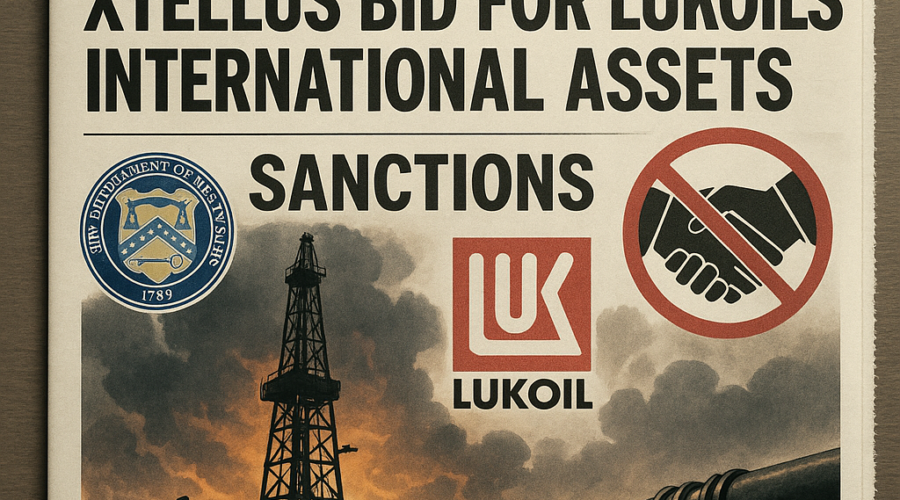
The U.S. Treasury has rejected a cashless bid led by U.S. bank Xtellus Partners to acquire Lukoil’s foreign assets, a decision that preserves existing sanctions constraints on transactions involving sanctioned Russian energy companies and reshapes the exit pathways for Western investors holding Lukoil securities[3].
💼 M&A / PE diligence in 24 hours? Yes, thanks to AI!
What Reuters and subsequent reports say
Reuters reported that the U.S. Treasury turned down an offer from Xtellus Partners to organise a swap: U.S. investors would return their Lukoil securities to the company in exchange for its international assets, in what was described as a largely cashless exchange[3].
Russian and international media, referencing the same reporting, noted the Treasury’s move follows earlier actions that put pressure on potential acquirers: Gunvor — which had earlier offered to buy Lukoil International GmbH — withdrew its bid after the Treasury signalled it did not plan to license profit-making business with the sanctioned assets until the conflict in Ukraine was resolved[1].
Why the Treasury likely declined the Xtellus proposal
- Sanctions enforcement and precedent risk: The swap would effectively transfer the economic benefit of internationally held assets while returning shares to a sanctioned entity, a structure that could enable sanctioned parties to retain indirect control or benefit — outcomes U.S. sanctions aim to prevent[1][3].
- Licensing and profit prohibition: Treasury guidance previously indicated reluctance to license transactions that let sanctioned Russian energy firms or their economic beneficiaries earn profits until broader policy conditions are met, narrowing permissible deal architectures[1].
- Complex cross-border legal and regulatory approvals: Even if U.S. sanctions were addressed, the sale of Lukoil’s foreign subsidiaries would require approvals in jurisdictions where assets sit and complex carve-outs to comply with export controls and anti-money-laundering rules[3].
Immediate implications for stakeholders
- For Lukoil: The rejection reduces near-term options to monetize or transfer control of overseas assets and increases the likelihood of prolonged asset-management or shutdown approaches for foreign operations[1][3].
- For Western holders of Lukoil securities: The blocked swap removes a potential pathway to realize value without direct cash transfers; holders face continued market illiquidity and legal restrictions on disposition[3].
- For strategic buyers and trading houses: The decision signals that bids enabling continuing profit flow to sanctioned parties will struggle to secure U.S. approval, discouraging structured “cashless swap” approaches and nudging buyers toward either sanctioned-asset avoidance or seeking bespoke, fully licensed structures with clear economic separation[1].
- For M&A advisors and lenders: Advisers must stress-test deal structures against sanctions licensing risk and factor in long timelines, geopolitical conditionality, and sovereign or host-country consent requirements[3].
Broader market and dealmaking consequences
The Treasury’s stance tightens the regulatory environment for cross-border M&A involving sanctioned Russian energy assets and reinforces several market realities:
- Valuation discounting and liquidity premium: Buyers able to satisfy licensing, reputational and compliance thresholds will demand larger discounts to reflect execution risk and potential operational restrictions[3].
- Shift to custodial or management solutions: Owners and host states may prefer third‑party custodial arrangements, asset mothballing, or nationalization routes over complex transfers that require U.S. sign‑off[1].
- Long tail for distressed private-equity and trade players: PE and trading houses that previously considered opportunistic entry now face longer timelines and higher legal costs to clear sanctions risk, slowing deal flow in the sector[1][3].
Deal-structure playbook for sponsors and advisers (practical guidance)
- Early engagement with sanctioning authorities: Seek pre‑submission policy consultations with the U.S. Treasury Office of Foreign Assets Control (OFAC) and equivalent agencies in allied jurisdictions to test permissibility and licensing likelihood[3].
- Economic separation and true escrow: Design structures that create legally enforceable, operationally independent conduits for cash flow and governance that demonstrably prevent sanctioned parties from receiving benefit[1].
- Jurisdictional consents and host-state alignment: Secure advance approvals or comfort letters from host jurisdictions where assets sit to reduce geopolitical veto risk[3].
- Robust compliance and audit rights: Build multi‑layer monitoring, independent directors and transparent reporting that can underpin licensing applications and reassure regulators[1].
How this compares to historical sanctioned-asset transactions
Past sanctioned-asset deals that succeeded typically involved either (a) full governmental negotiation and asset carve-outs with clear compensation mechanisms, or (b) arrangements that left sanctioned entities with no ongoing economic upside and full legal transfer of title — often at deep discounts[3].
Strategic takeaways for C-suite and deal teams
- Do not assume creative “swap” mechanics will secure regulatory blessing; regulators prioritize preventing circumvention over enabling liquidity for investors[3].
- Plan for extended timelines and higher cost of capital; capital providers will price in sanction and licensing risk as a sovereign‑style risk premium[1].
- Prepare multiple exit and stewardship scenarios; from managed wind‑down to third‑party custodianship or host‑state arrangements, each with different financial and reputational outcomes[1][3].
Key long-tail SEO phrases woven into the analysis
- cross-border M&A sanctions compliance 2025
- private equity strategies for sanctioned assets
- U.S. Treasury OFAC licensing Lukoil assets
- exit options for Western investors in Russian energy
- structuring sanctioned-asset transactions for regulatory approval
Sources
Core reporting on the Treasury rejection and deal mechanics is sourced to Reuters coverage summarized in MarketScreener and TASS reporting of the Reuters story, which detailed Xtellus’s proposed cashless swap and referenced the earlier Gunvor withdrawal after Treasury signals[3][1].
Note: This article synthesizes contemporaneous reporting and industry deal-practice considerations; licensing decisions are fact‑specific and regulators retain case-by-case discretion.
Sources
https://tass.com/economy/2058893, https://www.boursorama.com/bourse/actualites/le-tresor-americain-rejette-l-offre-de-xtellus-pour-les-actifs-de-lukoil-selon-certaines-sources-3ae2eaf811cc7b87274fe0229fe72682, https://www.marketscreener.com/news/u-s-treasury-rejects-xtellus-bid-for-russia-s-lukoil-assets-sources-say-ce7d50d9dd8ff324, https://energy.economictimes.indiatimes.com/news/oil-and-gas, https://www.investing.com/news/commodities-news/2