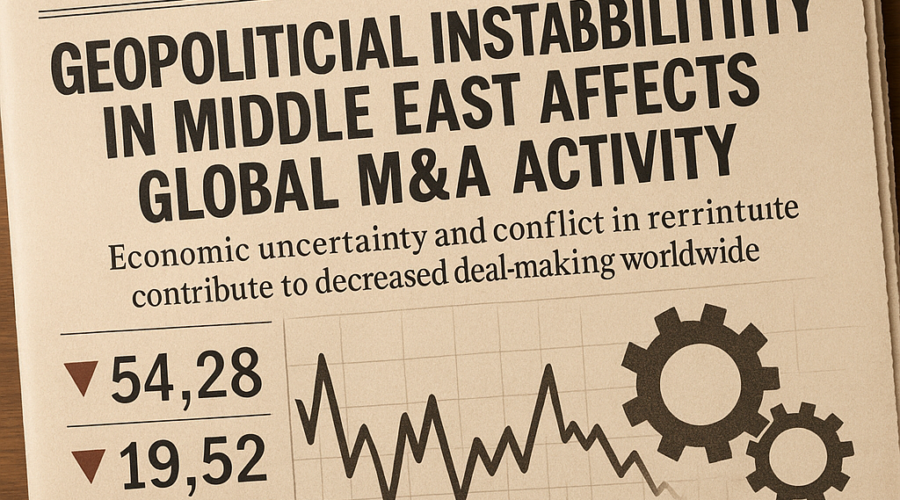
The tentative rebound in global Mergers & Acquisitions activity, which gained footing in the latter half of 2025, is now encountering significant headwinds driven by the escalating military conflict involving Iran. For dealmakers navigating an already complex landscape of stabilizing financing costs and high asset valuations, the sharp increase in geopolitical uncertainty is translating directly into slower timelines, intensified due diligence scrutiny, and a general chilling effect on cross-border execution certainty.
Most “AI for Diligence” tools are lying to you. The truth is, they are just chatGPT wrappers. Experience what real AI for Diligence looks like, built like Claude Code, but for M&A/ PE Diligence:
💼 When Claude Code Marries Due Diligence!
Entering 2026, corporate and private equity pipelines were reportedly fuller than in several years, buoyed by moderating inflation and modest interest rate declines. However, that optimism remains sensitive to geopolitical signals, with experts noting that executive confidence is often tempered by ongoing political developments, as seen in the latest BCG M&A Sentiment Index.
The New Diligence Mandate: Factoring in Energy and Regime Risk
The recent military escalation in the Middle East, particularly actions threatening transit through the Strait of Hormuz, has created immediate macroeconomic shockwaves that are functionally impacting transaction hygiene. Disruption in this critical chokepoint has spurred significant oil price spikes, with forecasts indicating that prolonged blockage could push Brent crude well above $80 per barrel.
For investment professionals, this energy volatility immediately impacts the core inputs of any valuation model:
- Forward Cost Modeling: Energy-dependent sectors, from airlines to chemicals, face immediate cost pressures, forcing buyers to re-run diligence scenarios against elevated operating expense projections.
- Valuation Gap Pressure: As noted by PwC, early 2026 activity has shown a greater discipline around valuation, which is now being further tested by macroeconomic instability that risks re-widening the gap between seller expectations and buyer financing realities.
- Regulatory and Sanctions Scrutiny: Legal and compliance teams are intensifying screening for sanctions risk and potential secondary effects related to the conflict, adding weeks to the diligence phase for any company with exposure to the Middle East or adjacent supply chains. EY reports that geopolitical forces now account for a significant portion of returns for large public companies, necessitating deep integration of political intelligence into M&A decision-making frameworks.
Financing Constrained by Inflation Fear
The immediate threat of sustained high energy prices complicates the Federal Reserve’s and European Central Bank’s monetary policy calculus. While central banks remain poised to inject liquidity if financial markets seize up, higher oil-driven inflation delays the anticipated rate cuts that M&A financing—particularly for the leveraged buyouts that dominated 2025 deal value—relies upon.
This environment favors strategic acquirers with lower costs of capital or those capable of arranging complex, alternative funding structures. As capital markets become less predictable, the necessity for “conviction” and “clearly articulated value-creation pathways” becomes paramount for deal success, according to Bain & Company analysis of the market trend toward larger, more decisive transactions.
Strategic Implications for Deal Advisors
The current climate demands a pivot from high-volume activity to high-quality, well-hedged transactions. For investment professionals advising on private equity exit strategies in volatile energy-exposed sectors, the focus shifts to achieving execution certainty.
The situation highlights the importance of adaptive deal structuring, a necessary component for cross-border M&A trends in 2026. With regulatory fragmentation and transactional diplomacy adding layers of risk, the primary goal for advisors is not merely closing a deal but securing its long-term viability against unpredictable external shocks.
M&A Sentiment vs. Geopolitical Volatility (Early 2026)
| Metric | Early 2026 Trend (Pre-Escalation) | Immediate Impact of Conflict |
|---|---|---|
| Deal Pipeline Health | Fuller than in recent years | Delays in final negotiations and signing |
| Valuation Consensus | Shrinking gap, rising confidence on price | Increased buyer caution; focus on robust due diligence depth |
| Financing Conditions | Modest rate declines, stabilizing capital markets | Inflation fears delay rate cuts; increased focus on hedging |
As Clifford Chance noted, while M&A activity is expected to be strong, geopolitical tensions will temper optimism, potentially driving focus toward regions or sectors less exposed to immediate conflict spillovers. The immediate future of dealmaking hinges on the duration of the maritime disruption and the success of diplomatic efforts to stabilize energy supply, making operational resilience the new premium metric in any investment thesis.