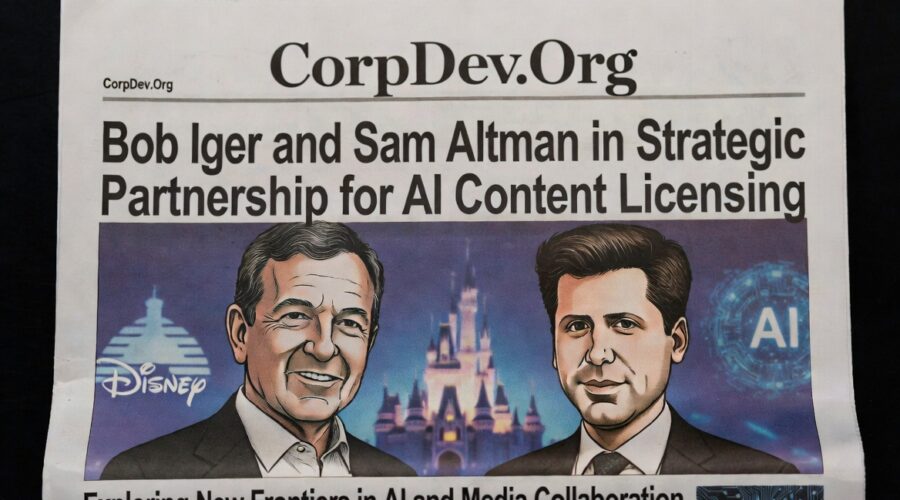
In a landmark move that underscores Disney’s strategic acumen under CEO Bob Iger, The Walt Disney Company has secured a pivotal licensing and investment deal with OpenAI, led by CEO Sam Altman. This agreement not only positions Disney as the first major content partner on OpenAI’s generative AI video platform, Sora, but also exemplifies Iger’s deft navigation of AI’s disruptive potential in entertainment, effectively gaining the upper hand in a complex negotiation with one of the tech sector’s most influential innovators.
Deal Overview: Disney’s $1 Billion Bet on OpenAI’s Generative AI
On December 11, 2025, Disney and OpenAI announced a three-year licensing agreement enabling Sora to generate short-form AI-driven videos featuring over 200 characters from Disney’s iconic franchises, including Marvel, Pixar, and Star Wars. This deal grants Disney exclusive rights to leverage OpenAI’s generative models for new storytelling experiences on platforms like Disney+, while explicitly excluding talent likenesses and voices to address industry concerns about AI misuse.
As part of the agreement, Disney is making a $1 billion equity investment in OpenAI and receiving warrants for additional equity purchases, signaling a deepening partnership beyond content licensing into technology integration and innovation across Disney’s ecosystem[2][5].
Strategic Rationale: Iger’s Mastery in Balancing Innovation and IP Protection
Bob Iger’s leadership reflects a nuanced approach to AI adoption—embracing its potential to enhance Disney’s direct-to-consumer engagement while rigorously protecting intellectual property (IP) and creator rights. Iger emphasized that the deal “honors and respects” creators by instituting licensing frameworks and AI guardrails, ensuring consumer safety and brand integrity in an era of rapid AI-driven content creation[2].
This strategic posture contrasts with Disney’s aggressive legal actions against other AI companies like Midjourney and Google, where Disney has sent cease-and-desist letters alleging massive copyright infringement of its characters and IP. Notably, just hours before publicly partnering with OpenAI, Disney sent a stern legal notice to Google accusing it of unauthorized use of Disney’s copyrighted works in AI-generated content, highlighting Iger’s dual-track strategy of collaboration with trusted partners and litigation against perceived infringers[3][4].
Industry Implications: Setting a Precedent for AI and Entertainment Synergy
The Disney-OpenAI deal represents a watershed moment in the intersection of artificial intelligence and entertainment, setting a precedent for how legacy media companies can harness AI responsibly. By becoming the first major content licensing partner on Sora, Disney is pioneering new user engagement models that leverage AI-generated content to combat flat streaming engagement metrics and compete with user-generated content platforms like YouTube[2].
Moreover, the partnership signals a broader industry trend where content owners seek to monetize and control AI-driven content creation rather than cede ground to unregulated AI platforms. Disney’s insistence on excluding talent likenesses and voices from the deal also addresses ongoing Hollywood concerns about AI’s impact on actors and creators, potentially shaping future regulatory and licensing frameworks[2][5].
Financial and Market Impact
Disney’s $1 billion investment in OpenAI comes at a critical juncture for the AI pioneer, which plans to spend approximately $1.4 trillion on data centers over the next eight years. While the investment is a fraction of OpenAI’s capital expenditure plans, it provides a significant validation from a blue-chip entertainment giant, likely boosting investor confidence and market valuation for both companies[2].
Following the announcement, Disney’s shares rose over 2%, reflecting investor optimism about the company’s innovative growth strategy and its ability to leverage AI to enhance its vast IP portfolio[2].
Historical Context and Leadership Dynamics
Bob Iger’s deft handling of this deal contrasts with the recent challenges faced by Sam Altman and OpenAI, which have encountered scrutiny and controversy over AI content moderation and copyright issues. Iger’s ability to secure favorable terms, including significant equity stakes and IP protections, demonstrates his seasoned negotiation skills and strategic foresight in an evolving tech-media landscape[4][5].
Key Takeaways for C-Level Executives and Deal Advisors
- Strategic Partnerships in AI: Legacy media companies can leverage AI through carefully structured licensing deals that protect IP and respect creators, balancing innovation with risk management.
- IP Protection as a Competitive Advantage: Aggressive legal enforcement combined with selective collaboration can safeguard valuable content assets in the AI era.
- Investment Synergies: Equity investments alongside licensing agreements can deepen partnerships and align incentives for technology adoption and co-innovation.
- Consumer Engagement Innovation: AI-generated content offers new avenues to increase user interaction and platform stickiness amid stagnant streaming engagement.
- Regulatory and Ethical Considerations: Excluding talent likenesses and implementing AI guardrails set industry standards for responsible AI use in entertainment.
Visual Summary: Disney-OpenAI Deal Highlights
| Aspect | Details |
|---|---|
| Deal Type | 3-year licensing agreement + $1B equity investment |
| Content Scope | 200+ characters from Disney, Marvel, Pixar, Star Wars (excluding talent likenesses/voices) |
| Platform | OpenAI’s Sora generative AI video platform, Disney+ |
| Strategic Goals | Enhance storytelling, increase consumer engagement, protect IP, respect creators |
| Legal Actions | Cease-and-desist letters to Google, Meta, and others for copyright infringement |
| Market Reaction | Disney shares +2% post-announcement |
Bob Iger’s deft orchestration of this deal with Sam Altman’s OpenAI underscores a defining moment in cross-sector collaboration, where traditional media’s storytelling mastery meets cutting-edge AI innovation. For executives and deal advisors, this deal exemplifies how to navigate the complex interplay of technology, IP rights, and consumer engagement in the evolving entertainment landscape.