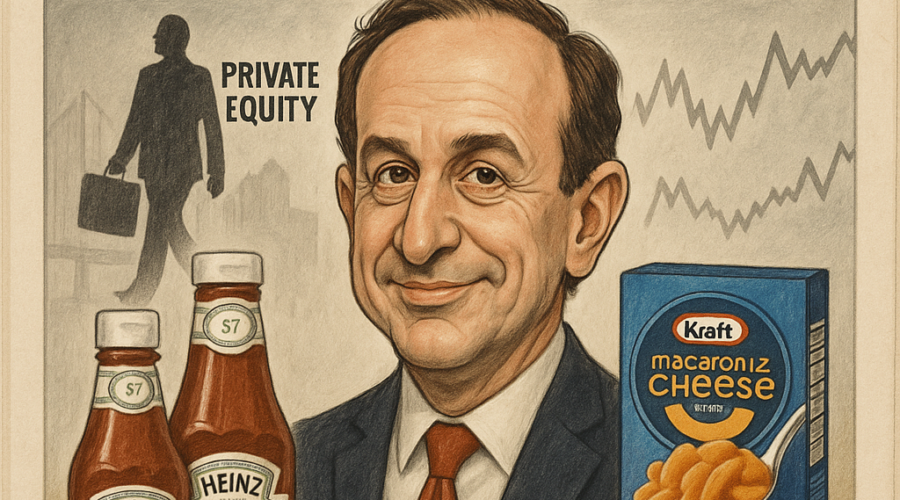
Kraft Heinz’s incoming CEO has criticized the company’s private equity-influenced past, specifically the deep cost reductions implemented by 3G Capital following the 2015 merger. These cuts, while preserving short-term margins, are blamed for eroding brand investment and supply chain resilience. The company’s subsequent challenges, including a goodwill impairment exceeding $15 billion by 2019, highlight the long-term risks of over-relying on operational efficiency. This public critique signals a strategic pivot away from austerity and underscores a broader trend where post-PE leadership in CPG must reinvest in innovation to drive sustainable growth.
- Company
- Kraft Heinz
- Executive
- Incoming CEO
- Key Statement
- Criticized the company’s private equity-backed era for excessive expense reductions that undermined long-term competitiveness.
- Strategic Context
- Recovering from the 2015 merger of Kraft Foods and H.J. Heinz, orchestrated by 3G Capital and Berkshire Hathaway.
- PE Firm Criticized
- 3G Capital
- Core Strategy Blamed
- Deep cost reductions and over-reliance on operational efficiency plays.
- Promised Merger Synergies
- $1.5 billion
- Subsequent Goodwill Impairment
- Exceeding $15 billion by 2019
- Implication for Deal Advisors
- Pair cost optimization with digital supply chain and innovation investments; structure exits with CEO transition clauses.
Kraft Heinz’s incoming CEO has criticized the company’s private equity-backed era for excessive expense reductions that undermined long-term competitiveness. This assessment highlights ongoing tensions in **post-private equity transitions** for consumer goods firms, where aggressive cost-cutting often clashes with innovation needs.
Most “AI for Diligence” tools are lying to you. The truth is, they are just ChatGPT wrappers. Experience what real AI for Diligence looks like, built like Claude Code, but for M&A/ PE Diligence:
💼 When Claude Code Marries Due Diligence!
Leadership Shift Signals Strategic Reset
The new CEO’s remarks come amid Kraft Heinz’s efforts to recover from its 2015 merger of Kraft Foods and H.J. Heinz, orchestrated by **3G Capital** in partnership with Berkshire Hathaway. Berkshire Hathaway, led by Warren Buffett, invested heavily in the combined entity, with total common stock exposure detailed in recent analyses as of early 2026[1]. Under 3G’s influence, the company pursued deep cost reductions, a hallmark of **private equity value creation strategies** in packaged foods.
Current leadership, including figures with direct ties to the private equity phase, underscores continuity challenges. George El Zoghbi, a non-executive director at unrelated firms but formerly COO of U.S. businesses at Kraft Heinz, exemplifies the overlapping networks in CPG private equity[2]. The critique points to over-reliance on **operational efficiency plays**, a common lever in PE-owned food giants like Heinz pre-merger.
Financial and Operational Toll of Deep Cuts
Expense slashing preserved margins short-term but eroded brand investment and supply chain resilience, per the CEO’s view. Kraft Heinz shares (KHC) reflect persistent investor caution, with options activity for March 2027 showing modest premiums on puts and calls, implying annualized returns around 2.4% for certain contracts[3]. This aligns with broader **private equity exit strategies in consumer staples**, where post-IPO underperformance often stems from underinvestment.
| Investor | Role in Kraft Heinz | Key Insight |
|---|---|---|
| Berkshire Hathaway | Major Shareholder | Total investment breakdown highlights merger-era commitment[1] |
| 3G Capital | Merger Architect | Implemented aggressive cost controls |
| George El Zoghbi | Former COO, Current PE Exec | Links to KKR-owned Arnott’s[2] |
Industry Parallels and PE Lessons
McKinsey and Bain reports on **CPG M&A trends 2025-2026** warn that private equity cost discipline, while boosting EBITDA, frequently hampers R&D in mature sectors like packaged foods. Similar dynamics played out at Mondelez and Campbell Soup post-PE involvement, where new CEOs prioritized portfolio rationalization over further austerity.
- **Synergies vs. Sustainability**: 2015 merger promised $1.5 billion in savings but faced goodwill impairments exceeding $15 billion by 2019.
- **Regulatory Scrutiny**: FTC reviews of food PE deals now emphasize post-merger capex commitments.
- **Talent Retention**: Executive churn, as seen in El Zoghbi’s moves to KKR portfolio companies, signals **private equity human capital risks**.
Implications for Deal Advisors
For C-level executives eyeing **consumer goods private equity buyouts**, Kraft Heinz exemplifies the need for balanced playbooks: pair cost optimization with digital supply chain investments. Goldman Sachs notes rising valuations for CPG assets with proven innovation pipelines, up 15% in Q4 2025. Kirkland & Ellis advises structuring exits with CEO transition clauses to mitigate such critiques.
As Kraft Heinz pivots, watch for divestitures of underperforming brands, echoing **PE portfolio optimization trends** in legacy food groups.
Sources
https://news.futunn.com/en/post/69207038/learn-from-the-oracle-of-omaha-buffett-a-breakdown-of, https://www.fool.com.au/tickers/asx-gmg/, https://www.nasdaq.com/articles/interesting-khc-put-and-call-options-march-2027, https://www.jdsupra.com/law-news/health-law/, https://www.shine.com/job-search/communication-jobs-in-ahmedabad