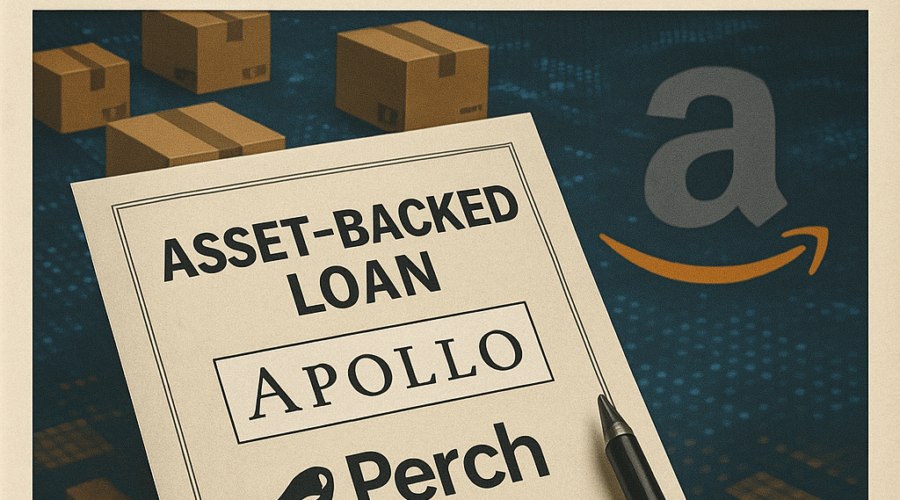
Apollo Global Management Inc. recorded a loss on a portion of a $170 million asset-backed financing extended to Perch, an Amazon brand aggregator, after that exposure was written down to zero.[1][2][3] The wipeout marks a rare setback for the private credit giant amid rising scrutiny of financing risks in the volatile e-commerce aggregation sector.
Set and exceed synergy goals with benchmarks and actionable operational initiative level data from similar deals from your sector:
💼 Actionable Synergies Data from 1,000+ Deals!
Deal Background and Financial Hit
Perch, which specialized in acquiring and scaling Amazon third-party seller brands, secured the $170 million asset-backed loan from Apollo to fund its roll-up strategy during the peak of e-commerce aggregator hype in 2021.[1] Apollo’s involvement reflected broader private equity trends in providing asset-based lending to high-growth consumer platforms, leveraging inventory and receivables as collateral.
The full loan amount has not been disclosed as entirely lost, but a material portion was impaired to zero value, forcing Apollo to recognize an immediate write-down.[2][3] This loss highlights vulnerabilities in asset-backed financing for aggregators, where rapid inventory obsolescence and Amazon policy shifts eroded collateral values.
Perch’s Downfall and Industry Context
Perch raised over $900 million in equity from investors including SoftBank and Tiger Global before peaking at a $1.5 billion valuation. Post-2022 market reset, the firm struggled with rising interest rates, softening consumer demand, and increased competition from Amazon’s direct brand initiatives. Aggregators like Perch faced **private equity exit strategies in SaaS and e-commerce** challenges, with many unable to achieve profitable scale amid **cross-border M&A trends 2025** favoring established players.
Similar fates hit peers: Thrasio filed for bankruptcy in 2023 after defaulting on $1.5 billion in debt, while Razor Group pivoted to European markets. Bain & Company analysis notes that 60% of top aggregators from 2021 have either folded or been restructured, underscoring **M&A valuation shifts in consumer tech** driven by higher discount rates and operational inefficiencies.
| Company | Peak Valuation | Outcome | Debt Exposure |
|---|---|---|---|
| Perch | $1.5B | Financing impaired; ops wound down | $170M (Apollo) |
| Thrasio | $10B | Chapter 11 bankruptcy | $1.5B |
| Razor Group | $1B+ | Pivot to Europe; partial sale | $500M+ |
Implications for Private Credit and Apollo
Apollo, managing $700 billion in assets as of late 2025, has expanded aggressively into private credit, originating $50 billion annually per Goldman Sachs estimates. This Perch loss, though isolated, signals caution in **asset-backed lending risks for e-commerce roll-ups**. McKinsey reports warn of 20-30% default rates in consumer-facing asset-based loans originated during low-rate eras, as collateral liquidation values plummet in downturns.
Broader **private equity trends 2026** show lenders tightening covenants and favoring senior secured facilities. Kirkland & Ellis partners note increased due diligence on platform economics, with sponsors like KKR emphasizing cash flow predictability over growth multiples in **strategic M&A in digital marketplaces**.
- Apollo’s credit arm remains resilient, with non-accrual rates under 2% versus industry averages of 5% (per BCG data).
- Regulatory risks rise: SEC scrutiny of private credit disclosures could impact fee income.
- Sector shift: Investors pivot to B2B SaaS aggregators with recurring revenue, mirroring successful exits like Vista Equity’s $10B playbook.
For C-level executives eyeing private credit allocations, this episode underscores the need for diversified exposure and robust collateral stress-testing amid **e-commerce M&A regulatory risks**.
Sources
https://www.thestar.com.my/authors?q=Eugene++Mahalingam, https://www.marketscreener.com/analysis/interviews/, https://www.marketscreener.com/videos/must-watch/