
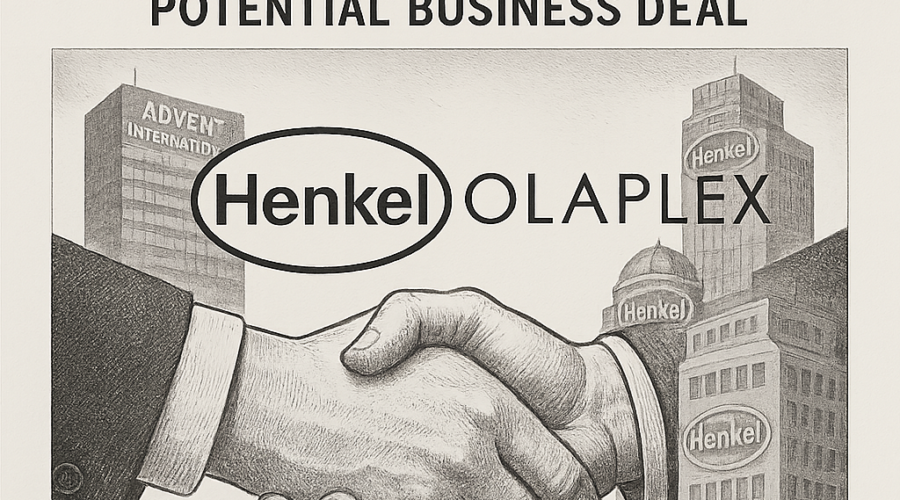
Germany’s Henkel AG has submitted a takeover offer for U.S.-listed haircare group Olaplex Holdings Inc., creating a potential exit path for private equity owner Advent International after a dramatic post-IPO value collapse of more than 90%.[1][4][6][14]
Set and exceed synergy goals with benchmarks and actionable operational initiative level data from similar deals from your sector:
💼 Actionable Synergies Data from 1,000+ Deals!
Deal Snapshot: Henkel–Olaplex at a Glance
According to multiple reports citing people familiar with the matter, Henkel has made a takeover approach and is in active discussions with Olaplex, with a deal that could be agreed within weeks, although talks may still fail to produce a transaction.[1][4][9][10][13][14] Financial terms have not been publicly disclosed, but market commentary pegs Olaplex’s current equity value at roughly $0.9–1.1 billion, versus a roughly $16 billion IPO valuation in 2021.[3][4][6]
| Metric | Olaplex (Standalone) | Context |
|---|---|---|
| Share price reaction to news | +20–24% intraday surge | Volatility halt triggered on NASDAQ after report of Henkel offer[1][4][5][6] |
| Current market cap | ≈$0.9–1.1 billion | Versus ≈$16 billion at IPO in 2021[3][4][6] |
| Major shareholder | Advent International ≈75% | Controls effective outcome of any takeover bid[1][4][6][9][14] |
| Recent quarterly revenue | $114.6 million | Down 3.8% year-on-year; EPS $0.02; negative net margin of 1.18%[3][6] |
| Return on equity | ≈1.3% | Below cost of capital; value-destructive in current form[3][6] |
Strategic Rationale for Henkel
Henkel, whose portfolio spans haircare brands such as Schwarzkopf as well as laundry detergents and adhesives, has long targeted professional and premium beauty as a growth pillar within its consumer brands division.[1][4][7] A potential Olaplex acquisition aligns with several strategic themes seen across recent beauty M&A trends and cross-border consumer deals.
1. Premium, Science-Led Brand in a Strategic Niche
Olaplex is a “science-enabled, technology-driven beauty company” built around a patented bond-building molecule (Bis-aminopropyl diglycol dimaleate, or “Bis-amino”) that repairs damaged hair at a molecular level.[7] Its portfolio of around 17 complementary products spans professional salon treatments, specialty retail, and direct-to-consumer channels.[7]
For Henkel, adding a highly recognizable, premium, ingredient-focused brand complements its existing hair portfolio, enhancing its positioning in high-margin segments where consumer loyalty and pricing power tend to be stronger. This echoes broader “science-backed beauty” acquisition themes also seen in large-cap strategic buyers’ recent moves in dermocosmetics and professional skincare.
2. Professional Salon Channel Scale-Up
Olaplex built its early success in the professional salon market with products like No.1 Bond Multiplier and No.2 Bond Perfector, which are sold exclusively to stylists and used as in-salon treatments.[7] Henkel has a sizable professional hair business but trails L’Oréal and others in premium bond-repair subsegments.
An Olaplex acquisition would:
- Strengthen Henkel’s footprint in the professional salon channel, particularly in North America.
- Provide a differentiated technology platform for bond-building and damage repair, which can be leveraged across Henkel’s salon brands.
- Enhance Henkel’s ability to compete on high-growth, high-ASP treatments rather than price-sensitive mass haircare.
3. Leveraging Global Distribution and Brand Management
Henkel could plug Olaplex into a global distribution network across Europe, Asia, and Latin America, scaling international penetration beyond what a sub-$2 billion standalone company can typically fund.[4][7] This is consistent with a pattern in global beauty M&A where strategics buy niche, fast-growing brands, then accelerate geographic and channel expansion.
Henkel’s scale in marketing, supply chain, and procurement could also compress unit costs and stabilize margins in a business where selling, general, and administrative (SG&A) expenses grew nearly 50% year-on-year in the most recent quarter.[6]
4. Capital Allocation and Multiple Arbitrage
Olaplex currently earns a return on invested capital (~0.85%) below its weighted average cost of capital, meaning value is being destroyed on a standalone basis.[6] A successful integration into Henkel’s broader portfolio offers:
- Scale synergies in procurement and manufacturing, helping close the ROIC-WACC gap.
- Potential multiple re-rating, as earnings are consolidated into a larger, more diversified group with a stronger balance sheet.
- Optionality to rationalize underperforming SKUs while focusing on hero products and innovation in bond-building technology.
Advent’s Exit Dynamics: From $16 Billion IPO to Sub-$2 Billion Takeout
Advent International acquired Olaplex in 2019 and subsequently took it public in 2021 at a valuation around $16 billion.[1][4][6] Since then, the share price has fallen by more than 90%, driven by slowing growth, competition, and execution challenges.[1][4][6]
1. Concentrated Ownership and Negotiating Leverage
Advent remains the dominant shareholder with roughly 75% of Olaplex’s equity, effectively controlling the fate of any change-of-control transaction.[1][4][6][9][14] This concentration:
- Streamlines negotiations: Henkel primarily needs to reach agreement with one sophisticated financial sponsor.
- Raises the bar on price: Advent may be reluctant to crystallize a permanent capital loss without a meaningful premium to current trading levels.
- Reduces execution risk linked to dispersed shareholder votes but increases dependence on Advent’s internal view of fair value and strategic alternatives.
2. Valuation Anchors and PE Exit Pressures
Public commentary from retail investors suggests speculation about a price anchored to the IPO valuation of $16 billion, though such a level appears inconsistent with current fundamentals and trading at around $1.35–$1.60 per share and a sub-$1.1 billion market cap.[1][3][6] For Advent, realistic reference points are more likely:
- Pre-rumor trading price (as a base) plus a typical M&A control premium, often 20–40% in public-to-private deals, though sector and situation specific.
- Downside scenario valuation if the deal collapses, given ongoing operational pressures and elevated stock volatility (daily swings cited around 38%).[6]
- Internal rate of return (IRR) considerations versus hold-and-fix strategies or alternative exit options such as a structured minority deal or joint venture.
The proposed Henkel transaction illustrates the evolving playbook for private equity exit strategies in beauty and consumer brands: when public-market support deteriorates, a strategic sale can still deliver a clean exit at an acceptable IRR, even if headline valuations fall well below peak IPO levels. This mirrors private equity exit strategies seen across other consumer categories where sponsors sell de-rated public assets to industrial buyers who can extract synergies and re-rate the asset over time.
Olaplex Fundamentals: A Distressed Growth Story
While the stock reaction to Henkel’s offer was sharply positive, underlying fundamentals remain under pressure, which is central to both deal pricing and integration planning.
Revenue, Profitability, and Cash Dynamics
Recent results show:
- Q3 revenue of $114.6 million, a 3.8% year-on-year decline.[3][6]
- GAAP EPS of $0.02, flat versus consensus but down versus $0.04 in the prior-year quarter.[3][6]
- Negative net margin of about 1.2%, with a positive but modest return on equity (~1.3%).[3]
- SG&A up ~49% year-on-year, compressing margins and indicating the company is spending heavily to defend market share.[6]
- ROIC of about 0.85%, below its estimated WACC, signalling value destruction on incremental investment.[6]
The balance sheet shows a current ratio of about 4.2 and a quick ratio of around 3.5, with a debt-to-equity ratio of 0.40, suggesting adequate liquidity but limited growth momentum in the absence of strategic change.[3][6]
Brand and Market Headwinds
Though not fully detailed in the current news flow, Olaplex’s performance over the last two years has been impacted by:
- Intensified competition from rival bond-building and repair brands in both professional and retail channels.
- Slower category growth in certain markets and potential channel inventory normalization following earlier pandemic-era spikes.
- Reputational and litigation noise that may have weighed on consumer sentiment, increasing the need for marketing spend.
These factors underpin why some market observers characterize the stock as a “distress trap” despite any short-term takeover catalyst: absent a deal, investors face ongoing operational challenges and high volatility.[6]
Synergy Levers and Integration Considerations
For C-level executives and deal advisors evaluating similar beauty M&A or cross-border consumer transactions, the potential Henkel–Olaplex combination offers a clear view of where value can be created.
1. Revenue Synergies
- Geographic expansion: Leveraging Henkel’s existing distribution in Europe, APAC, and Latin America to grow Olaplex penetration beyond its U.S.-centric base.
- Channel diversification: Strengthening presence in specialty retail and e-commerce while preserving professional salon equity, a pattern consistent with omnichannel beauty M&A strategies.
- Innovation pipeline: Extending Olaplex’s bond-building IP into adjacent categories (e.g., scalp health, styling, treatments) to broaden average spend per customer.
2. Cost and Margin Synergies
- Procurement: Consolidated raw material and packaging sourcing, especially for specialized haircare ingredients, to reduce COGS.
- Manufacturing and logistics: Utilizing Henkel’s manufacturing footprint and logistics network to reduce unit costs and working capital intensity.
- Overhead rationalization: Streamlining corporate functions and marketing infrastructure, particularly where Henkel can absorb standalone overhead.
3. Governance and Operating Model
The transaction would also likely involve a shift from PE-backed, growth- and exit-focused governance to strategic corporate governance optimized for long-term brand equity and portfolio fit. This has implications for:
<
Sources
https://stocktwits.com/news-articles/markets/equity/olaplex-shares-rally-on-potential-takeover-offer-from-germanys-henkel/cmxz9LwR42Y, https://www.tradingview.com/news/reuters.com,2026:newsml_L6N3Y8156:0-olaplex-draws-takeover-interest-from-germany-s-henkel-bloomberg-news-reports/, https://www.marketbeat.com/instant-alerts/olaplex-nasdaqolpx-hits-new-1-year-high-should-you-buy-2026-01-07/, https://www.investing.com/news/stock-market-news/olaplex-stock-soars-after-reported-takeover-offer-from-henkel-93CH-4435674, https://www.gurufocus.com/news/4100376/olaplex-olpx-stock-rises-amid-acquisition-discussions-with-henkel, https://www.ainvest.com/news/olaplex-24-surge-takeover-catalyst-distress-trap-2601/, https://www.marketscreener.com/news/olaplex-gets-takeover-offer-from-germany-s-henkel-ce7e59dcde80f026, https://www.businessoffashion.com/latest/, https://www.tipranks.com/news/the-fly/olaplex-in-takeover-talks-with-henkel-bloomberg-reports-thefly, https://www.gurufocus.com/news/4100382/olaplex-olpx-surges-on-henkels-takeover-offer, https://www.gurufocus.com/news/4100375/henkel-proposes-acquisition-of-olaplex-olpx, https://www.fidelity.com/news/article/company-news/202601071538BENZINGAFULLNGTH49767952, https://www.tradingview.com/news/reuters.com,2026:newsml_L4N3Y81FO:0-olaplex-jumps-after-report-germany-s-henkel-eyes-takeover/, https://www.facilitiesmanagement-now.com/article/246141/advents-olaplex-stake-in-play-as-henkel-explores-takeover
Related Posts
Educator Unions Escalate Pressure on SEC Over Apollo Global’s Epstein-Connected Donor Scrutiny
null Major education unions have formally called for a Securities and Exchange Commission investigation into Apollo Global Management's historical ties to Jeffrey Epstein, marking an intensification...
Sverica Capital Management Announces Sale of Defy Security to Booz Allen Hamilton
Sverica Capital Management LP disclosed the sale of its portfolio company Defy Security LLC to Booz Allen Hamilton Holding Corp., capping a five-year investment that tripled the cybersecurity firm's...
Carlyle Readies €4bn Debt Sale for €7.7bn BASF Coatings Carve-Out
null Carlyle Group is advancing its landmark acquisition of BASF's coatings division with a €4bn debt syndication targeting late March or early April, signaling sustained investor appetite for...
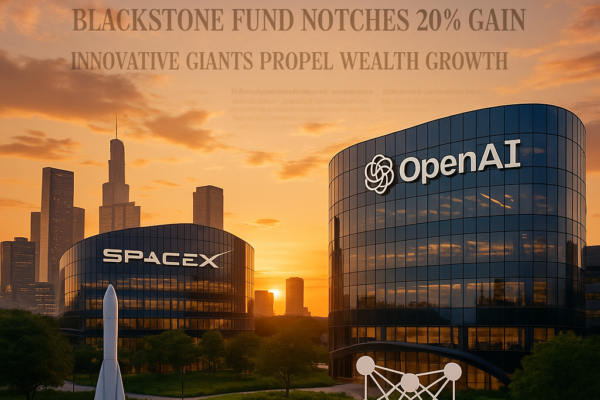
SpaceX, OpenAI Drive 20% Gain in Blackstone Fund for the Wealthy
Blackstone's private wealth vehicle targeting high-net-worth investors posted a 20% return in 2025, propelled by stakes in SpaceX and OpenAI. The Blackstone Private Credit Fund, with over $60...