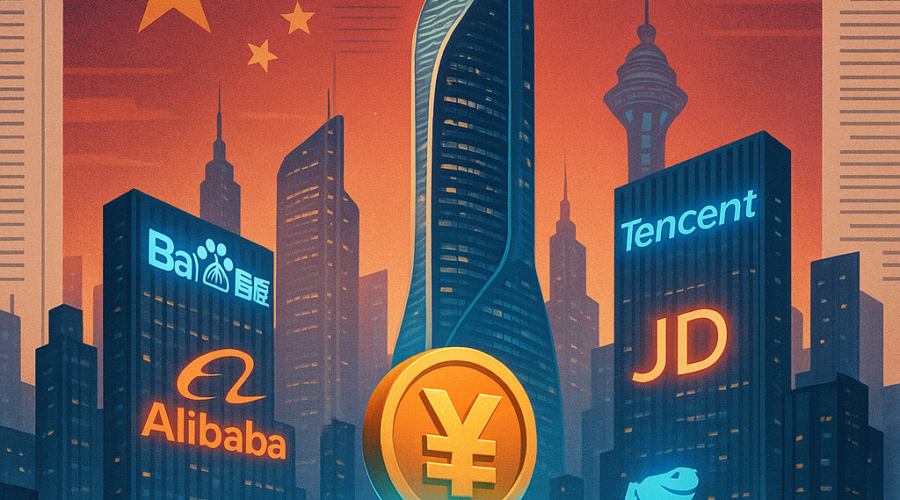
China has officially launched a landmark **national venture capital guidance fund** injecting 100 billion yuan ($14 billion) in central government capital, aiming to mobilize up to 1 trillion yuan for **early-stage tech investments** in strategic sectors like semiconductors, biotechnology, and AI[3][1]. This initiative, part of a three-tier structure including newly operational regional funds exceeding 50 billion yuan each, underscores Beijing’s aggressive push for **tech self-sufficiency** amid U.S. export curbs and domestic innovation gaps[1][3].
Set and exceed synergy goals with benchmarks and actionable operational initiative level data from similar deals from your sector:
💼 Actionable Synergies Data from 1,000+ Deals!
Fund Structure and Strategic Deployment
The national fund operates through a hierarchical model: a central “mother fund” amplified by regional vehicles in Beijing-Tianjin-Hebei (managed by CICC Capital), Yangtze River Delta (SDIC Unity Capital), and Guangdong-Hong Kong-Macao Greater Bay Area (Shenzhen Capital Group)[1]. Each regional fund, valued over 50 billion yuan ($7.1 billion), has signed agreements with 49 sub-funds and 27 projects, targeting 600 sub-funds to fuel **emerging industries** and **future industries** such as hard tech with long cycles[1].
Complementing this, the Social Security Science and Technology Innovation Fund has expanded via “central-local cooperation,” investing 140 billion yuan across provinces like Jiangsu, Zhejiang, Fujian, and Hubei, backing stars like Muxi Integrated and Chery Automobile under a “mother fund + direct investment” approach[2]. These vehicles integrate state capital with banks, insurers, and market players, addressing funding gaps in capital-intensive areas[2][3].
Key Investment Focus Areas
- Semiconductors: SMIC’s $5.8 billion buyout of a subsidiary advances 12nm capabilities, supported by funds like China Integrated Circuit Industry Investment Fund, amid U.S. sanctions[6].
- Biotech and AI: A 11.6 billion yuan brain-computer interface fund and Insilico Medicine’s HKD 2.277 billion Hong Kong IPO (with Lilly, Tencent as cornerstones) highlight AI-drug discovery momentum[4][8].
- Humanoids and EVs: Over $20 billion in 2024 funding positions robotics as a “future industry,” with AI/EV sectors drawing $125 billion+ in 2025[5][10].
Implications for Global M&A and Private Equity
For **private equity firms** and **cross-border M&A advisors**, this flood of state-backed capital signals a **China tech investment surge 2025**, blending **government guidance funds** with private inflows. Foreign investors, including Temasek and Oaktree in Insilico’s IPO, eye high-tech FDI despite 27.1% inbound decline in 2024, drawn by eased access in biotech/telecom via the 2025 Action Plan[5][8].
However, challenges persist: industrial profits plunged in November 2025 due to weak demand/deflation, local governments issue record asset-backed securities for liquidity, and basic research lags necessitate a “core tech pivot”[3][12]. Goldman Sachs forecasts Chinese cloud providers ramping capex post-15th Five-Year Plan’s AI prioritization[9].
| Region/Fund | Scale (CNY Billion) | Manager | Focus |
|---|---|---|---|
| National VC Guidance Fund | 100 (mobilize 1,000) | Central Govt | Semiconductors, Biotech |
| Beijing-Tianjin-Hebei | >50 | CICC Capital | Tech Finance |
| Yangtze River Delta | >50 | SDIC Unity Capital | Regional Innovation |
| Greater Bay Area | >50 | Shenzhen Capital | Reform Pioneer |
Private Equity Opportunities and Risks
**PE exit strategies in China tech** gain traction as Beijing Exchange emerges as an IPO hub for startups, with stock trading hitting 400 trillion yuan annually led by tech[3]. Yet, property slumps drag fixed-asset investment down 2.6%, pressuring valuations[11]. For C-level executives, co-invest via sub-funds offers leveraged exposure to **China early-stage tech funding trends**, but geopolitical risks demand rigorous due diligence on state ties and IP[12].
McKinsey-like analysis: This ecosystem amplifies 2.69% GDP R&D spend, fostering resilience (5.2% Q1-Q3 growth) despite trade tensions, positioning China as a **strategic tech supremacy** contender[7]. Deal advisors should monitor sub-fund rollouts for LP commitments in AI, chips, and robotics.
Sources
https://english.shanghai.gov.cn/en-Latest-WhatsNew/20251229/84ea9bf875b144078f35a36a747462ec.html, https://eu.36kr.com/en/p/3617355870291204, https://emergingmarketskeptic.substack.com/p/emerging-markets-week-december-29-2025, https://news.cgtn.com/news/2025-12-30/China-showcases-advances-in-brain-computer-interface-BCI-technology-1JwnhJS055S/share_amp.html, https://www.ainvest.com/news/china-digital-asset-legal-reform-market-implications-institutional-preparedness-investment-opportunities-regulated-digital-economy-2512/, https://siliconangle.com/2025/12/29/smic-buys-subsidiary-5-8b-chinas-chipmaking-progress-accelerates/, https://timesofoman.com/article/166670-yearender-decoding-sources-of-chinas-economic-resilience-in-2025, https://insilico.com/news/p010170up1-insilico-medicine-lists-on-hong-kong-sto, https://www.myjournalcourier.com/opinion/article/the-us-win-ai-race-samuel-field-21262918.php, https://www.ainvest.com/news/china-humanoid-robotics-surge-strategic-tech-supremacy-assessing-investment-potential-geopolitical-economic-tailwinds-2512/, https://www.ctpost.com/news/world/article/as-a-property-slump-drags-on-china-s-economy-21267602.php, https://www.scmp.com/economy/global-economy/article/3338116/chinas-lagging-basic-research-demands-core-tech-pivot-us-curbs-bite-economic-adviser, http://en.people.cn/n3/2025/1230/c90000-20408169.html