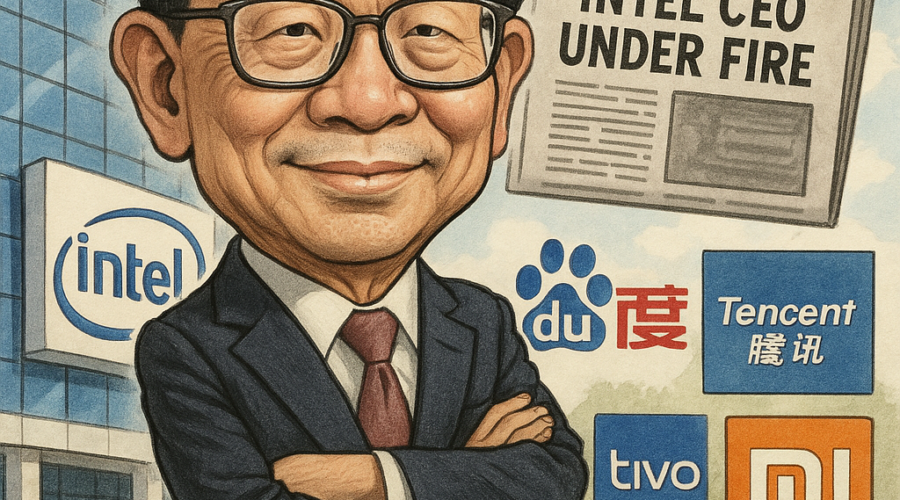
Intel CEO Lip-Bu Tan is under mounting scrutiny as his extensive investment portfolio, including stakes in more than 600 Chinese companies, raises concerns about conflicts of interest and geopolitical risks in an increasingly fraught semiconductor landscape. This scrutiny comes amid heightened U.S. regulatory and political pressure on semiconductor firms with China exposure, complicating Intel’s strategic positioning and Tan’s leadership credibility.
💼 M&A / PE diligence in 24 hours? Yes, thanks to AI!
Dual Roles and Conflicts of Interest in a High-Stakes AI Chip Bidding War
Tan’s dual role as Intel CEO and chairman of AI chip startup Rivos sparked controversy during a fierce bidding war between Intel and Meta. Rivos, initially valued at $2 billion, saw its valuation double to approximately $4 billion due to competing offers. Tan’s involvement in advocating for Intel’s acquisition of Rivos, despite Intel’s board hesitance, highlighted potential conflicts of interest given his personal financial gains from the deal. Sources indicate that the bidding war inflated Rivos’ sale price, directly benefiting Tan’s fortune while raising governance questions at Intel[1][4].
Geopolitical and Regulatory Risks Amplify Reputational Challenges
The semiconductor industry faces escalating geopolitical headwinds, with U.S. export controls and investment restrictions targeting China’s semiconductor sector. The SAFE Chips Act enacted in late 2025 imposes a 30-month moratorium on advanced AI chip exports to China, Russia, Iran, and North Korea, severely limiting market access for U.S. firms. Intel, alongside peers like AMD and Nvidia, confronts revenue declines and operational challenges due to these policies, which also heighten legal and reputational risks[2].
Tan’s extensive stakes in Chinese firms exacerbate these risks, as U.S. Senate investigations spotlight $38 billion in Chinese semiconductor investments, fueling bipartisan calls for tighter controls. This environment creates a “deal scrutiny era” where executives with cross-border financial interests face intensified examination from regulators, investors, and the public alike[2].
Financial and Legal Implications for Intel and Its Leadership
Beyond reputational damage, Intel confronts significant legal exposure. Patent litigation, such as the ongoing $948 million dispute with VLSI Technology, drains resources and threatens financial stability. Tan’s personal financial interests in Chinese firms may invite further regulatory probes, complicating Intel’s compliance landscape and investor confidence[2].
Moreover, the fallout from Tan’s involvement in deals like Rivos raises governance concerns. Intel’s board’s decision to retain Tan despite conflict allegations underscores the tension between leveraging his industry connections and managing fiduciary risks. This dynamic is emblematic of broader challenges in private equity and M&A governance amid geopolitical friction and regulatory tightening[1][4].
Industry and Market Implications
The Intel-Rivos saga and Tan’s investment portfolio spotlight the complex interplay between corporate strategy, geopolitical risk, and regulatory scrutiny in semiconductor M&A and private equity. As U.S.-China tensions persist, executives with cross-border stakes must navigate an increasingly hostile environment where deal transparency and compliance are paramount.
For investors and deal advisors, this case exemplifies the rising importance of thorough due diligence on executive conflicts and geopolitical exposure in private equity exit strategies and cross-border M&A trends in 2025. Firms must balance growth ambitions in AI and chip innovation with the imperative to mitigate legal, reputational, and regulatory risks.
Visual Insight: Timeline of Key Events in the Intel-Rivos Deal and Regulatory Developments
| Date | Event |
|---|---|
| Early 2025 | Rivos valued at $2 billion; bidding war begins between Intel and Meta |
| Mid 2025 | Tan advocates Intel’s acquisition of Rivos; board hesitates amid conflict concerns |
| Q3 2025 | Rivos valuation doubles to ~$4 billion due to competitive bids |
| October 2025 | U.S. Senate report highlights $38B Chinese semiconductor investments; bipartisan calls for export controls |
| December 2025 | SAFE Chips Act enacted, imposing 30-month AI chip export moratorium to China and others |
| December 2025 | Intel faces intensified scrutiny over CEO’s Chinese investments amid geopolitical tensions |
Looking Ahead: Navigating the Deal Scrutiny Era
Intel’s experience under Lip-Bu Tan’s leadership underscores a critical inflection point for semiconductor firms and private equity investors. As regulatory frameworks tighten and geopolitical risks mount, transparency in executive investments and rigorous conflict-of-interest policies will be essential to sustain market trust and competitive advantage.
Executives and boards must proactively address the complexities of cross-border stakes, especially in sensitive sectors like semiconductors and AI chip manufacturing. This includes enhanced governance protocols, scenario planning for export control impacts, and strategic recalibration of investment portfolios to align with evolving U.S. and global policies.
For dealmakers, the Intel-Rivos case serves as a cautionary tale emphasizing the importance of integrating geopolitical risk assessment into M&A due diligence and private equity exit strategies in 2025 and beyond.
Sources
https://www.devdiscourse.com/article/technology/3726783-power-struggles-in-silicon-valley-the-intel-rivos-tug-of-war, https://www.ainvest.com/news/semiconductor-industry-exposure-geopolitical-legal-risks-assessing-long-term-liability-reputational-damage-chipmakers-2512/, https://bilyonaryo.com/2025/12/11/chinas-zte-may-pay-more-than-1-billion-to-the-us-over-foreign-bribery-allegation/technology/, https://www.nst.com.my/newssummary/1334439, https://www.businesstimes.com.sg/international/global/mexico-approves-50-tariffs-china-other-asian-nations