Unilever PLC has announced a dedicated annual allocation of approximately $1.7 billion (around €1.5 billion) for mergers and acquisitions, with a pronounced strategic emphasis on expanding its footprint in the United States, CEO Fernando Fernandez revealed in December 2025.
💼 M&A / PE diligence in 24 hours? Yes, thanks to AI!
Strategic Rationale Behind U.S.-Centric M&A Investment
Fernando Fernandez highlighted that 90% to 95% of Unilever’s M&A capital will be deployed in the U.S., underscoring the region’s critical role in the company’s growth trajectory. This focus follows a deliberate portfolio streamlining and premiumization strategy, aiming to consolidate Unilever’s position in high-growth, high-margin segments within the American consumer goods market.
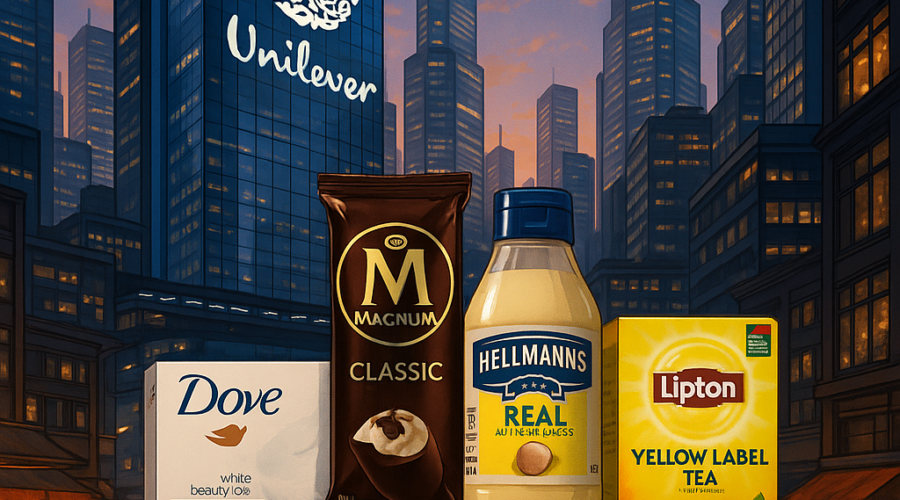
Fernandez noted that Unilever has built a robust and profitable U.S. business, with key power brands such as Dove experiencing significant growth—Dove hair care, for instance, grew over 20% in the last quarter. The company has also removed several non-core brands in the U.S. to sharpen its portfolio focus on these power brands, reflecting a broader trend of portfolio simplification and premium brand prioritization.
Context: Post-Ice Cream Spin-Off and Market Positioning
This M&A commitment comes on the heels of Unilever’s strategic separation of its ice cream division, Magnum Ice Cream, which was spun off and listed on multiple exchanges including Euronext Amsterdam and the NYSE in early December 2025. The divestiture aligns with Unilever’s “One Unilever” simplified operating model, focusing resources on markets and categories with critical mass and growth potential.
Fernandez emphasized that the U.S. market offers significant opportunities amid global shifts, including retailer consolidation and evolving consumer preferences toward premium and health-conscious products. Unilever’s strong retailer relationships and market intimacy in the U.S. are cited as competitive advantages enabling the company to win market share and drive volume growth consistently.
Financial and Market Implications
Allocating $1.7 billion annually for M&A reflects Unilever’s proactive capital deployment strategy to fuel inorganic growth, particularly in a competitive consumer goods landscape marked by rapid innovation and shifting consumer trends. This budget positions Unilever to pursue both bolt-on acquisitions and potentially larger transformative deals in the U.S. market.
Market analysts view this focused M&A approach as a positive signal of Unilever’s commitment to strengthening its U.S. portfolio, which has historically been underappreciated by investors despite solid performance metrics. The company’s strategic moves also align with broader private equity and strategic buyer trends emphasizing premiumization and portfolio optimization in consumer sectors.
Broader M&A and Industry Trends
Unilever’s U.S.-focused M&A strategy mirrors a wider trend among global consumer goods companies prioritizing North America for growth and consolidation. The region’s large consumer base, evolving retail landscape, and innovation ecosystems make it a prime target for dealmaking. Additionally, the post-pandemic environment and macroeconomic factors have accelerated deal activity in premium and health-oriented product categories.
Summary Table: Unilever’s M&A Focus and Recent Corporate Actions
| Aspect | Details |
|---|---|
| Annual M&A Budget | Approximately $1.7 billion (€1.5 billion) |
| Geographic Focus | 90%-95% allocated to United States |
| Recent Corporate Action | Spin-off of Magnum Ice Cream, listed Dec 2025 |
| Portfolio Strategy | Focus on Power Brands, premiumization, portfolio simplification |
| Key Growth Brands in U.S. | Dove (20%+ growth in hair care), Hellmann’s, deodorants |
| Market Positioning | Strong retailer relationships, focus on premium and health trends |
Implications for Private Equity and Strategic Buyers
Unilever’s sizable and focused M&A budget signals increased deal activity in the U.S. consumer goods sector, creating opportunities for private equity firms and strategic buyers specializing in bolt-on acquisitions and platform expansions. The emphasis on premium and health-oriented brands aligns with ongoing private equity exit strategies in consumer sectors, where scaling niche brands through M&A remains a key value driver.
As Unilever continues to streamline and sharpen its portfolio, deal advisors and investors should monitor the company’s acquisition targets closely, particularly those that complement its power brands and enhance its U.S. market penetration.
Sources: Unilever CEO Fernando Fernandez statements at JP Morgan Fireside Chat (Dec 2025), Reuters, MarketScreener, The Middle Market, StockAnalysis.com
Sources
https://www.law360.com/transactions-uk, https://stockanalysis.com/quote/etr/UNV0/, https://www.themiddlemarket.com, https://www.marketscreener.com/quote/stock/UNILEVER-ADR-14745/news/, https://www.unilever.com/files/jp-morgan-fireside-chat-with-fernando-fernandez-ceo-webcast-transcript.pdf, https://tradersunion.com/news/financial-news/show/1056080-unilever-slips-0-52percent-today/, https://www.tipranks.com/news/unilever-stock-ul-looks-sweeter-as-ice-cream-sale-shifts-focus-to-major-u-s-ma, https://www.marketbeat.com/stocks/NYSE/UL/, https://www.marketscreener.com/news/unilever-plc-jefferies-reaffirms-its-sell-rating-ce7d51d3db80f627